
🌍 Foreign Nationals Allowed
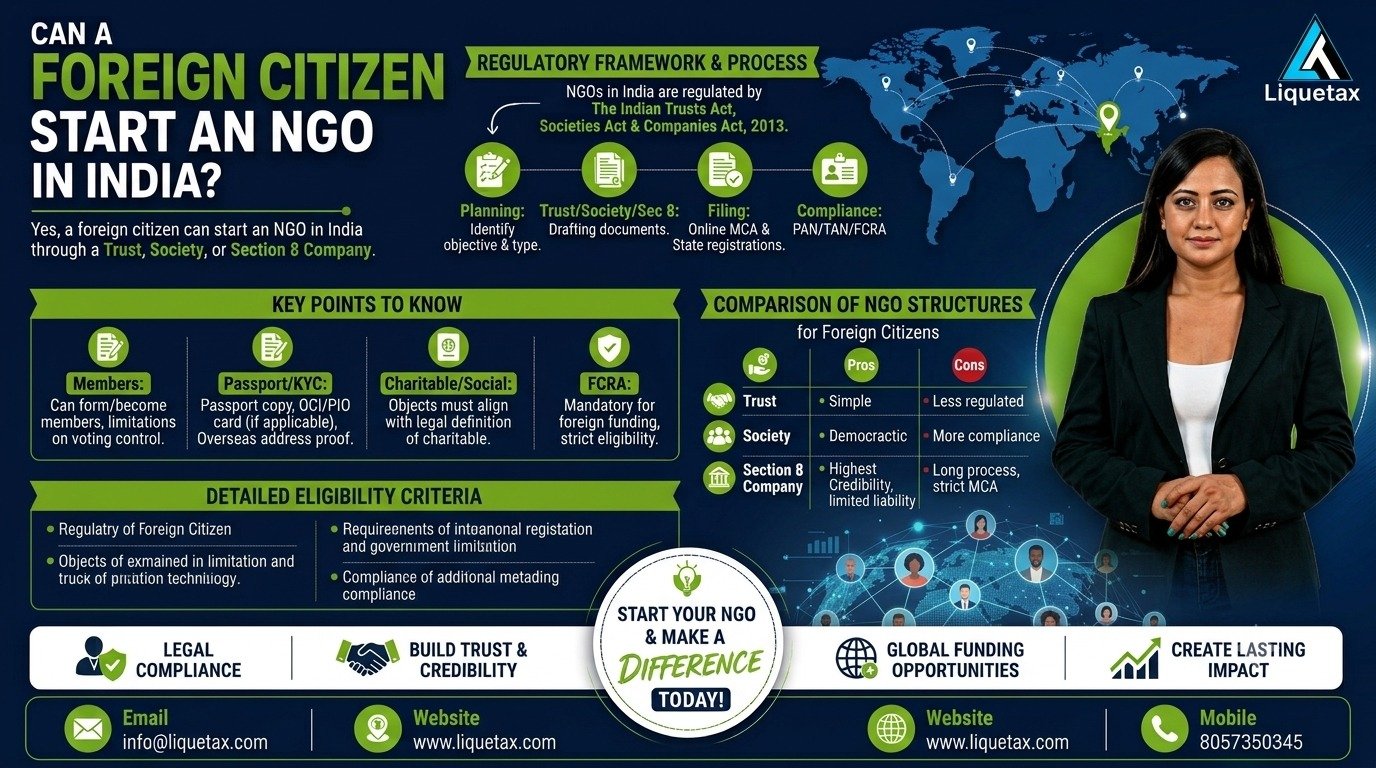
Yes, foreign citizens can register an NGO in India, but with conditions under FCRA.
📜 FCRA Registration
If you receive foreign funding, FCRA registration is mandatory. It's a key step for foreign NGOs.
🏛️ Legal Structures
Choose from Trust, Society, or Section 8 Company. Each has its own process and benefits.
🤝 Compliance
Annual filings, audits, and FCRA returns are essential to keep the NGO compliant.
🎬 Watch: Can a Foreign Citizen Start an NGO in India? (Explained)
 ▶ Tap to play
Introduction: Can a Foreign Citizen Start an NGO in India?
Yes, a foreign citizen can start an NGO (Non-Governmental Organization) in India, but the process involves specific legal requirements. The most important is compliance with the Foreign Contribution Regulation Act (FCRA), which regulates foreign funding. Foreign nationals can register as a Trust, Society, or Section 8 Company, but they must have a resident Indian on the board and follow strict reporting norms. This guide explains the entire process, eligibility, and how Liquetax makes it simple.
What is an NGO in India?
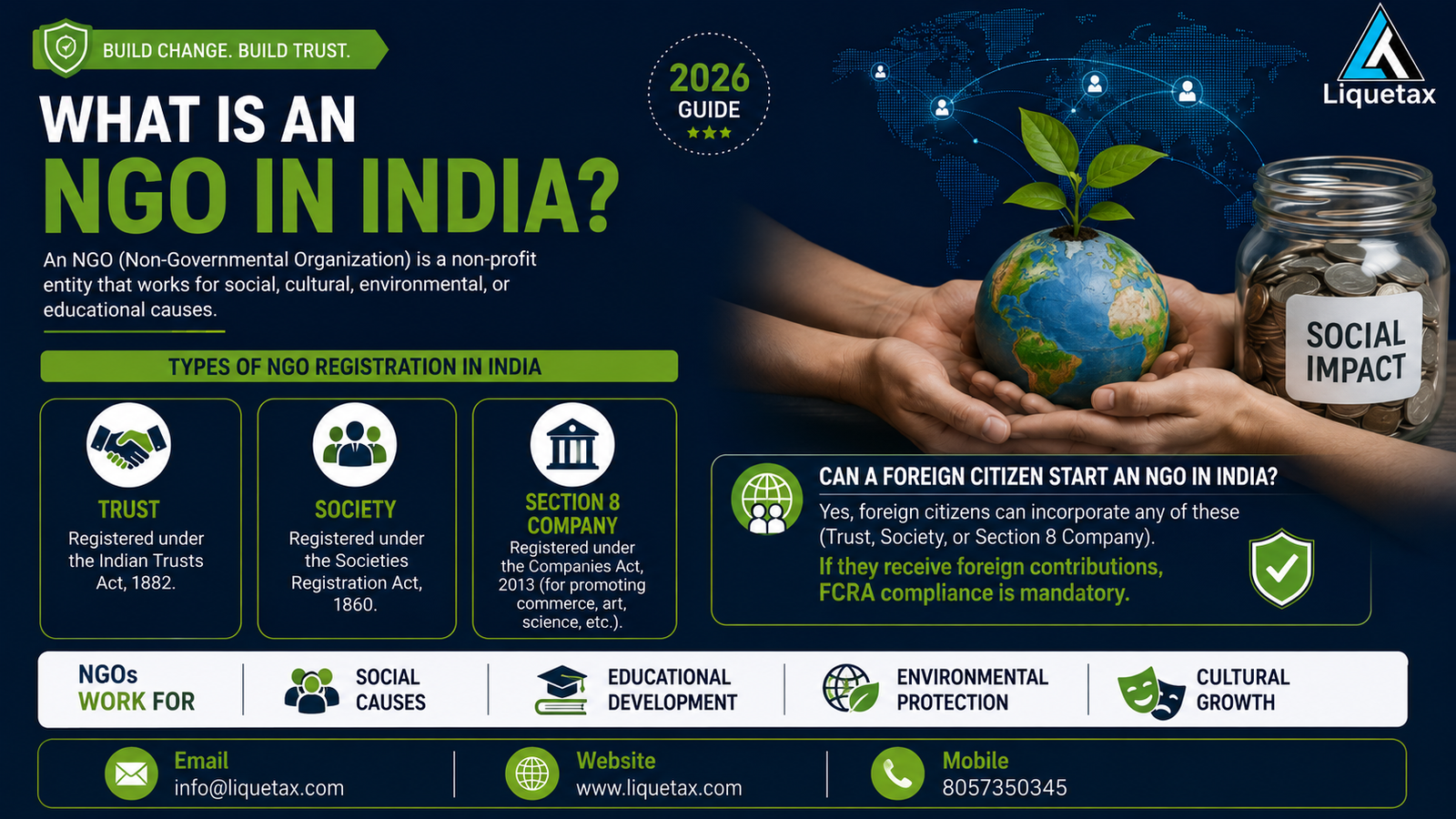
An NGO (Non-Governmental Organization) is a non-profit entity that works for social, cultural, environmental, or educational causes. In India, NGOs can be registered as:
- Trust: Registered under the Indian Trusts Act, 1882.
- Society: Registered under the Societies Registration Act, 1860.
- Section 8 Company: Registered under the Companies Act, 2013 (for promoting commerce, art, science, etc.).
Foreign citizens can incorporate any of these, but they must comply with FCRA if they receive foreign contributions.
Why NGO Registration Matters for Foreign Citizens
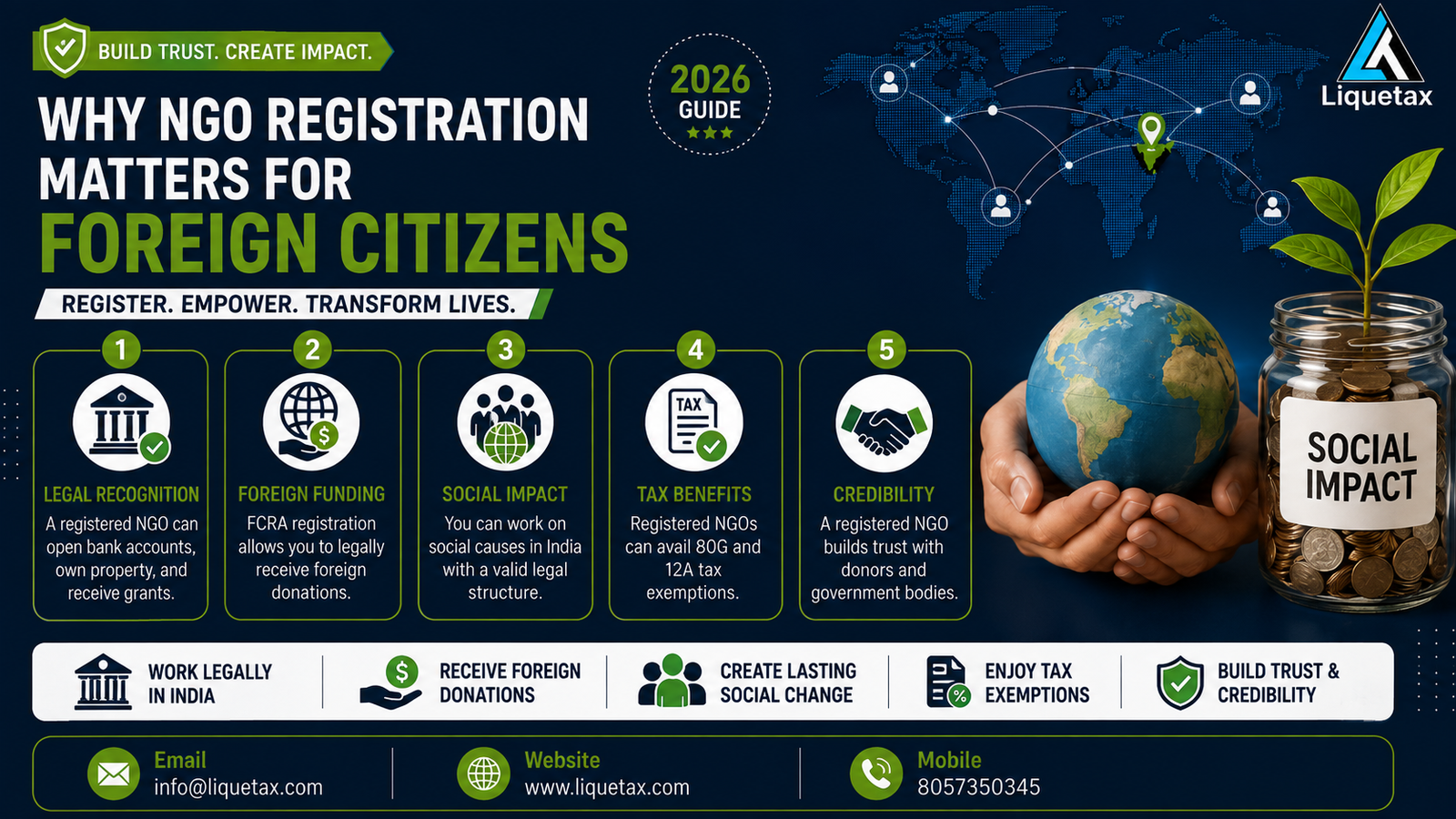
- Legal recognition: A registered NGO can open bank accounts, own property, and receive grants.
- Foreign funding: FCRA registration allows you to legally receive foreign donations.
- Social impact: You can work on social causes in India with a valid legal structure.
- Tax benefits: Registered NGOs can avail 80G and 12A tax exemptions.
- Credibility: A registered NGO builds trust with donors and government bodies.
Eligibility & Requirements for Foreign Citizens
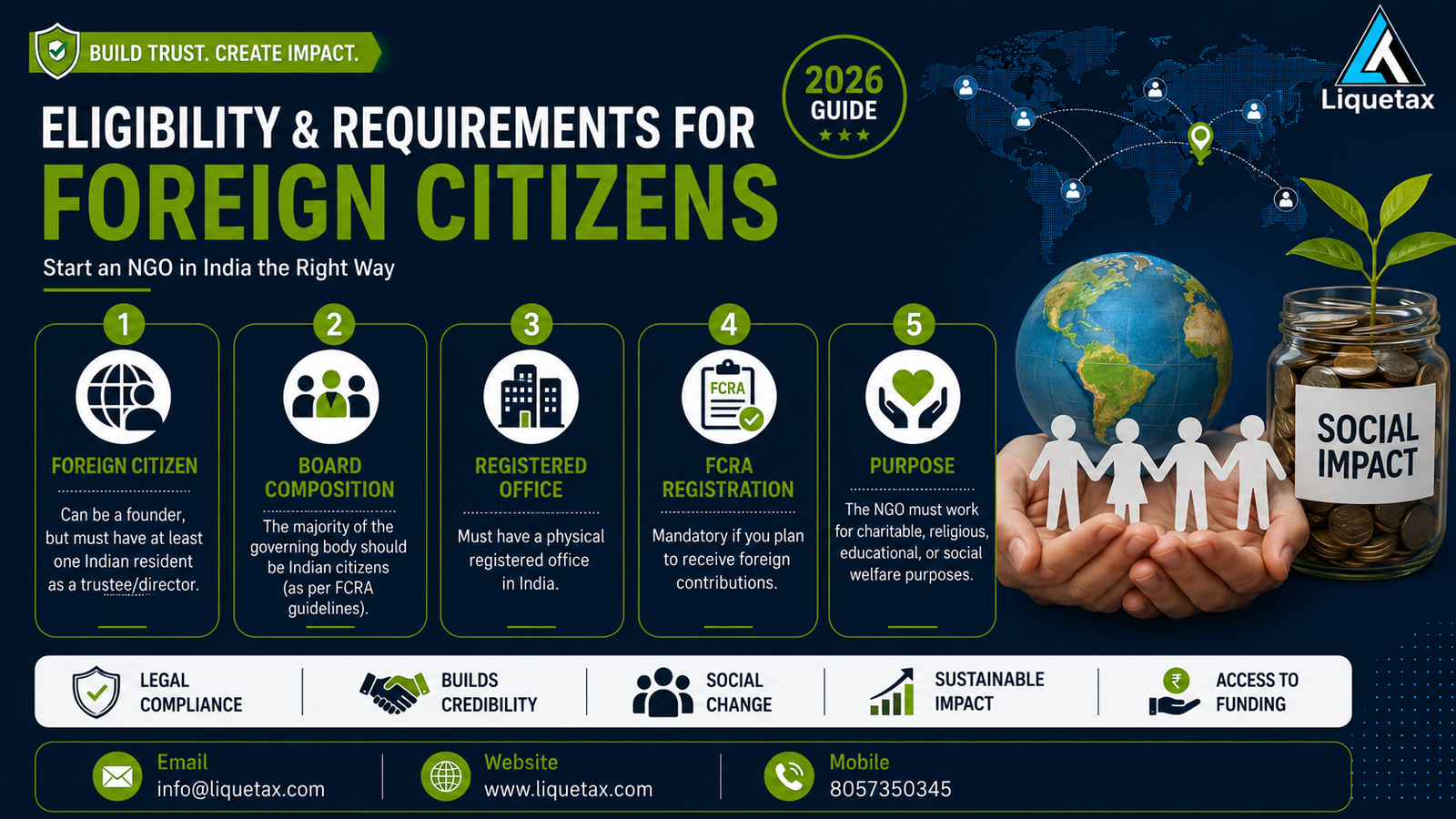
- Foreign citizen: Can be a founder, but must have at least one Indian resident as a trustee/director.
- Board composition: The majority of the governing body should be Indian citizens (as per FCRA guidelines).
- Registered office: Must have a physical registered office in India.
- FCRA registration: Mandatory if you plan to receive foreign contributions.
- Purpose: The NGO must work for charitable, religious, educational, or social welfare purposes.
Step-by-Step Process to Register an NGO in India (for Foreign Citizens)
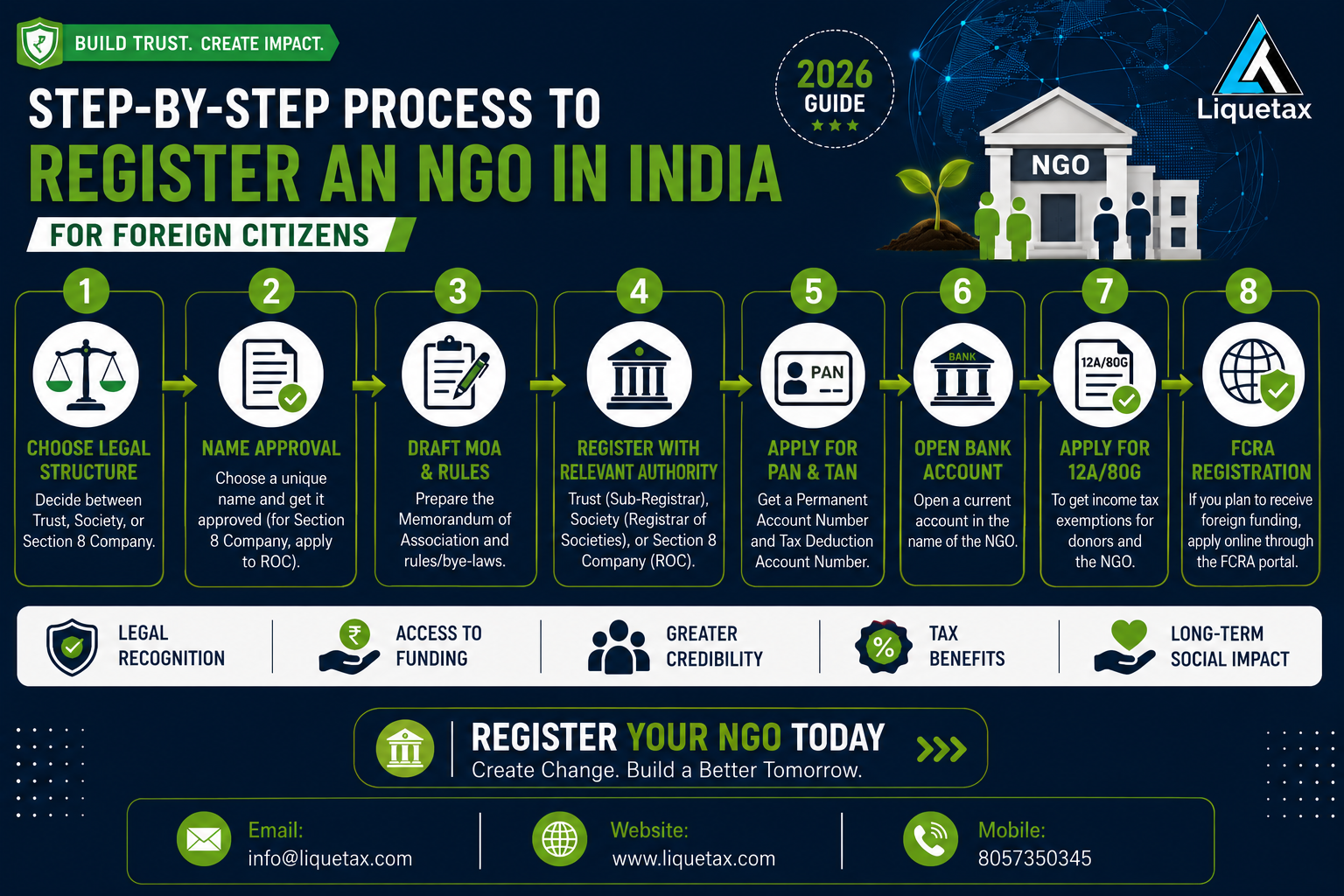
- Choose legal structure: Decide between Trust, Society, or Section 8 Company.
- Name approval: Choose a unique name for your NGO and get it approved (for Section 8 Company, apply to ROC).
- Draft MoA & rules: Prepare the Memorandum of Association and rules/bye-laws.
- Register with relevant authority: Trust (sub-registrar), Society (registrar of societies), or Section 8 Company (ROC).
- Apply for PAN & TAN: Get a Permanent Account Number and Tax Deduction Account Number for the NGO.
- Open bank account: Open a current account in the name of the NGO.
- Apply for 12A/80G: To get income tax exemptions for donors and the NGO.
- FCRA registration: If you plan to receive foreign funding, apply online through the FCRA portal.
Documents Required for NGO Registration (Foreign Citizens)
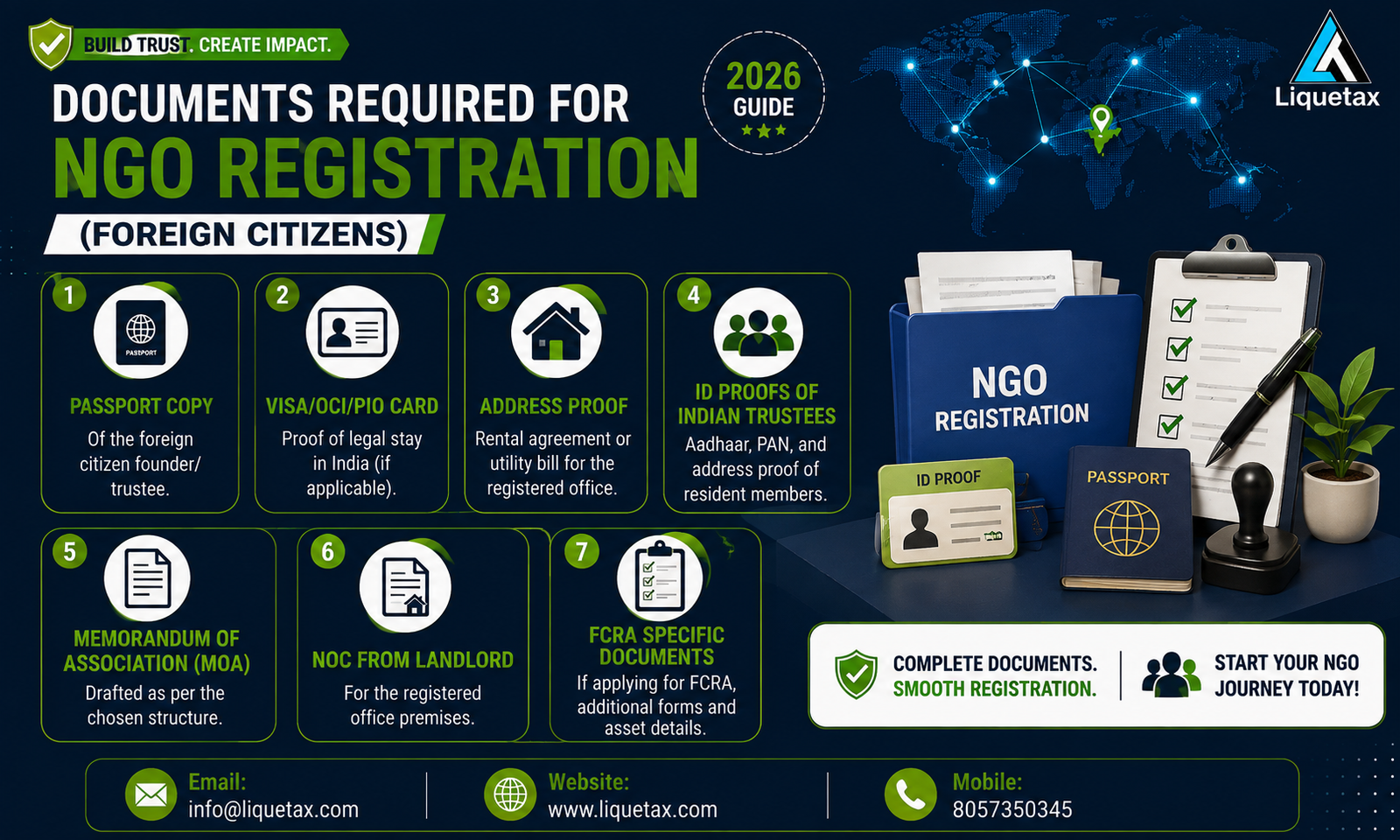
- Passport copy: Of the foreign citizen founder/trustee.
- Visa/OCI/PIO card: Proof of legal stay in India (if applicable).
- Address proof: Rental agreement or utility bill for the registered office.
- ID proofs of Indian trustees: Aadhaar, PAN, and address proof of resident members.
- Memorandum of Association (MoA): Drafted as per the chosen structure.
- NOC from landlord: For the registered office premises.
- FCRA specific documents: If applying for FCRA, additional forms and asset details.
Government Fees & Costs for NGO Registration
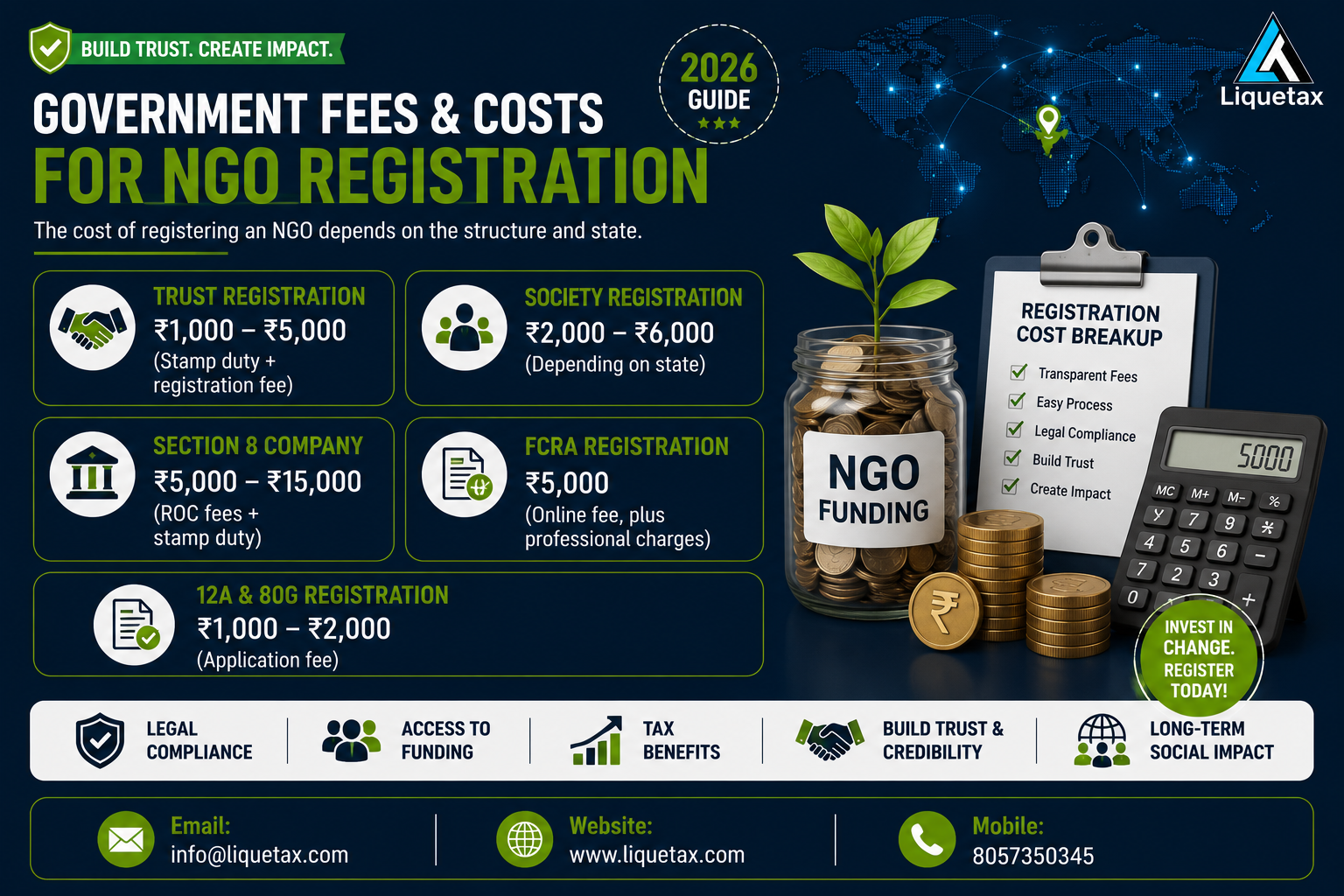
The cost of registering an NGO depends on the structure and state:
- Trust registration: ₹1,000 – ₹5,000 (stamp duty + registration fee).
- Society registration: ₹2,000 – ₹6,000 (depending on state).
- Section 8 Company: ₹5,000 – ₹15,000 (ROC fees + stamp duty).
- FCRA registration: ₹5,000 (online fee, plus professional charges).
- 12A & 80G: ₹1,000 – ₹2,000 (application fee).
How Liquetax Can Help Foreign Citizens Set Up an NGO in India
- Eligibility check: We assess your profile and guide you on the best structure.
- Document preparation: We draft MoA, rules, and other required documents.
- Registration filing: We file the application with the appropriate authority.
- FCRA assistance: We help you apply for FCRA registration and guide you on compliance.
- Tax compliance: We assist with 12A, 80G, and annual tax filings.
- Post-registration support: Annual returns, audits, and FCRA renewals.
Choose Liquetax for a hassle-free NGO registration experience in India.
FAQs on Starting an NGO in India as a Foreign Citizen
Yes, but the NGO must have at least one Indian resident as a trustee/director as per FCRA and Indian laws.
Yes, if you receive foreign contributions, you must obtain FCRA registration. Without it, foreign funding is illegal.
Typically 2-4 months, depending on the structure and government processing time. Liquetax can expedite the process.
Yes, the NGO can apply for 80G and 12A registration, making donations tax-exempt for Indian donors.
Start Your NGO in India – Liquetax Makes It Easy!
Whether you're a foreign citizen or NRI, we help you register your NGO, get FCRA, and stay compliant. Get started today!