

LIQUETAX franchise enquiries: what to confirm first
Explore a LIQUETAX franchise enquiry with questions about written terms, service responsibilities, costs, support and exit arrangements before committing.
Read article →LIQUETAX KNOWLEDGE CENTRE
FIND YOUR NEXT STEP
Search the full guide library or choose a topic. For a useful order to read in, explore four reading paths.
FIND THE RIGHT STARTING POINT
Use articles to understand a question and prepare your records. Use a service hub to compare situations, the work involved and a next step. An article is general information, not a decision on your eligibility or an agreed engagement. Check its dates, official references and any review notice before acting.
Understand authorship, source checks and professional review.
Last updated: . LIQUETAX maintains this directory. Check each article’s author, filing period and source notes before acting; general guides are not personal professional advice.
For official forms and instructions, start with the MCA company portal, GST portal or Income Tax e-filing portal, then use the relevant guide to prepare your records and questions.
Showing 1–24 of 205. Choose a guide to read its scope, source references and next steps.
Explore a LIQUETAX franchise enquiry with questions about written terms, service responsibilities, costs, support and exit arrangements before committing.
Read article →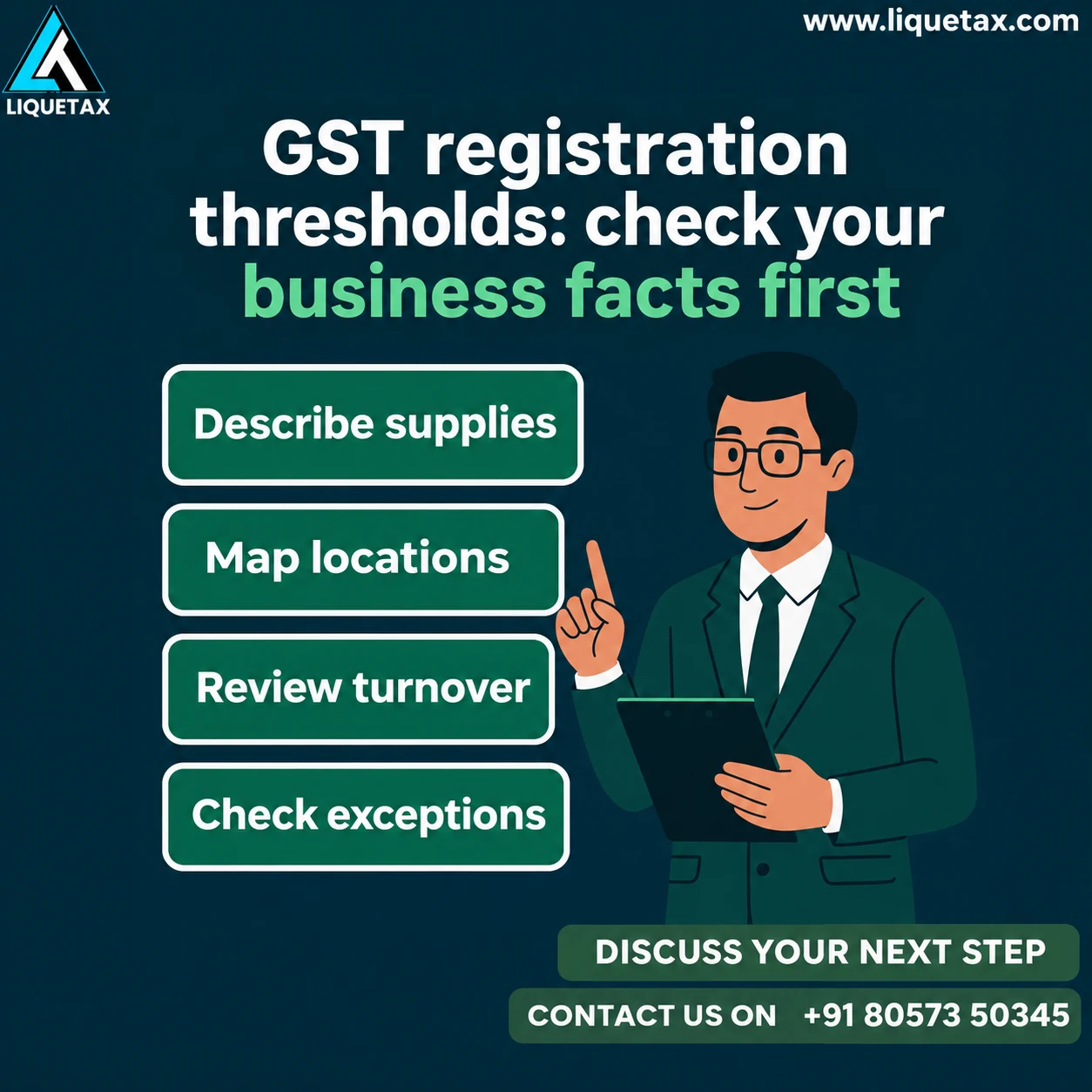
Check your activity, state, PAN-wide turnover and special registration rules before deciding whether your Indian business needs GST registration.
Read article →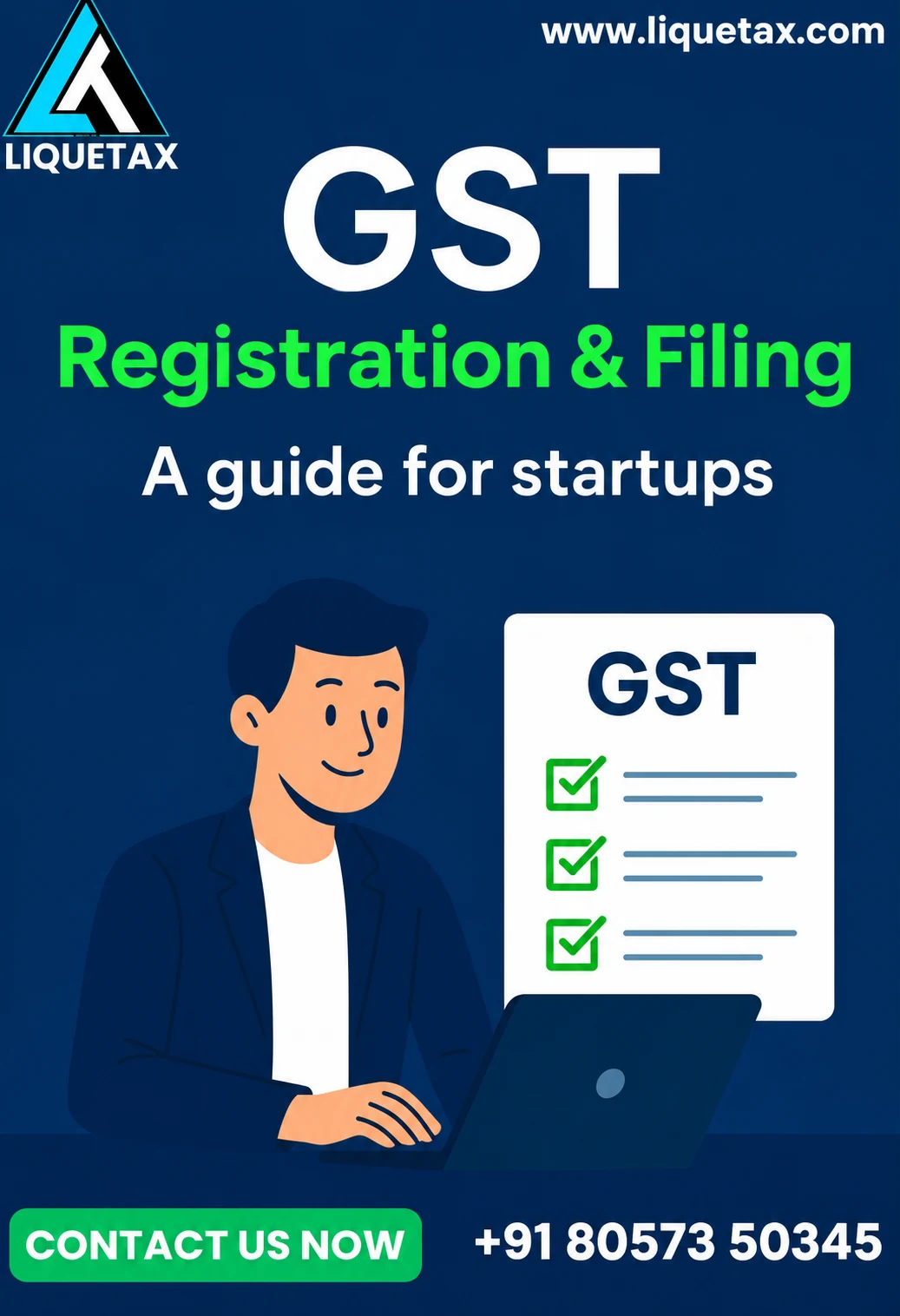
Build a startup GST workflow: registration documents, GSTR-1 and GSTR-3B, monthly or QRMP filing, reconciliation, nil-period checks and filing records.
Read article →Plan GST registration for LLPs with checks for business activity, turnover and locations, plus consistent identity, premises and signatory documents.
Read article →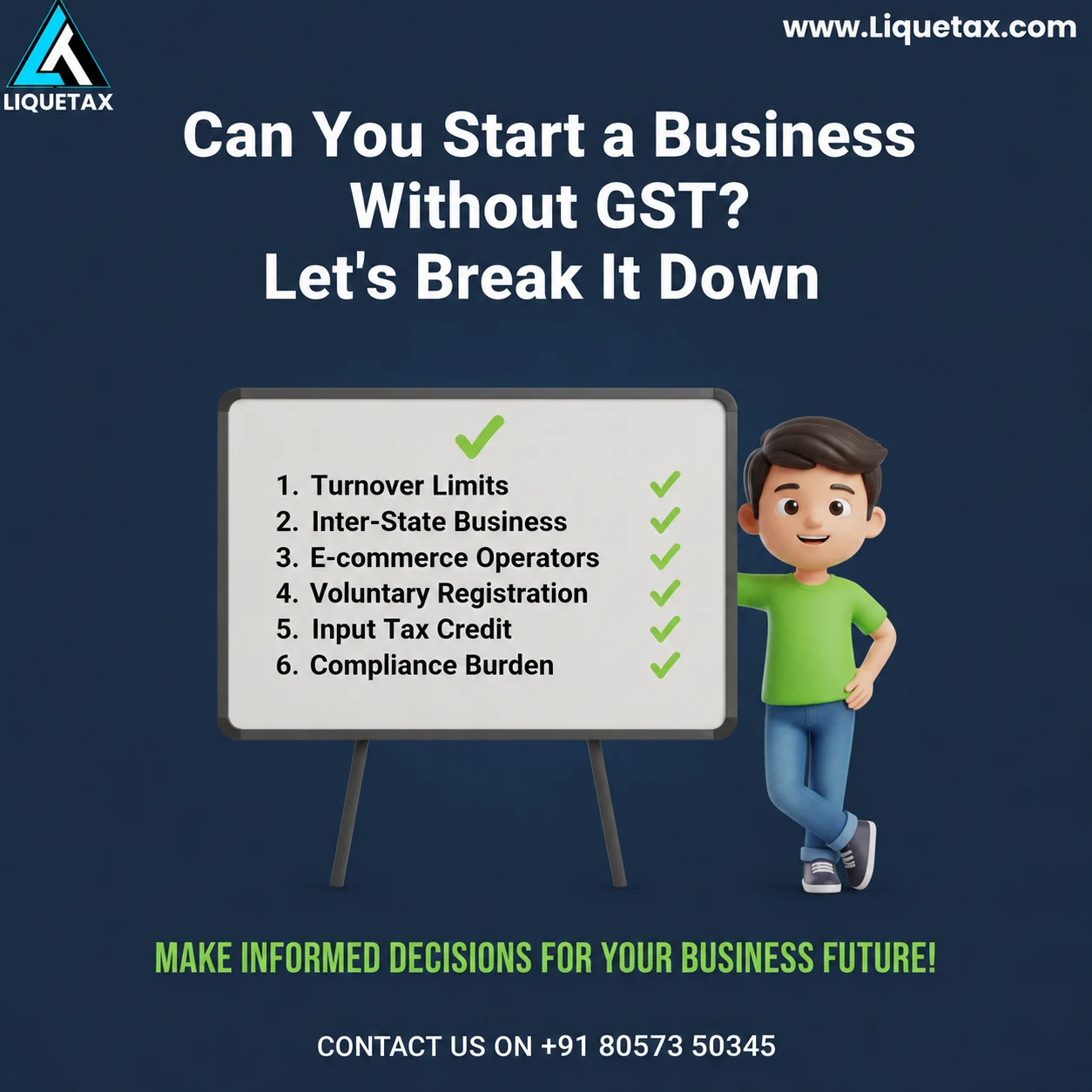
Understand when a business may begin without GST registration and which activity, turnover, state and platform checks you should complete first.
Read article →
Organise domestic and overseas freelance contracts, turnover and payment records before checking GST registration and supply treatment in India.
Read article →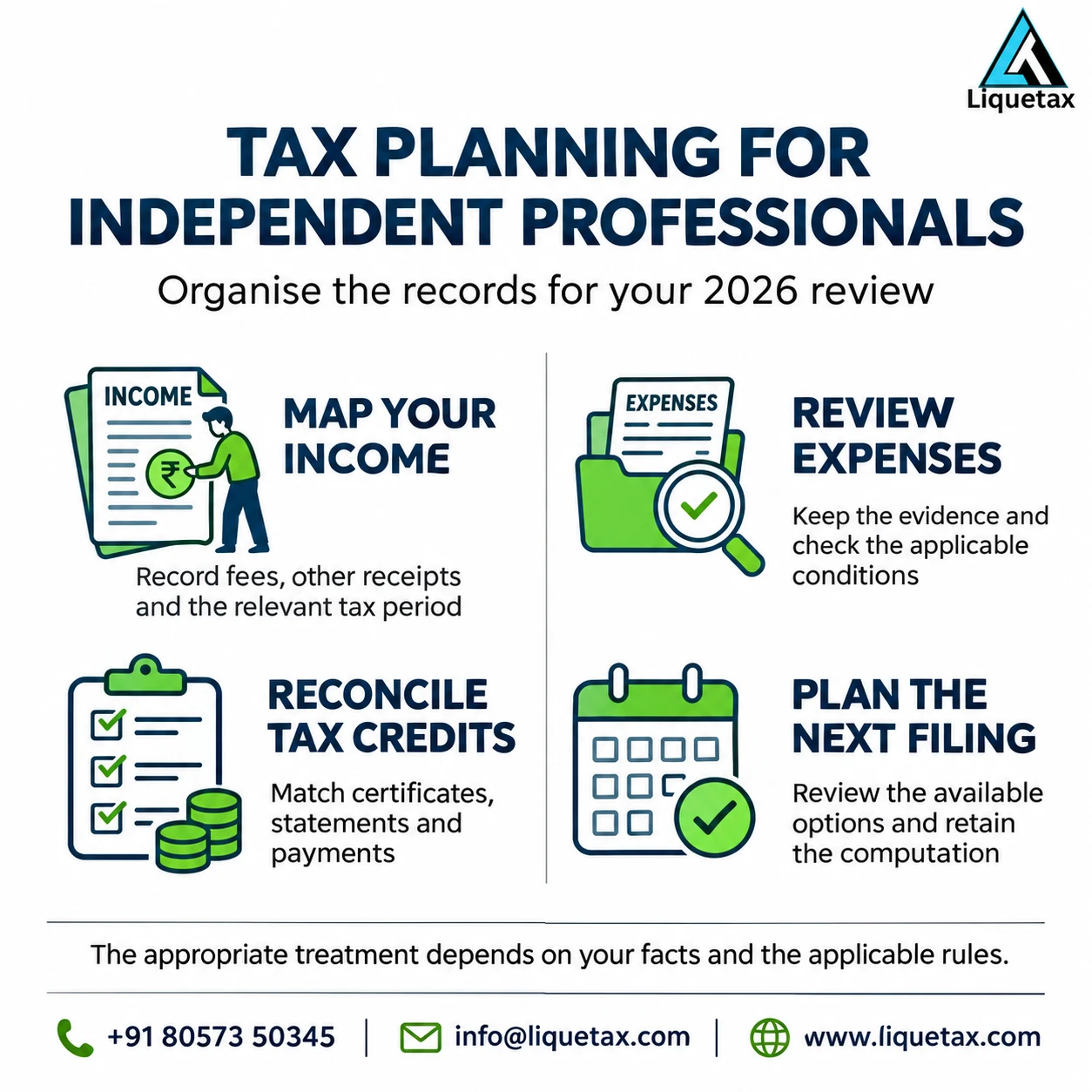
Organise freelance income, expenses, tax credits and overseas receipts, then review the correct tax period, filing route and lawful planning options.
Read article →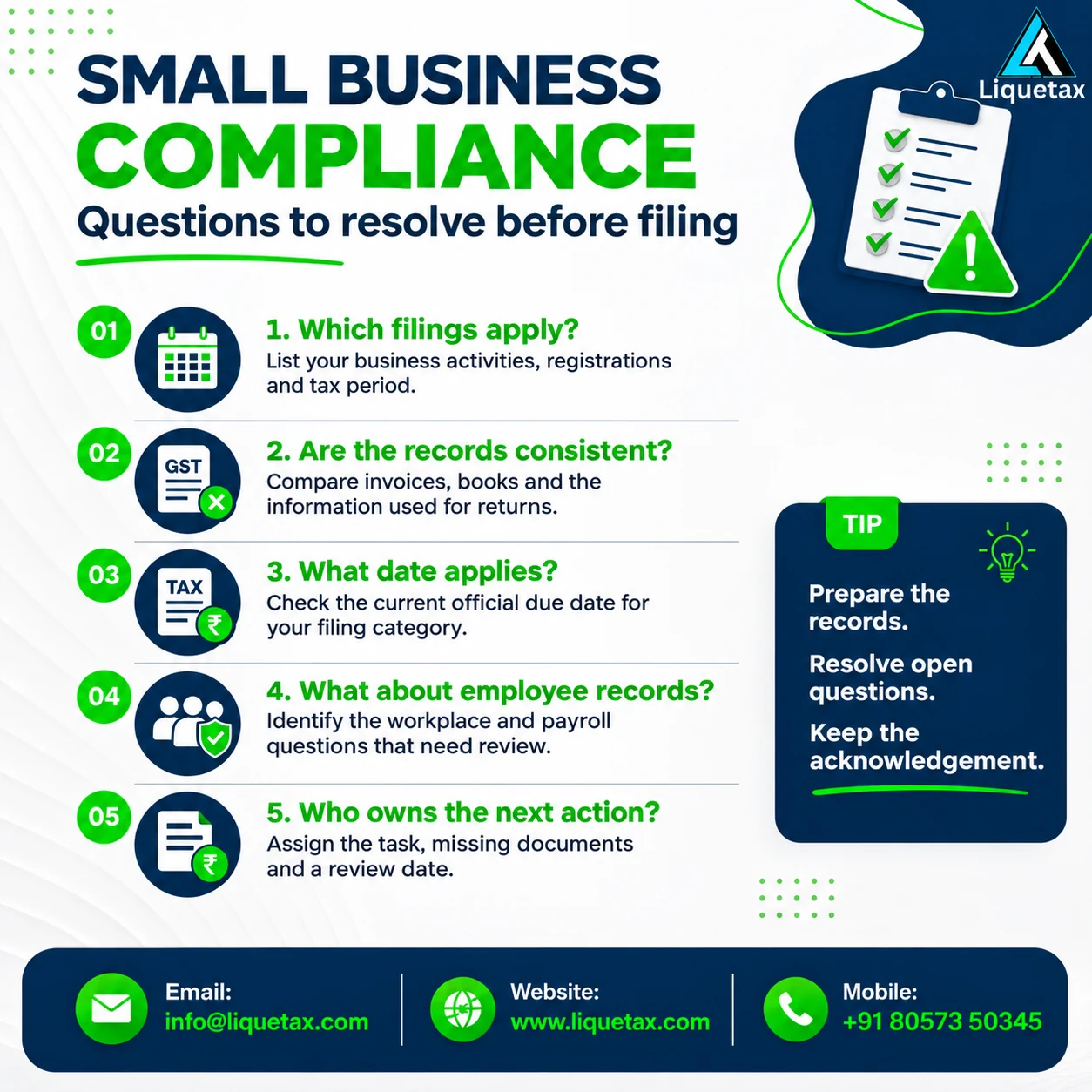
Use these small business compliance FAQs to check registration, records, filing responsibilities and practical next steps for your Indian business.
Read article →Organise company records, pending tasks, responsibilities and filing evidence after incorporation. Use this practical checklist for a clearer compliance handover.
Read article →
Plan your online store launch with trademark and brand checks. Separate name clearance, GST, product permissions and marketplace requirements.
Read article →
Prepare founders, name choices, ownership, registered office and SPICe+ filing inputs. Distinguish incorporation approval from later tax and compliance work.
Read article →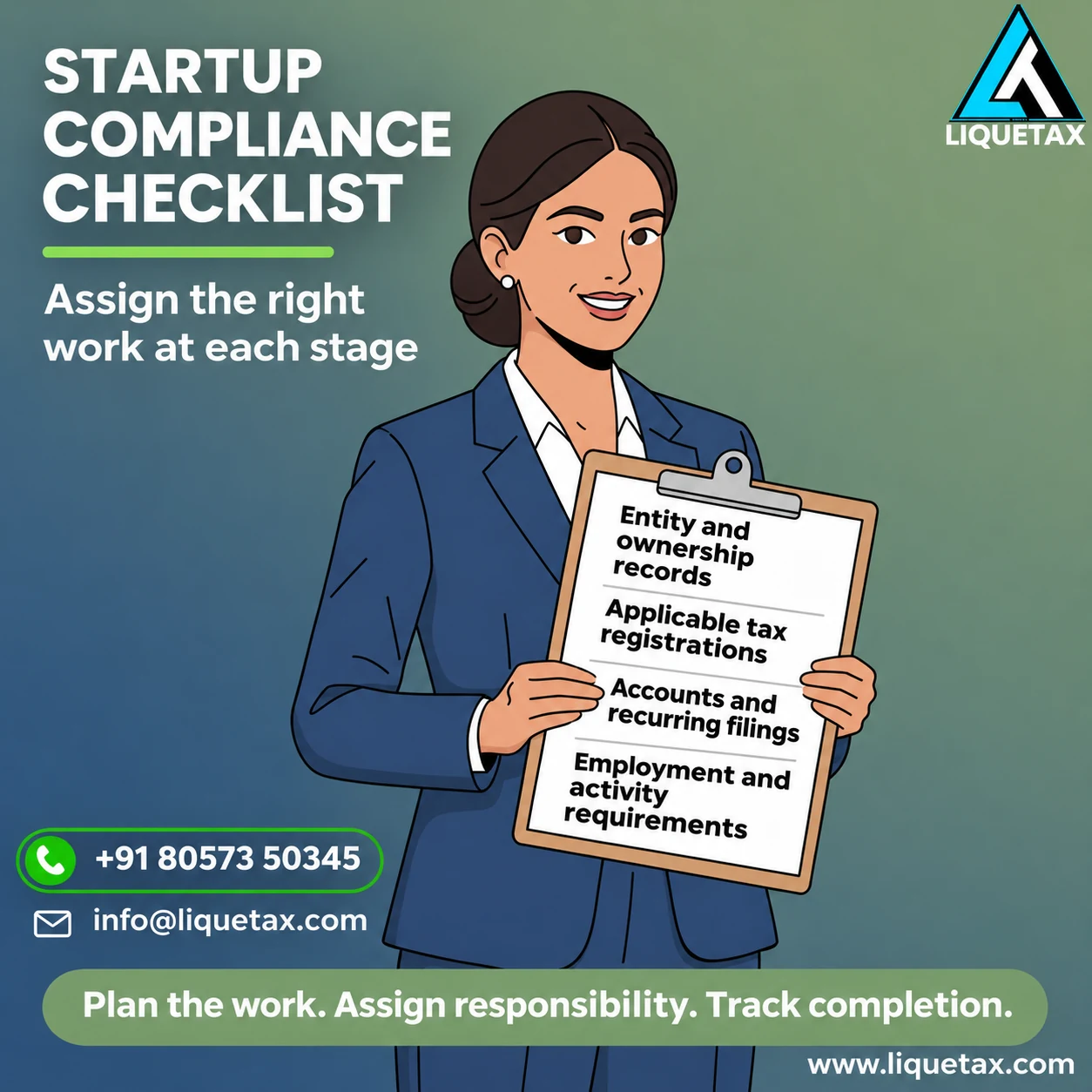
Plan the steps between business registration and a first sale: applicable licences, invoices, customer terms, payments, records and filing responsibilities.
Read article →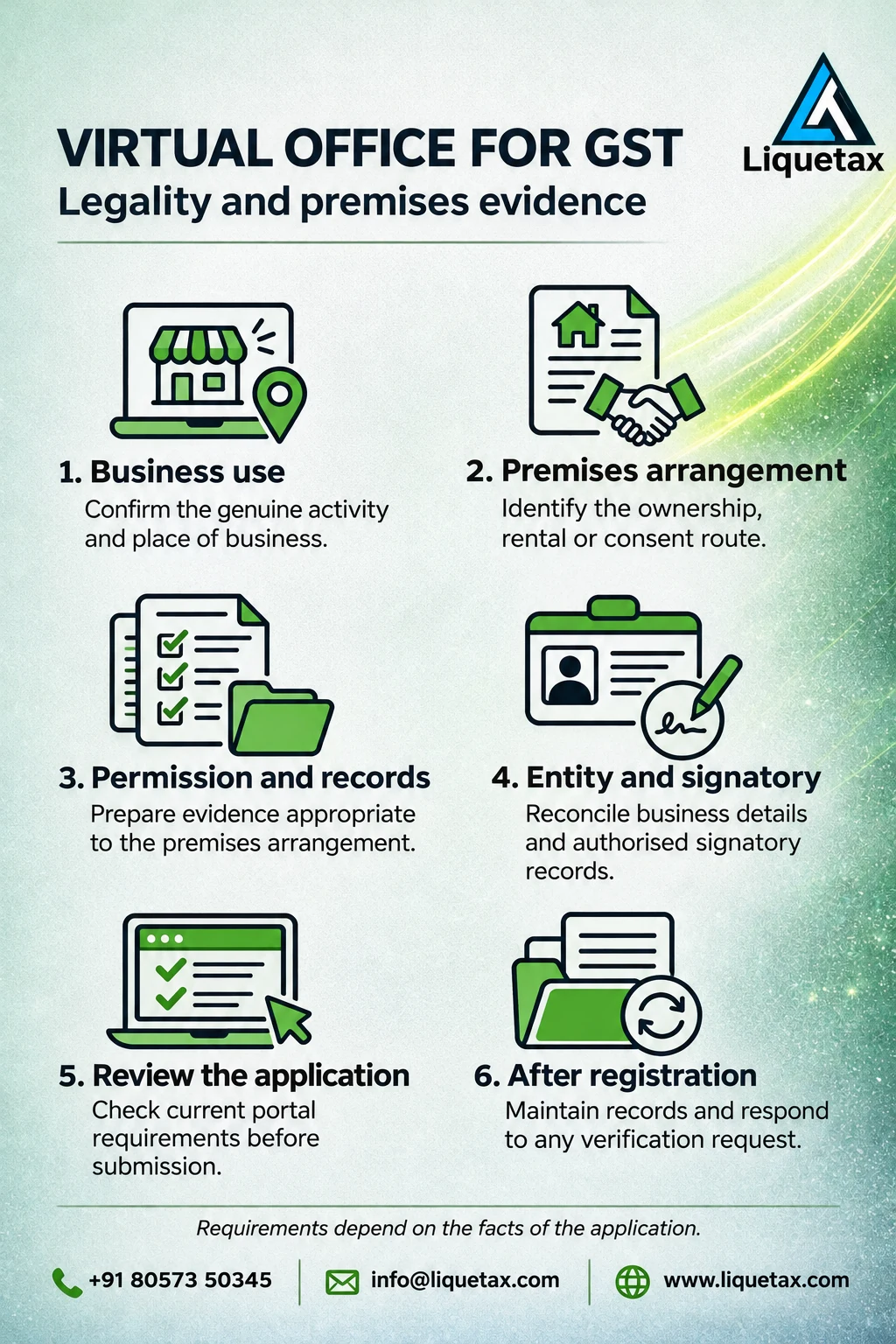
Check when a shared or virtual office can support GST registration, with the correct rental, consent or ownership evidence and post-registration steps.
Read article →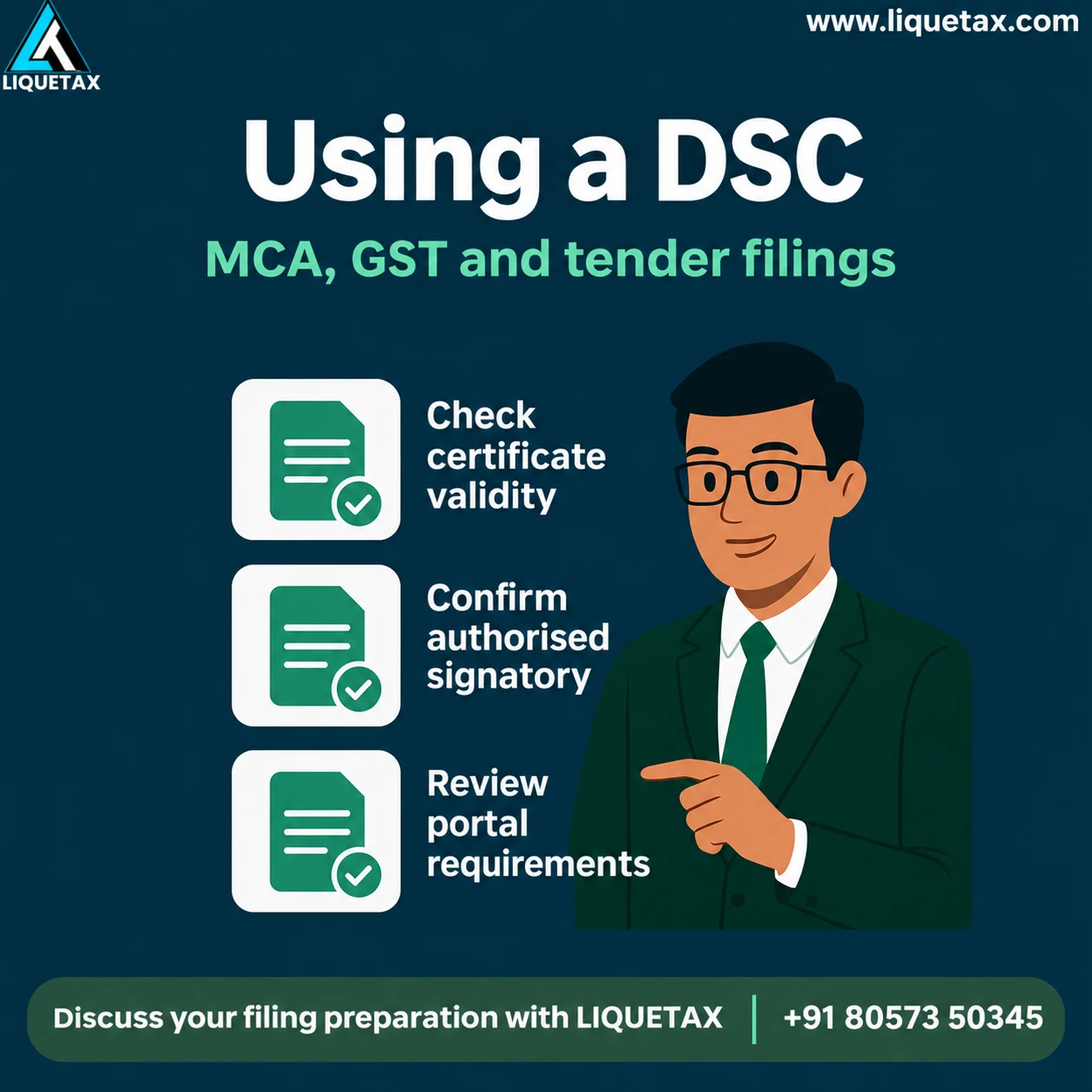
Use your DSC safely for MCA, GST and tender filings: check the signatory, portal requirements, certificate validity and control of signing credentials.
Read article →
Plan your e-commerce seller setup with entity, GST and platform checks, bank records, product permissions and marketplace settlement responsibilities.
Read article →
Review Udyog Aadhaar and Udyam registration records before using an old deadline claim. Check the official route, current details and linked permissions.
Read article →Separate virtual-office provider KYC from company-address and GST premises evidence. Check consent, ownership, access and the actual intended use.
Read article →Prepare workplace safety records, responsibilities and audit evidence for ISO 45001. Get a clear LIQUETAX scope without relying on fixed cost or time claims.
Read article →Map environmental activities, organise operating evidence and plan your ISO 14001 preparation. Separate certification from permits and approval decisions.
Read article →Prepare your quality-management scope, process records and audit evidence. Review the current ISO 9001 edition and agree a practical LIQUETAX support plan.
Read article →
Understand why Udyam does not guarantee a loan. Prepare cash-flow evidence, lender questions and a practical funding checklist with LIQUETAX support.
Read article →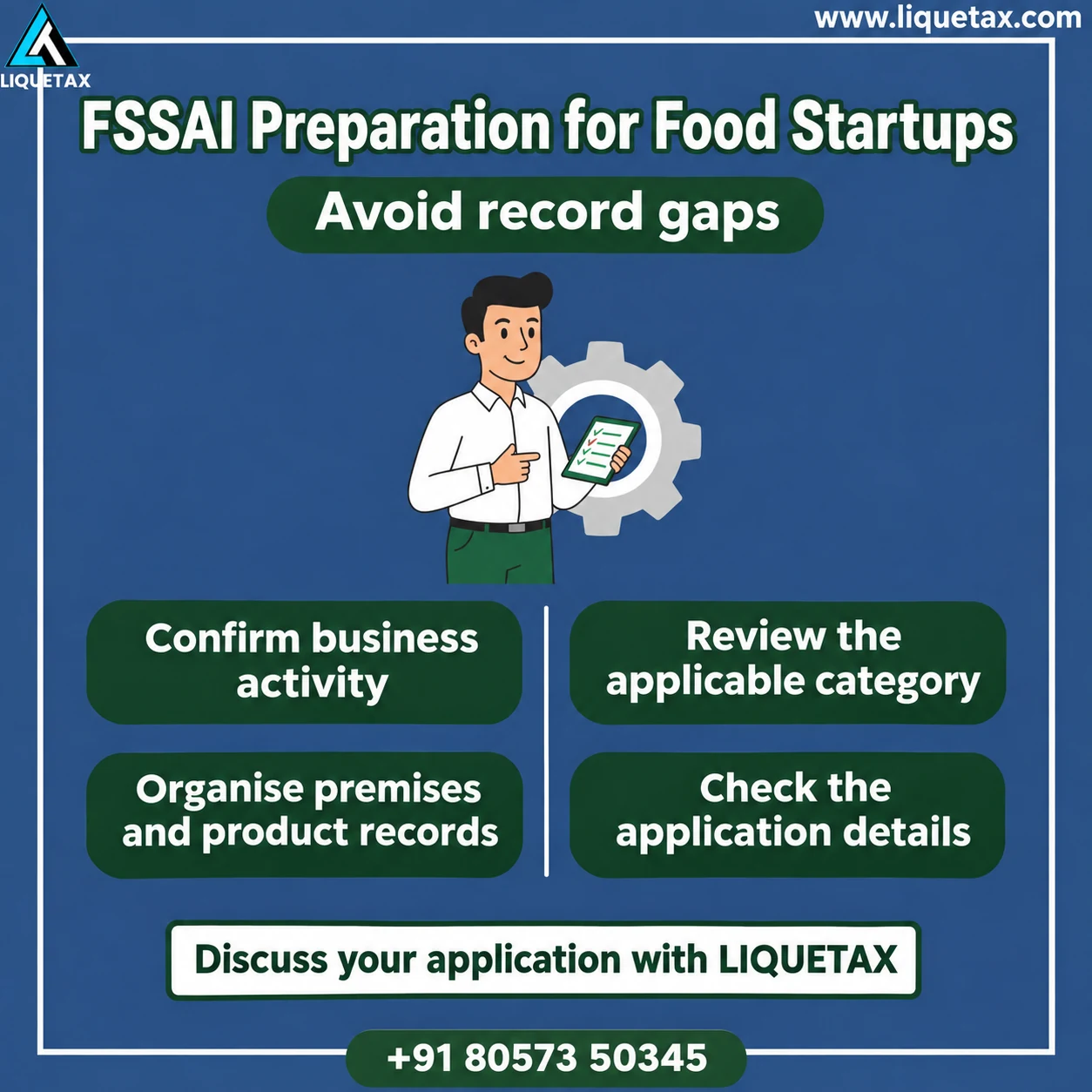
Prepare your food-business activity, premises and records under the revised FSSAI framework. Get a clear application checklist and written LIQUETAX scope.
Read article →Build a professional-income ledger that explains gross fees, client withholding, platform deductions, expenses and the chosen computation method.
Read article →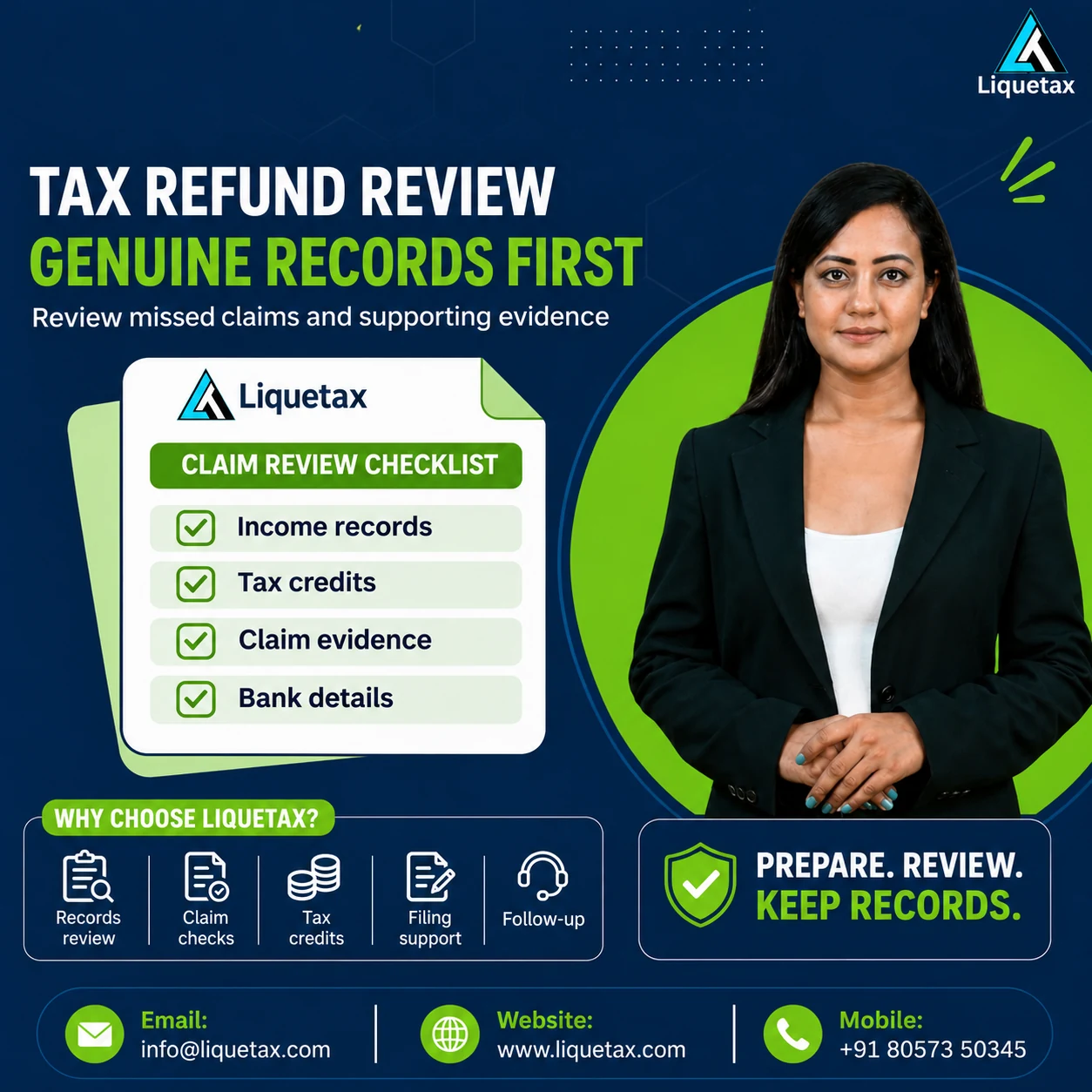
Review complete income, genuine deductions and tax credits before claiming a refund. Compare lawful options without fabricated expenses or investments.
Read article →A USEFUL ORDER TO READ IN
Choose the question you are working on. Each path connects a practical guide, a preparation step and the relevant service.
Use the structure checker to organise the facts you need for a comparison.
Look at ownership, funding and ongoing responsibilities together.
Check how an OPC differs and what a future co-owner could change.
Identify the documents received, unfinished work and who owns the next action.
Connect applicable licences, invoicing, customer terms and business records.
Organise your business facts for a professional to confirm the applicable obligations and dates.
Start with your activity, state, turnover and special registration rules.
Use the preparation checker to identify the identity, premises and signatory records to discuss.
Connect invoices, reconciliation, GSTR-1 and GSTR-3B with the applicable filing arrangement.
Review the filing question for your circumstances and relevant income period.
Bring income, tax credits and genuine supporting evidence into one checklist.
Understand preparation, submission, verification and the records to keep afterward.