Factors to compare
- Nature and place of supply
- Turnover and registration triggers
- Interstate, export and marketplace transactions
REGISTRATION, RETURNS & RESPONSES
CHOOSE YOUR NEXT STEP
Check the business facts before choosing a registration route.
Assign responsibility for the first return cycle after registration.
Resolve evidence and credit questions before assuming a tax saving.
Use the actual notice, deadline and affected periods to define a response.
A refund claim needs its own category, evidence and follow-up scope.
Content updated . Individual guides retain their own source and review information.
WHO THIS HUB HELPS
DECISION SUPPORT
You may not need this route when: A person whose activities and turnover do not create a current registration or filing requirement may only need an applicability review.
COMPARE YOUR STARTING POINT
Use these questions to frame an enquiry, not to decide statutory eligibility. Follow the service guide that matches the work you need.
| Your situation | Facts to compare | Next guide |
|---|---|---|
| Unsure whether registration applies | Activities, supply locations, turnover records and any specific registration trigger; do not use one threshold as a universal answer. | GST registration and applicability → |
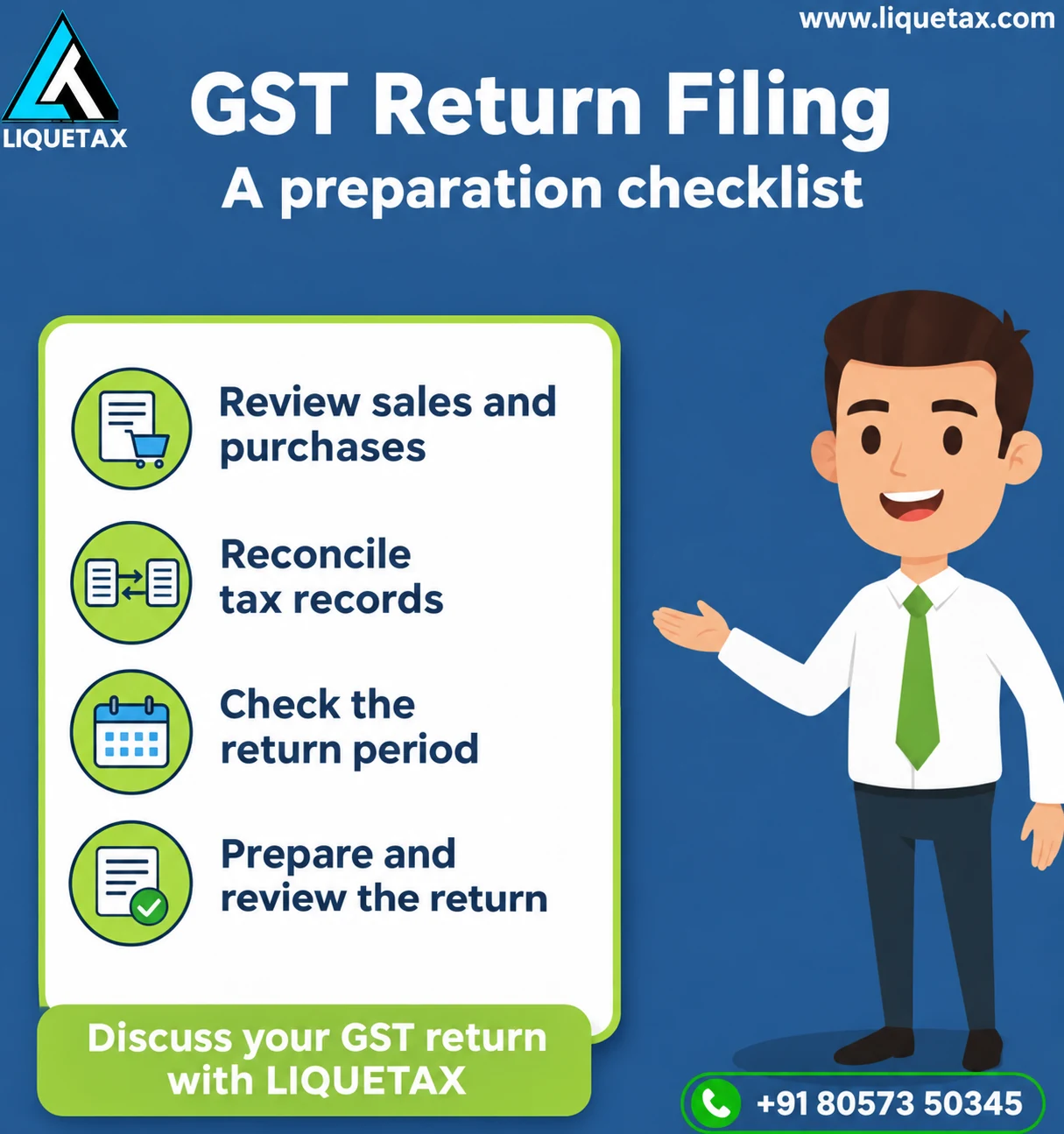
| Already registered and preparing returns | GSTIN, filing periods, invoices, credit notes and differences between sales, purchases and portal records. | Plan the GST return workflow → |
| A notice or mismatch needs attention | The complete notice, reference number, period, stated response date and the underlying records before choosing a reply. | Prepare a GST notice response → |
SERVICE PATHS
LIKELY NEXT LIFECYCLE STEPS
GST return workflow →Income tax return coordination →GST notice response →EDUCATIONAL READING
These explain a related question; they are separate from a service engagement. Check each guide's scope, source information and dates before relying on it.
HOW TO AGREE THE WORK
Share your business activity, present stage and the work you need help with.
Confirm the work, fees, review responsibility and follow-up included in the engagement.
Organise the agreed documents, check the details and identify anything still missing.
Check the prepared work before authorising the next step, then retain the agreed handover records.
COMMON QUESTIONS
No. Applicability depends on current law and facts such as turnover, supplies, location and specific registration triggers.
Yes. Registration creates ongoing record and return obligations that depend on the taxpayer's applicable filing profile.
Keep the full notice, its reference and stated response date, the affected periods and relevant filings or invoices. Avoid sharing only a cropped screenshot; confirm who will assess the notice and what the response engagement includes.
If the records are complete and agree, discuss the applicable return and period. If sales, purchase credit or portal information do not reconcile, explain the differences first and agree the reconciliation work. A recurring filing quotation should identify whether historical corrections or credit review are included.