
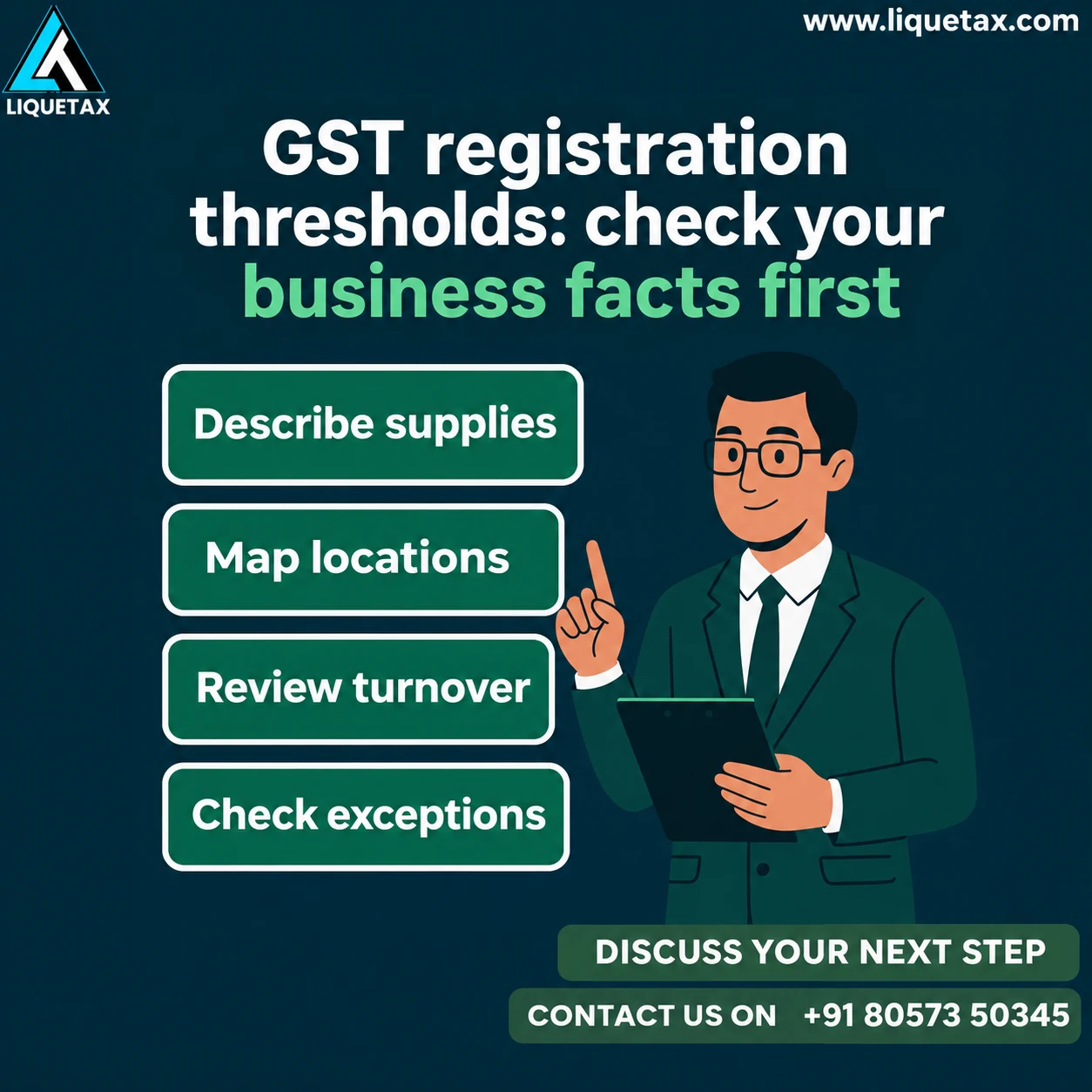
- 1. Describe supplies
Separate goods, services and mixed activities.
- 2. Map locations
Record operating states and customer locations.
- 3. Calculate turnover
Review the relevant PAN-wide figures.
- 4. Check exceptions
Confirm compulsory rules and notified relief.
Why one threshold does not fit every business
Under section 22, the usual service threshold is ₹20 lakh, with ₹10 lakh applying in specified special-category situations. The higher ₹40 lakh limit for exclusive goods suppliers is conditional. State, activity and notification checks matter. Do not apply a headline figure copied from a social-media post to every business.
Identify whether you supply only goods, only services or both. Record any exempt supplies separately and explain unusual receipts to your adviser. Registration liability, the tax rate on a product and eligibility for a small-taxpayer scheme are separate questions. Getting one answer right does not settle the others.
Prepare a turnover working that someone can check
Create a month-wise sales register using invoices, credit notes and the books. Compare it with bank receipts and marketplace settlements, but do not assume every credit to your bank is a sale. Loans, owner contributions, advances and cancellations need correct treatment. Keep the underlying records instead of sending only a rounded annual total.
If the same PAN operates more than one business or location, explain the complete activity. Looking only at one shop's receipts can miss the relevant aggregate figure. Have the calculation reviewed when your transactions include exempt supplies, exports, refunds or different business lines. Save the conclusion and the assumptions behind it.
Check compulsory registration and exceptions separately
Transactions through a marketplace, across states or under a reverse-charge arrangement can require an additional legal check. Some categories have notified exemptions or conditions. Neither 'all interstate sales require registration' nor 'below the limit means no registration' is a reliable universal rule.
Before you launch a new channel, describe whether the platform sells your goods, collects payment, provides leads or acts only as a listing service. Ask which provision applies to that arrangement. A platform's onboarding policy can also be stricter than your legal registration obligation; record both answers.
What to do after the review
If registration is needed, prepare consistent identity, constitution, premises and signatory records. Agree who will manage invoicing, books and returns once the GSTIN is active. If registration is not currently required, keep a turnover tracker and review it when sales, locations or business activities change. A dated decision with supporting records is more useful than an unsupported yes or no.
Facts to bring to a GST applicability review
| Record | Why it matters |
|---|---|
| PAN and business structure | Connect all relevant activities and registrations. |
| Month-wise turnover | Show the calculation and supporting sales records. |
| Goods and services list | Identify exclusive-goods or mixed activity. |
| State and sales channels | Check state-specific and special-category conditions. |
| Existing GSTINs and notices | Avoid duplicate or conflicting applications. |
Illustrative example
Illustrative example: a proprietor sells goods from one shop and earns consulting income under the same PAN. The shop's turnover alone is not enough to choose a goods-only threshold. The review should consider both activities before deciding on registration.
Frequently asked questions
Is ₹40 lakh the limit for every Indian business?
No. It concerns eligible exclusive-goods suppliers under applicable conditions. Service and mixed businesses need a separate assessment.
Does profit determine GST registration?
Registration checks commonly use turnover and transaction categories. Low profit or a loss does not automatically remove an obligation.
Can I use only bank deposits to calculate sales?
Use invoices and books, then reconcile receipts. Bank credits can include amounts that are not sales and can miss unpaid invoices.
What if I open another branch?
Review the PAN-wide activity and state-wise registration requirements before the new location begins supplying.
Should I register voluntarily?
Assess customer needs, input-credit conditions, costs and ongoing filing responsibilities. Voluntary registration creates continuing obligations; it is a business decision.
Get clarity before your next filing
Bring the records listed above to a LIQUETAX conversation. Ask for the applicable work, documents, responsibilities and fee components in writing before you authorise a submission. Government charges, professional fees and applicable GST should be shown separately.
Book a conversationOfficial references
Check the linked authority for the rule, form and notification that applies to your facts and period. This guide explains preparation and does not record a professional opinion on an individual case.