
- 1. Describe the plan
Write what you sell and who will buy.
- 2. Check the law
Review turnover and transaction categories.
- 3. Check the channel
Confirm marketplace and customer requirements.
- 4. Keep watch
Monitor changes after the business starts.
Separate starting a business from registering for GST
Choosing a proprietorship, partnership, LLP or company answers ownership and structure questions. GST registration answers a tax question. A company incorporation certificate does not remove GST obligations, and a GST certificate does not replace incorporation or a sector-specific licence.
List the approvals needed for your actual product and location. Food, regulated products, local premises and employment arrangements can require independent checks. Avoid buying a registration bundle just because every certificate appears in a generic startup checklist. Ask which requirement applies and what evidence supports that answer.
When an unregistered launch may be possible
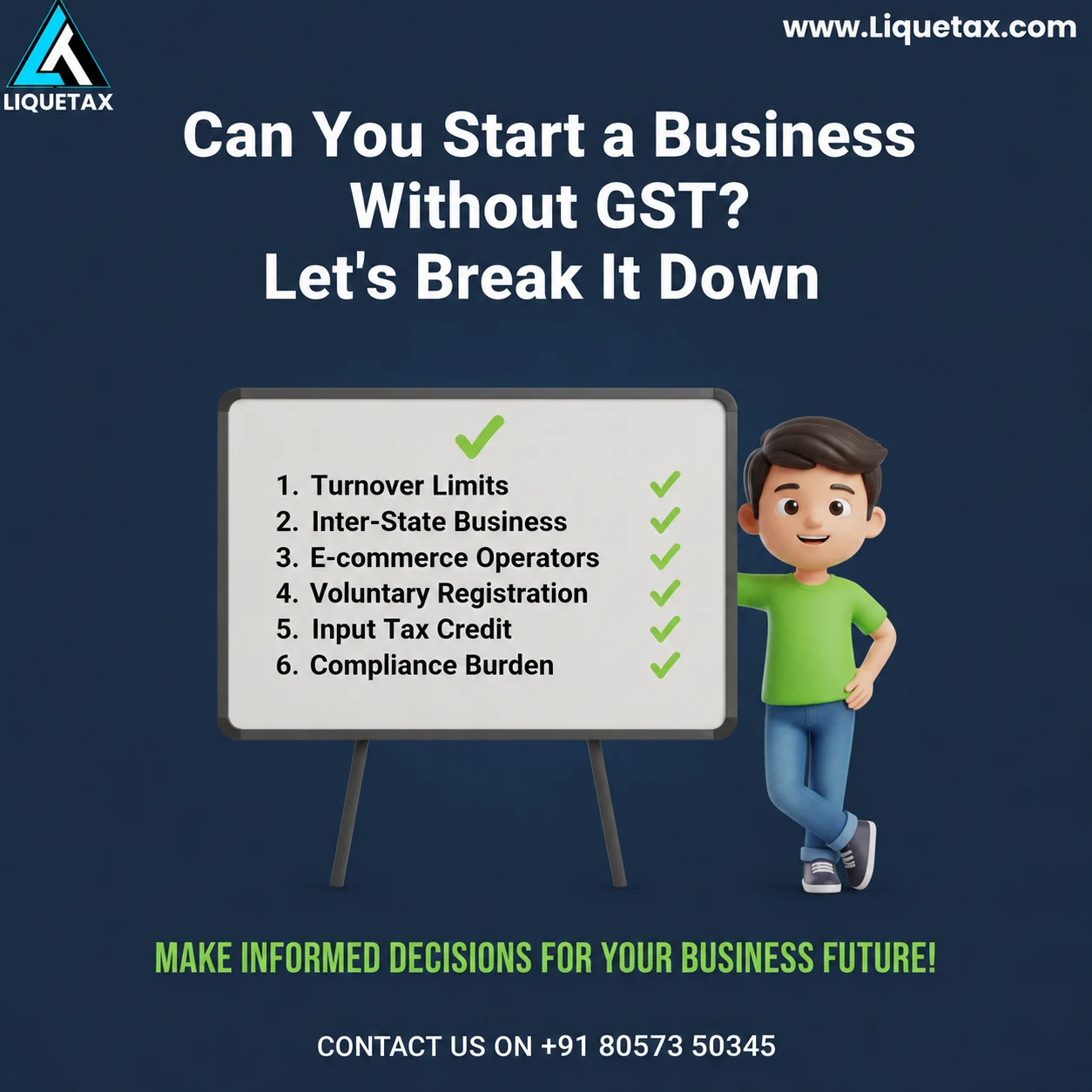
If your activity and turnover do not trigger registration, and no compulsory rule applies, operating without GST registration may be possible. Record the review date and assumptions. Check the relevant state, the nature of supplies and any notified conditions before treating this as a continuing exemption.
Your customer may prefer to deal with a GST-registered vendor for its own commercial reasons. That preference should be distinguished from a legal requirement. If you consider voluntary registration, budget for record keeping and applicable returns as well as the registration preparation cost.
What changes the answer
A new marketplace, another operating state, an overseas customer or a different line of business can change the analysis. Interstate and e-commerce arrangements need careful category and notification checks. Do not rely on either a blanket 'interstate always means GST' statement or a blanket 'small businesses never need GST' statement.
If sales increase, maintain a running turnover calculation supported by invoices and the books. Review approaching limits early so that you can prepare records and invoice settings in time. Keep business receipts, owner contributions and loans identifiable; a bank balance is not a turnover calculation.
What you can and cannot tell customers
Describe your registration status accurately. Do not issue documents that imply you hold an approved GSTIN when you do not. Ask your adviser how to prepare an appropriate commercial invoice for your current status and explain any customer procurement requirement before accepting the order.
If an application is pending, tell the customer that it is pending. Registration preparation, government verification and the start of ongoing returns are different stages. A clear status prevents disputes when a customer expects a tax invoice or a platform asks for an active registration.
Build a launch file you can update
Keep a short note containing the business activity, locations, expected sales channels, current registration position and next review trigger. Add identity, premises and sales records as you create them. This small file makes later registration or a change of adviser easier and helps you avoid repeating the same information in multiple applications.
Questions to answer before your first sale
| Question | Useful evidence |
|---|---|
| What will I supply? | Product or service description and sample contract. |
| Where will I operate? | Actual premises and fulfilment locations. |
| How will I sell? | Own website, marketplace or direct-customer terms. |
| What is the relevant turnover? | Month-wise working and PAN-wide activity. |
| What will trigger a new review? | Sales growth, new state, new channel or new supply. |
Illustrative example
Illustrative example: a designer starts with local assignments and later signs an overseas contract. The initial registration conclusion should be revisited using the new contract and payment arrangement. The fact that the business started small does not settle the treatment of every later transaction.
Frequently asked questions
Must every new business obtain GST on day one?
No. Review the applicable registration rules using the actual activity, state and transactions.
Can I use my company certificate instead of a GSTIN?
They serve different purposes. A company certificate does not replace a GST registration where it is required.
Does an online shop always need GST?
Review the goods, platform arrangement and current notified conditions. Platform onboarding policy should also be checked separately.
Can I collect GST while unregistered?
Do not represent yourself as GST-registered or collect tax on that basis. Get the correct invoicing approach checked for your status.
How often should I revisit the decision?
Review when turnover grows or your activity, state, customers or selling channel changes. Use a recurring sales check as an internal reminder.
Get clarity before your next filing
Bring the records listed above to a LIQUETAX conversation. Ask for the applicable work, documents, responsibilities and fee components in writing before you authorise a submission. Government charges, professional fees and applicable GST should be shown separately.
Book a conversationOfficial references
Check the linked authority for the rule, form and notification that applies to your facts and period. This guide explains preparation and does not record a professional opinion on an individual case.