
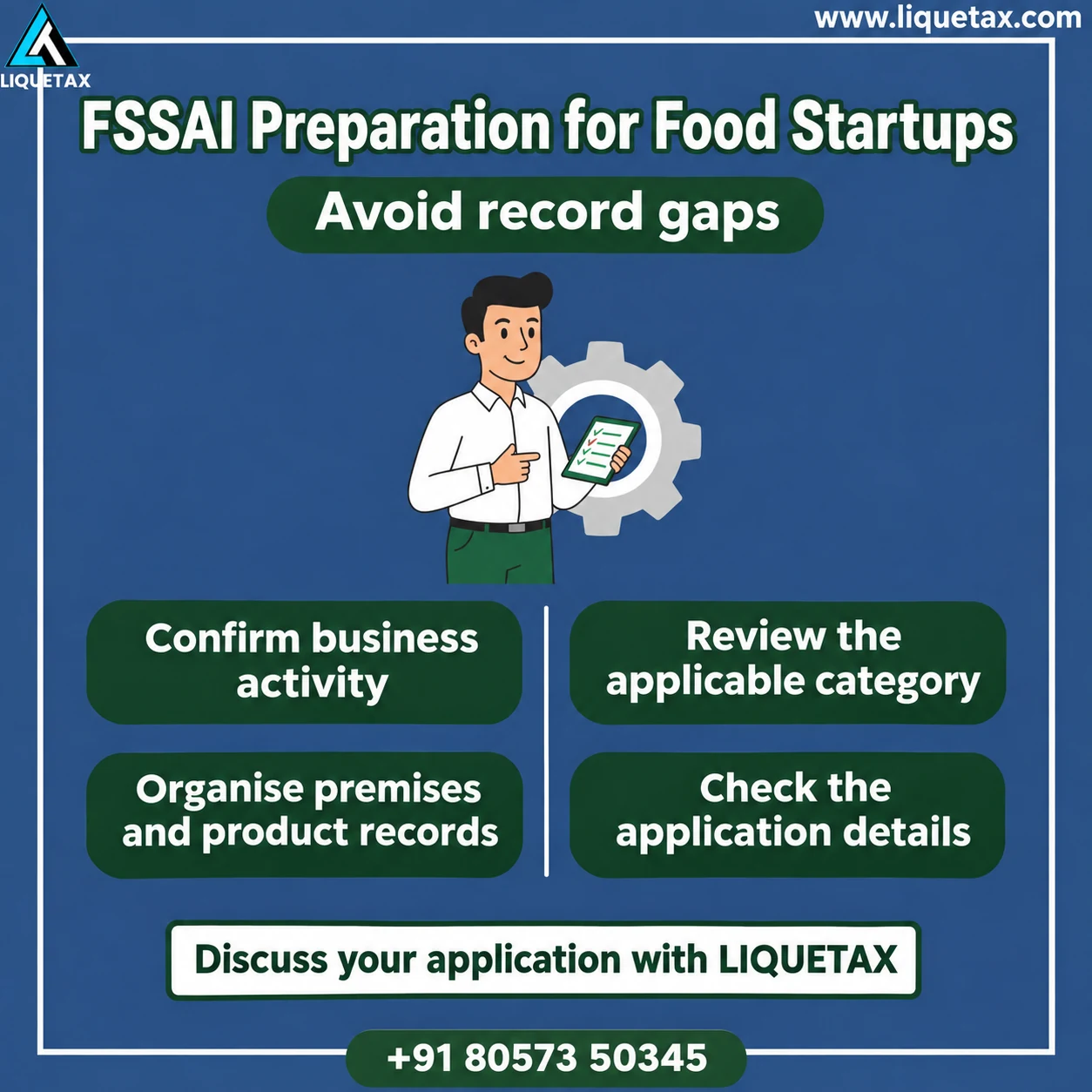
- Describe operationsProducts, processes and premises.
- Check the routeUse current framework and existing records.
- Resolve gapsMatch applicant and premises evidence.
- Retain outcomeKeep authority record and next actions.
A food startup needs a clear operating plan before it chooses an application route. Explain who runs the business, where food is handled, what activities take place and which records already exist. A home kitchen, packaged-food manufacturer and online food seller should not copy the same checklist without checking their actual facts.
Use the revised framework, not an old turnover table
FSSAI’s 13 March 2026 order revised turnover categorisation effective from 1 April 2026. Its 27 March 2026 FAQs explain licensing reforms including perpetual validity and continuing controls. The old article’s ₹12 lakh table and routine one-to-five-year renewal description should not be reused as current advice. Check the latest FoSCoS route and applicable authority requirements for your activity, premises and existing status before filing.
Write an operating brief before collecting documents
Describe the products, ingredients, processes and sales channels in plain language. Identify where food is prepared, packed, stored and dispatched, and whether another business performs part of the work. For example, a founder buying finished products for resale should not describe the business as a manufacturer merely because the packaging carries its brand. The application information needs to follow the real arrangement.
Match the applicant and premises records
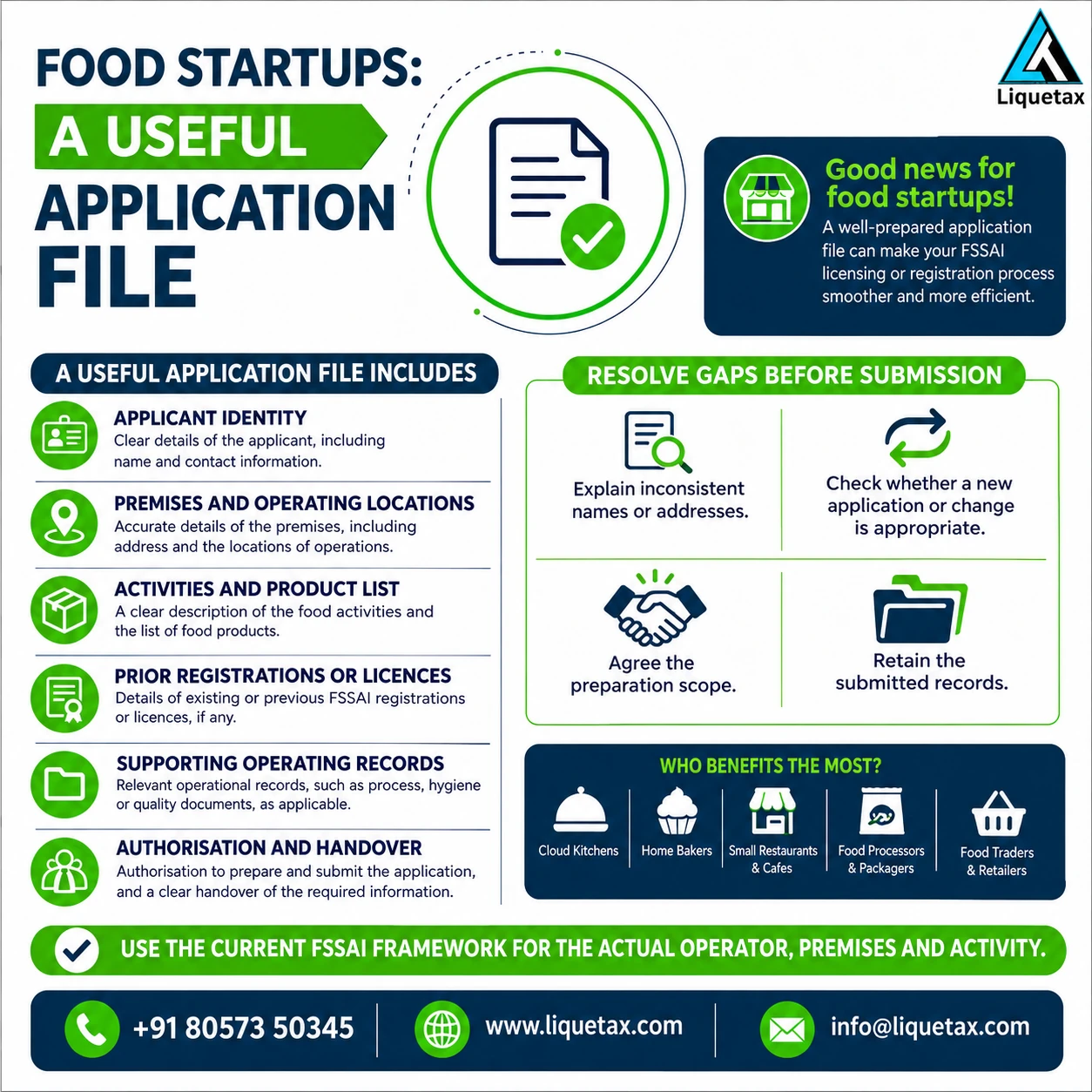
Prepare the actual entity or proprietor details, authorised-person information and evidence for the premises. Compare names and addresses across records and identify changes before data entry. If a lease, business address or applicant name is inconsistent, log the issue and resolve it through the appropriate evidence. Do not upload unrelated documents simply to fill an attachment slot. Request the final checklist for the route actually selected.
Build a useful product and activity list
Separate foods made at the site from goods sourced from other businesses. Identify intended additions and explain which are current operations rather than future plans. Keep available product and label information organised for the applicable review. Technical food-safety, testing, labelling and operating questions need the appropriate expertise; an application-preparation service should not silently claim that all product obligations have been cleared.
Review an existing record before starting again
If the business already has a registration, licence, pending application or authority communication, supply its reference first. Explain the change or problem you want addressed. A new application, amendment, migration enquiry and response to a notice are different tasks. Under the reformed framework, do not assume that an old renewal reminder accurately describes today’s action. Keep the actual status and subsequent instructions visible in the work plan.
Agree deliverables and customer responsibilities
Ask LIQUETAX to list the preparation, document review, application coordination and follow-up included in writing. Separate professional fees, authority charges, taxes and external technical work. Confirm who will supply missing information, review the facts and authorise the relevant action. The licensing authority decides the outcome; an upload or saved application is not evidence of approval. A preparation estimate should depend on the actual gaps and route.
Make handover the start of organised operations
Retain the approved particulars, available authority record, application evidence and action list. Check that the business uses its actual details in relevant commercial records. Assign someone to monitor changes to premises, activities and authority communications. Continuing obligations do not disappear because a record has perpetual validity. Discuss the current requirements with the appropriate team when the business changes, rather than treating the initial application folder as permanently complete.
Questions before you act
Can I rely on the ₹12 lakh figure in an older article?
Use the revised order and current portal guidance instead. Applicability and the route must be checked against the actual food-business facts.
Does perpetual validity mean there is no continuing work?
No. The 2026 reforms include continuing controls. Keep operational requirements, changes and authority instructions separately tracked.
Official references and their limits
- FSSAI: revised turnover order, 13 March 2026
Revised categorisation and 1 April 2026 effective date.
Official PDF read on 11 October 2026; no individual application assessed.
- FSSAI: licensing reform FAQs, 27 March 2026
Perpetual-validity reforms and continuing framework.
Official PDF read on 11 October 2026; current portal record not inspected.
Useful next steps
Discuss your requirement with LIQUETAXAI-assisted educational writing by LIQUETAX Editorial. No named professional endorsement or individual outcome is claimed.