
🚫 Incorrect Class Selection
Choosing the wrong trademark class is a top reason for objections and delays.
📝 Incomplete Description
Vague or incomplete goods/services description can lead to refusal.
⏳ Trademark Search Skipped
Filing without a proper search increases the chance of opposition.
📄 Improper Logo/Format
Submitting a logo that doesn't meet guidelines can cause rejection.
🎬 Watch: Common Trademark Filing Mistakes to Avoid
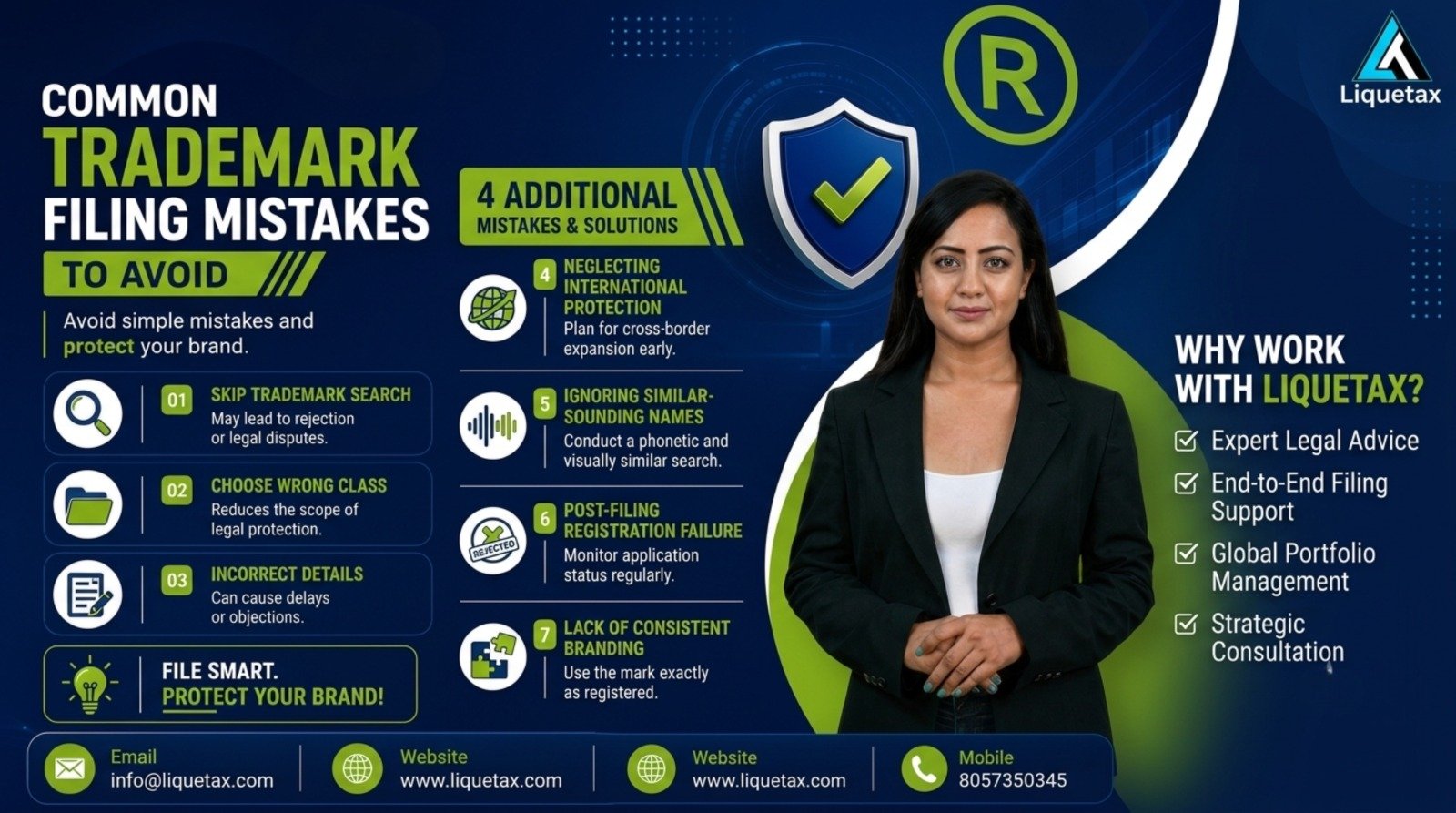 ▶ Tap to play
Introduction: Common Trademark Filing Mistakes to Avoid
Filing a trademark is a crucial step to protect your brand identity. However, many applicants make common mistakes that lead to objections, delays, or even rejection. Errors like incorrect class selection, incomplete description, or skipping the trademark search can cost you time and money. This guide covers the most common trademark filing mistakes and how to avoid them.
What is Trademark Registration?
A trademark is a unique symbol, word, phrase, or design that identifies and distinguishes your products or services from others. Trademark registration gives you legal ownership and exclusive rights to use the mark in connection with your goods or services. It prevents others from using a similar mark that could confuse customers.
- Validity: 10 years, renewable indefinitely
- Protection: Nationwide legal protection
- Types: Word mark, logo, slogan, sound mark, etc.
- Common mistakes: Wrong class, incomplete specification, no prior search
Why Trademark Filing Accuracy Matters for Your Business
- Legal protection: Prevents others from using your brand identity.
- Brand recognition: Builds trust and loyalty among customers.
- Business value: A registered trademark is an intangible asset that adds value.
- Online presence: Helps in domain name disputes and social media handles.
- Peace of mind: Avoid legal battles and infringement issues.
Eligibility & Requirements for Trademark Filing
- Any individual or business: Sole proprietor, partnership, company, or LLP can apply.
- Unique mark: Must be distinctive and not similar to existing marks.
- No geographical name: Generally, common names or city names are not allowed.
- Clear representation: The mark must be represented clearly in the application.
Step-by-Step Process to File a Trademark Correctly
- Conduct a trademark search: Check for similar existing marks to avoid opposition.
- Choose the right class: Identify the correct class(es) for your goods/services.
- Prepare the application: Fill Form TM-A with correct details, description, and logo.
- File the application: Submit online on the IP India portal.
- Receive acknowledgment: Get a receipt with the application number.
- Examination: The trademark office examines the application for distinctiveness and conflicts.
- Publication: If accepted, the mark is published in the trademark journal for opposition.
- Registration: If no opposition, the trademark is registered and a certificate is issued.
Documents Required for Trademark Filing
- Applicant details: Name, address, and nationality of the applicant.
- Logo/Design: Clear image of the mark in JPEG or PNG format.
- Description of goods/services: Detailed list of products/services with class numbers.
- Power of Attorney (POA): If filing through an agent or attorney.
- Proof of use (optional): For claiming prior use or proposed use.
- MSME/Startup certificate (if applicable): For fee reduction.
Government Fees & Penalties for Trademark Filing Errors
Common filing mistakes can increase costs and lead to penalties:
- Filing fee: ₹9,000 for individuals/startups, ₹12,000 for others (per class).
- Opposition fee: ₹27,000 for filing a notice of opposition.
- Penalty for incorrect filing: May require a fresh application with full fees.
- Lost time: Objections can delay registration by 6–12 months.
- Abandonment: If you don't respond to objections, the application is abandoned.
How Liquetax Can Help You Avoid Trademark Filing Mistakes
- Comprehensive search: We conduct a thorough trademark search to check availability.
- Class selection guidance: We help you choose the correct class(es) for your mark.
- Application drafting: We prepare a clear and accurate description of goods/services.
- Logo formatting: We ensure your logo meets the required specifications.
- Filing and follow-up: We file the application and track it until registration.
- Objection handling: If any objection arises, we help you respond effectively.
Choose Liquetax for a smooth, error-free trademark filing experience.
FAQs on Common Trademark Filing Mistakes
Choosing the wrong class is the most common mistake. It leads to objections and requires re-filing.
You will receive a notice from the trademark office. You can respond within the given time to overcome the objection.
Yes, you can file a request for amendment or respond to objections. However, some errors may require a fresh application.
Liquetax provides end-to-end support, including search, class selection, application drafting, and objection handling.
File Your Trademark Error-Free – Avoid Objections & Delays!
Don't let common trademark mistakes cost you your brand identity. Let Liquetax handle your trademark filing accurately and smoothly.