
⚖️ Tax Exemption
12A grants income tax exemption to NGOs. 80G gives donors deduction on donations.
📝 Eligibility
Trusts, societies, Section 8 companies registered under Indian laws can apply.
📂 Documents
Registration certificate, MOA, financials, PAN, and project details required.
✅ Process
Apply online via income tax portal. Approval usually takes 3-6 months.
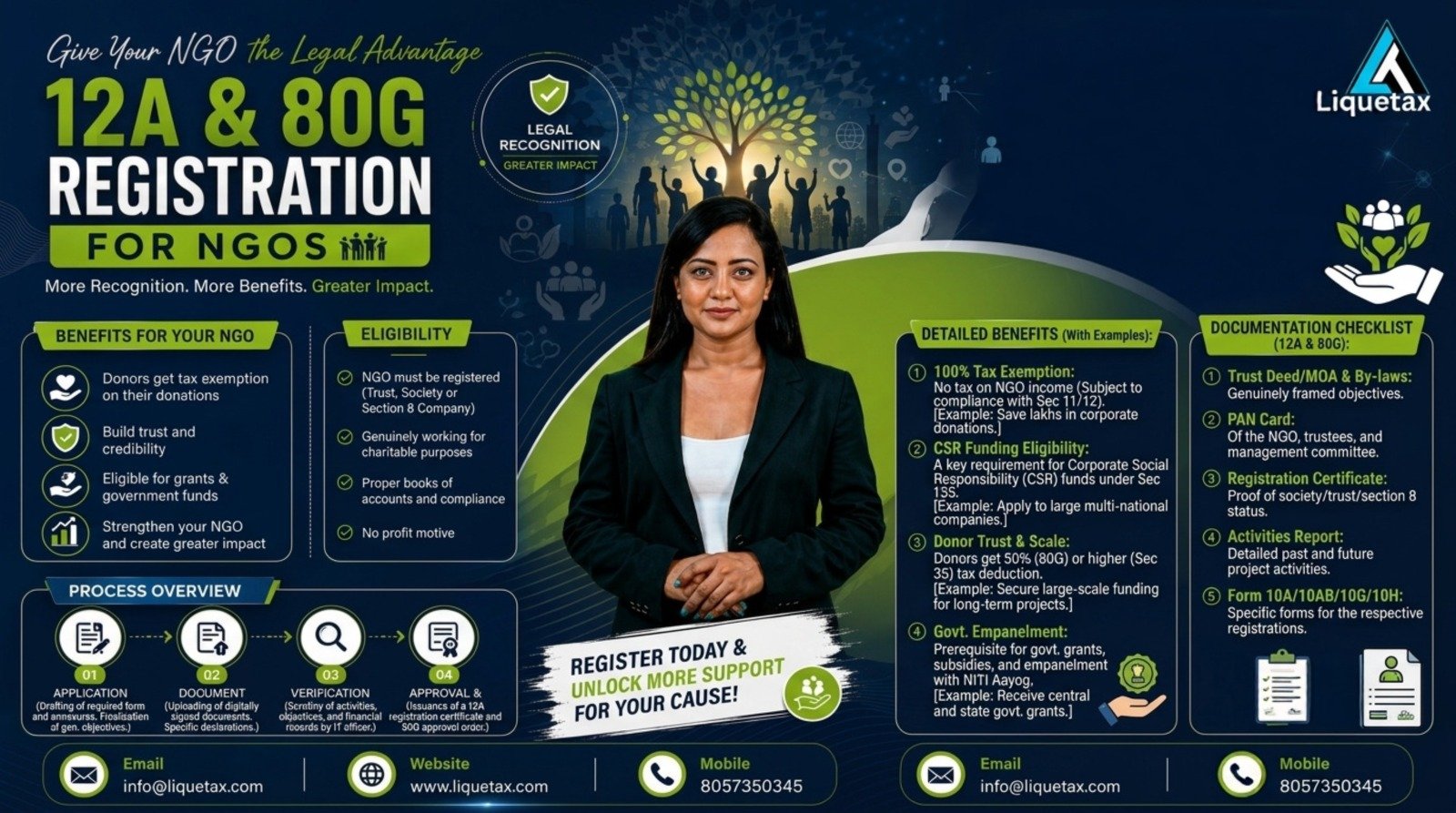
🎬 Watch: 12A & 80G Registration for NGOs – Complete Guide
 ▶ Tap to play
Introduction: What is 12A & 80G Registration for NGOs?
12A and 80G are two crucial registrations under the Income Tax Act that provide tax benefits to NGOs and their donors. 12A registration grants tax exemption to the NGO itself, while 80G allows donors to claim deductions on their contributions. Together, they enhance the credibility and funding potential of any non-profit organisation in India.
What is 12A & 80G Registration?
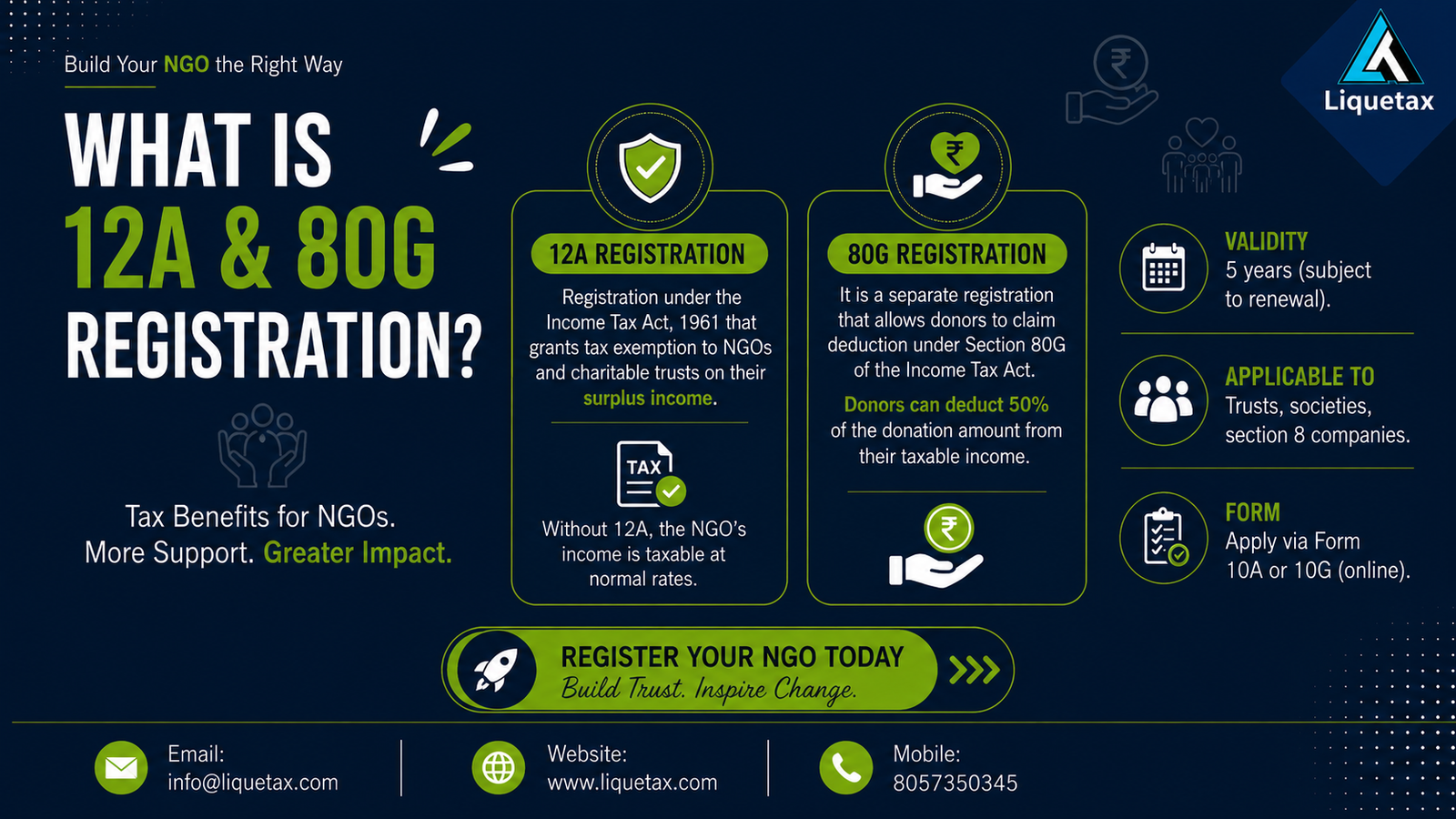
12A Registration – It is a registration under Section 12A of the Income Tax Act that exempts the income of a trust, society, or Section 8 company from tax. It ensures that the NGO’s surplus from charitable activities is not taxed.
80G Registration – It is a registration under Section 80G that allows donors to deduct the amount donated to the NGO from their taxable income. This encourages more people to donate.
- 12A: Income tax exemption for the NGO.
- 80G: Tax deduction for donors (up to 50% or 100% of donation).
- Validity: Both registrations are permanent now (w.e.f. 2021) but require filing of annual returns.
Why 12A & 80G Registration Matters for NGOs
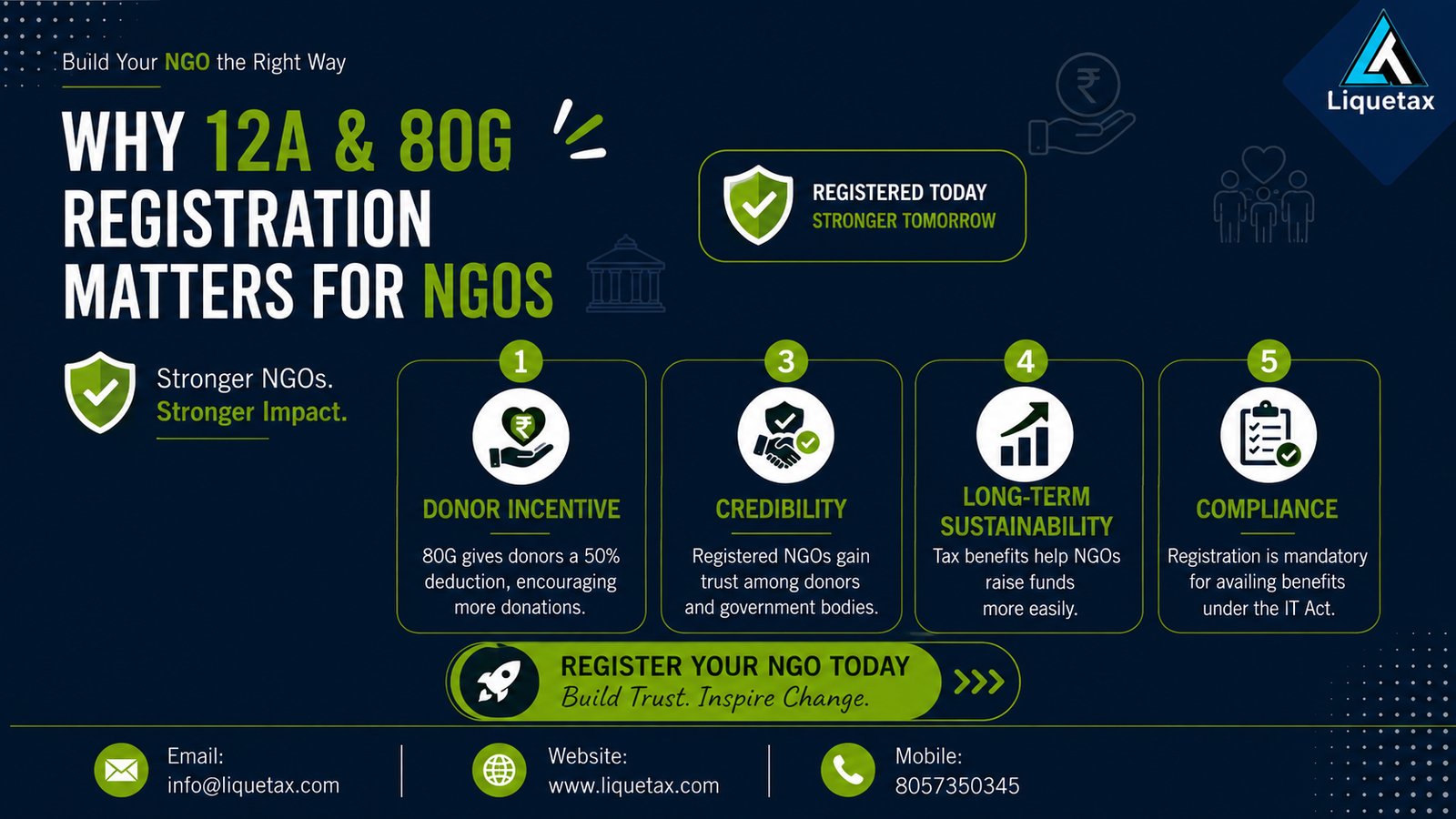
- Tax exemption: 12A saves the NGO from paying tax on surplus income.
- Donor confidence: 80G certification builds trust and encourages donations.
- More funding: Donors prefer 80G-registered NGOs for tax benefits.
- Legal credibility: It validates the genuineness of the organisation.
- Corporate donations: Many corporates donate only to 80G-registered NGOs.
Eligibility & Requirements for 12A & 80G Registration
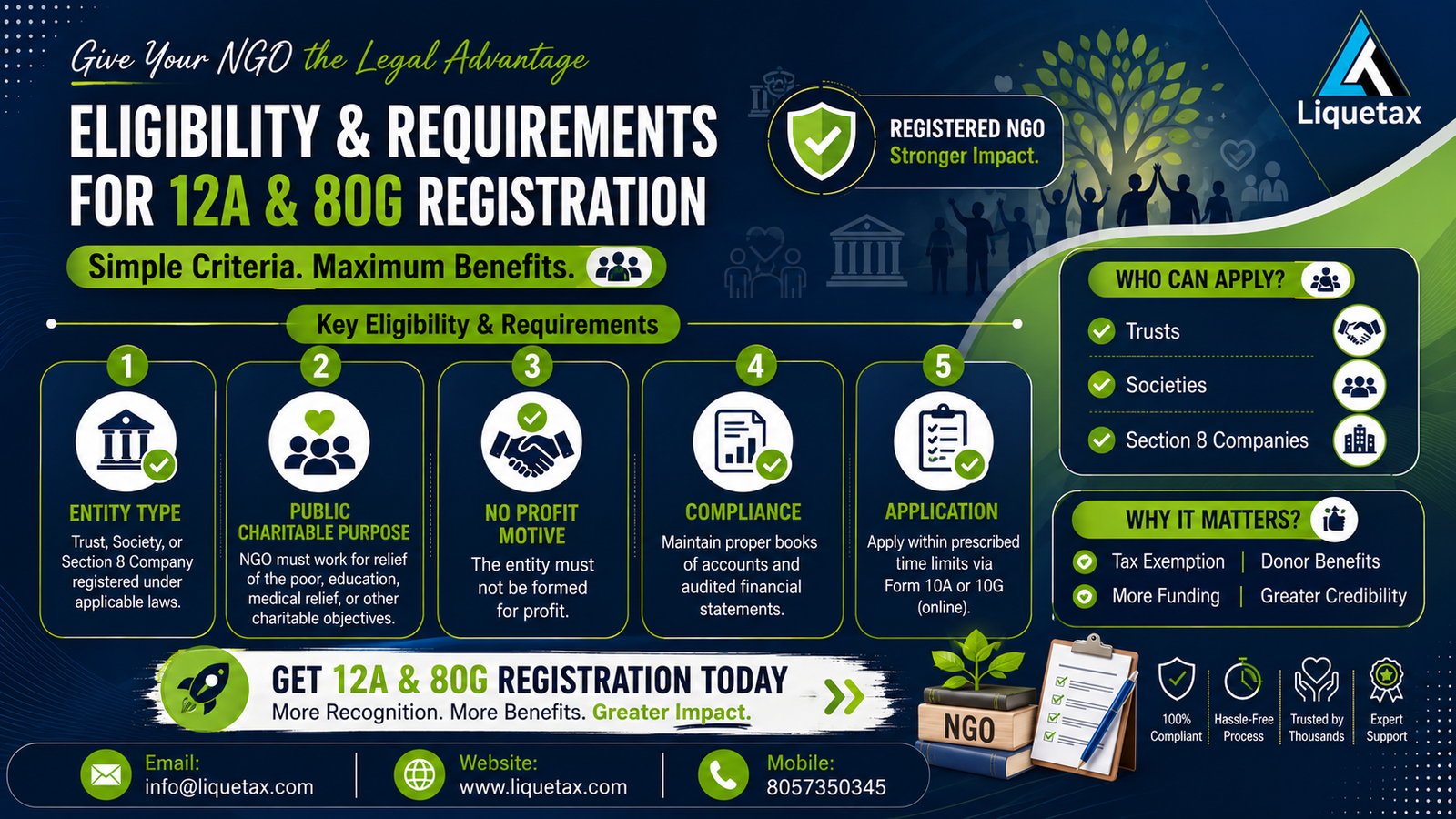
- Legal entity: Trust, society, or Section 8 company registered in India.
- Charitable purpose: Must be engaged in charitable activities as per Income Tax Act.
- PAN: The NGO must have a valid Permanent Account Number.
- Registration: Already registered under Trust/Society/Companies Act.
- No commercial motive: Should not be for profit or private benefit.
Step-by-Step Process to Apply for 12A & 80G Registration
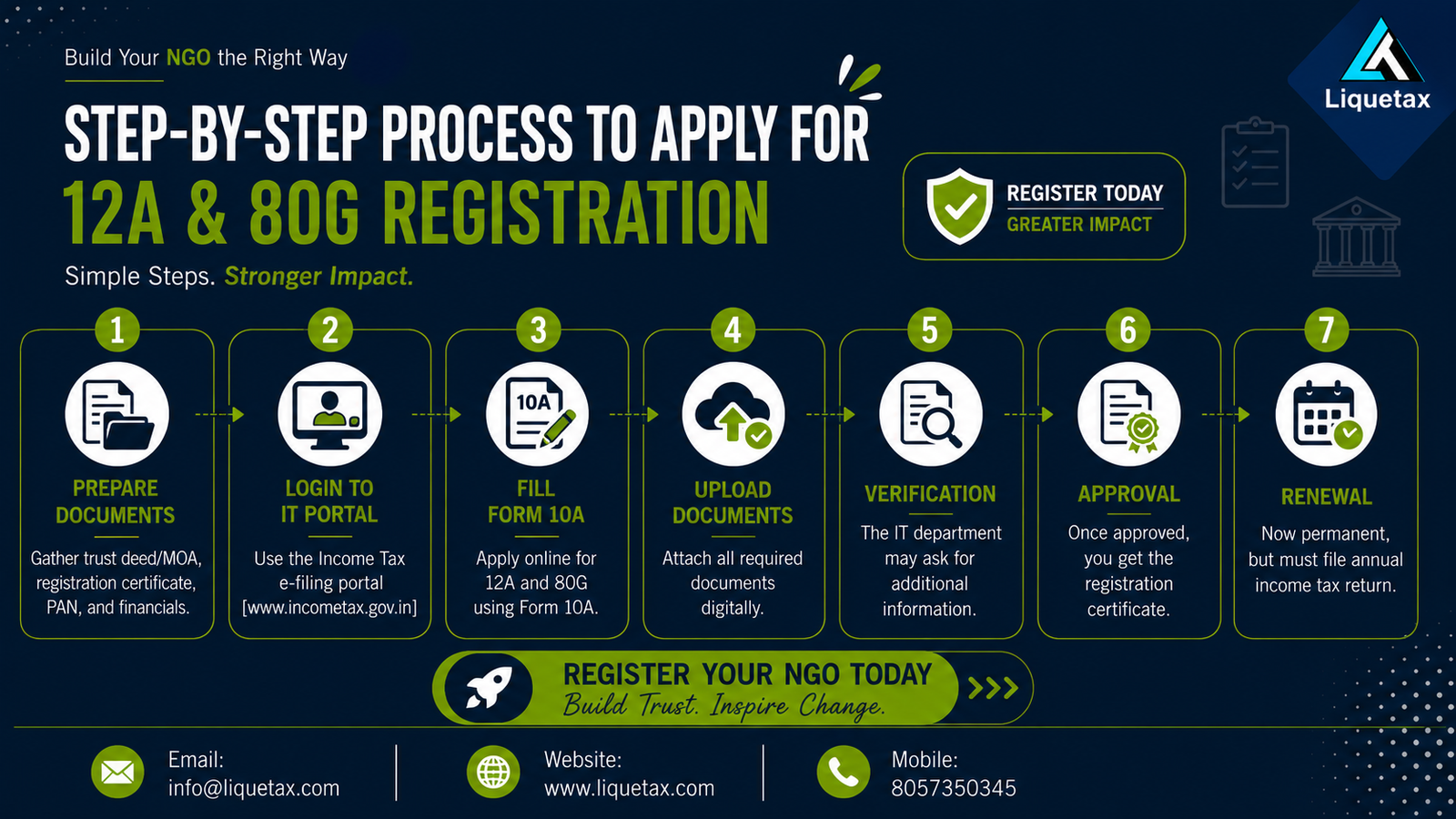
- Prepare documents: Gather trust deed/MOA, registration certificate, PAN, and financials.
- Login to IT portal: Use the Income Tax e-filing portal (www.incometax.gov.in).
- Fill Form 10A: Apply online for 12A and 80G using Form 10A.
- Upload documents: Attach all required documents digitally.
- Verification: The IT department may ask for additional information.
- Approval: Once approved, you get the registration certificate.
- Renewal: Now permanent, but must file annual income tax return.
Documents Required for 12A & 80G Registration
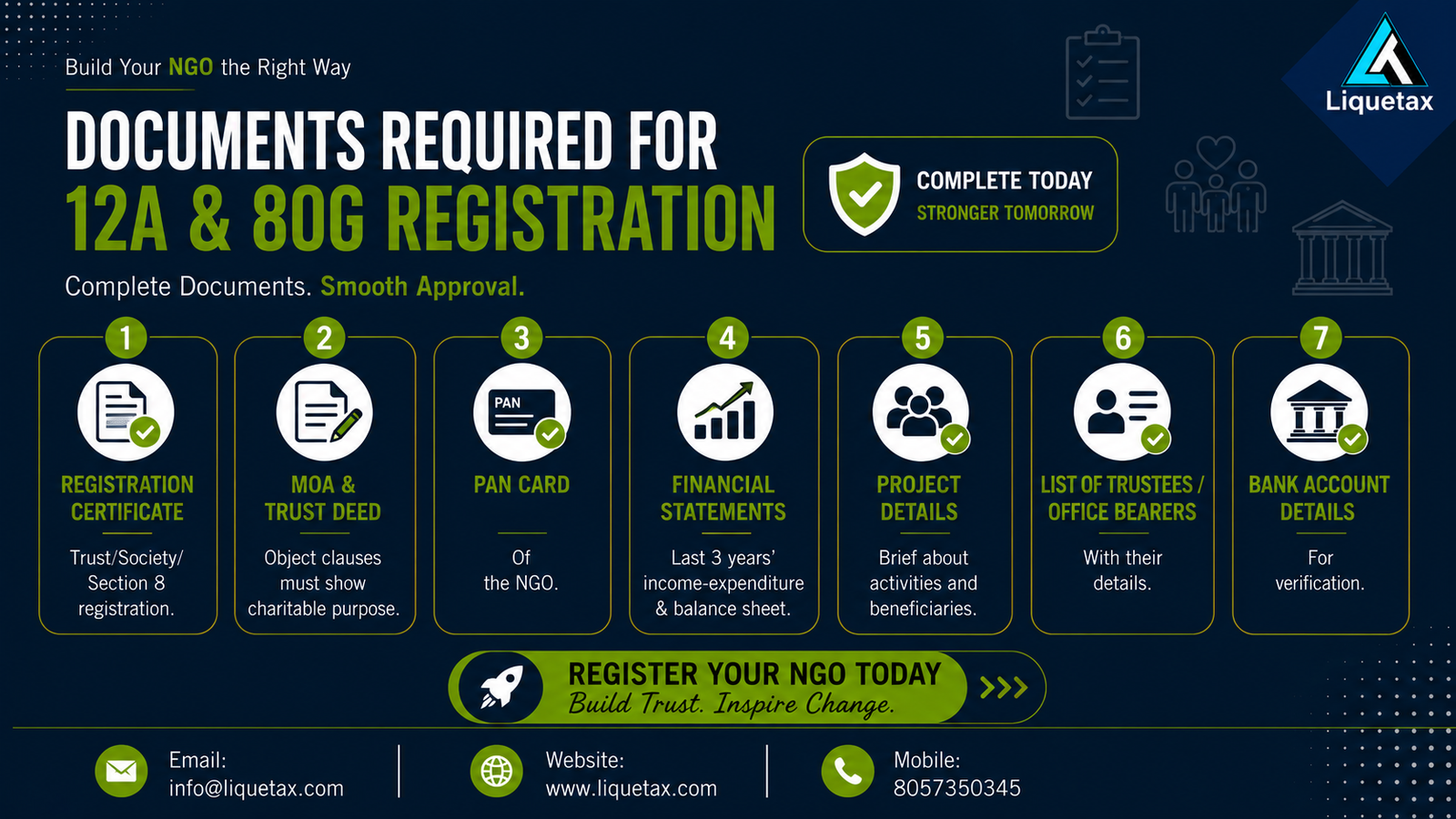
- Registration certificate: Trust/Society/Section 8 registration.
- MOA & Trust Deed: Object clauses must show charitable purpose.
- PAN card: Of the NGO.
- Financial statements: Last 3 years’ income-expenditure and balance sheet.
- Project details: Brief about activities and beneficiaries.
- List of trustees/office bearers: With their details.
- Bank account details: For verification.
Government Fees & Timeline for 12A & 80G Registration
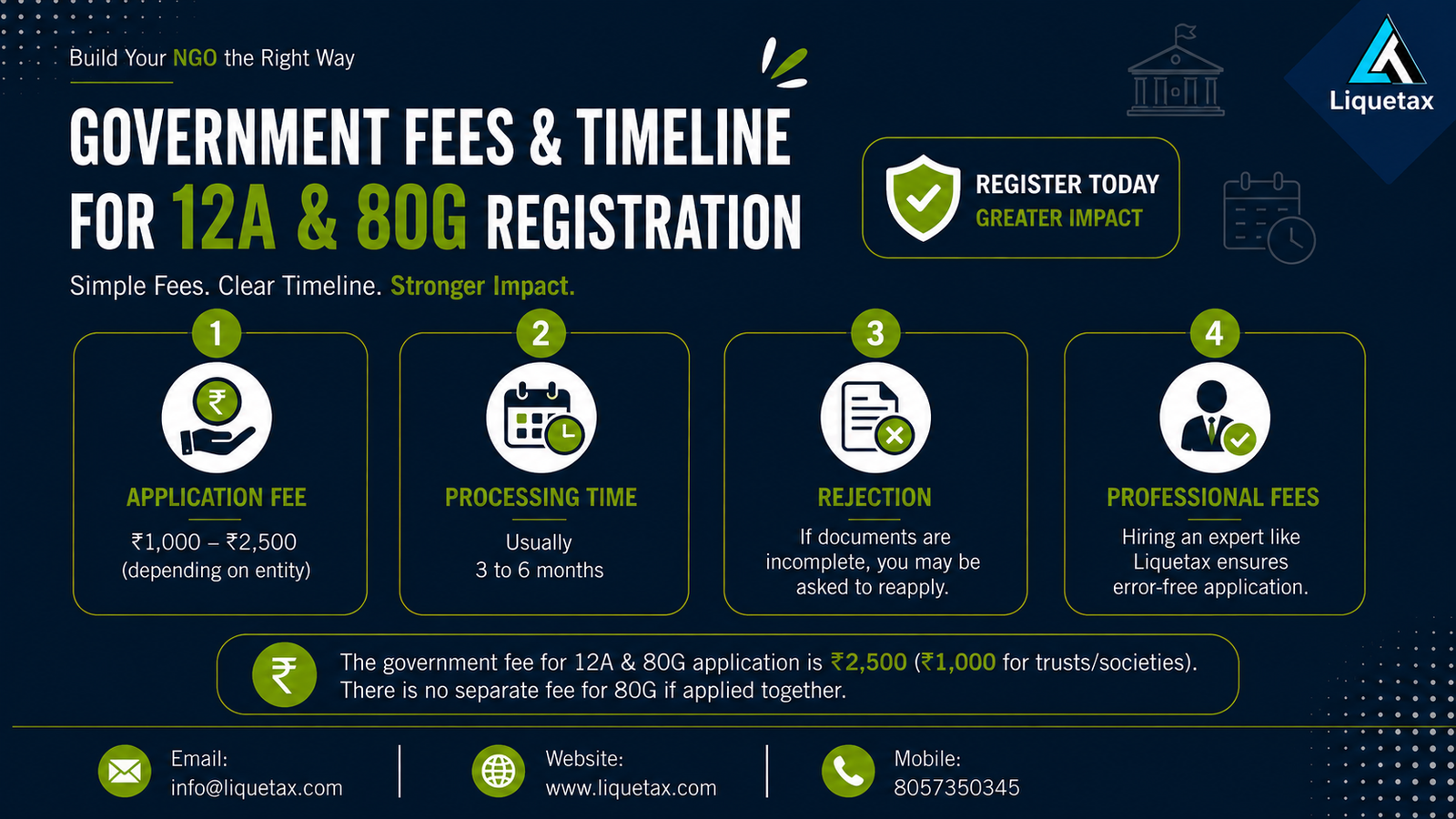
The government fee for 12A & 80G application is ₹2,500 (₹1,000 for trusts/societies). There is no separate fee for 80G if applied together.
- Application fee: ₹1,000 – ₹2,500 (depending on entity).
- Processing time: Usually 3 to 6 months.
- Rejection: If documents are incomplete, you may be asked to reapply.
- Professional fees: Hiring an expert like Liquetax ensures error-free application.
FAQs on 12A & 80G Registration for NGOs
12A gives tax exemption to the NGO itself, while 80G gives tax deduction to donors. Both are essential for fundraising.
It usually takes 3 to 6 months from the date of application, depending on the IT department's processing time.
Yes, applications are made online through the Income Tax e-filing portal using Form 10A.
Liquetax provides end-to-end support, from eligibility check to filing and follow-up, ensuring a smooth registration process.
Get 12A & 80G Registration for Your NGO Today!
Unlock tax benefits and boost donor confidence. Let Liquetax handle your registration accurately and on time.