
- 1. Define the need
Identify the product and target buyer.
- 2. Check the enterprise
Review Udyam and actual activity.
- 3. Choose the route
Assess GeM or relevant NSIC conditions.
- 4. Prepare evidence
Organise product, capacity and bid records.
Understand the purpose of each record
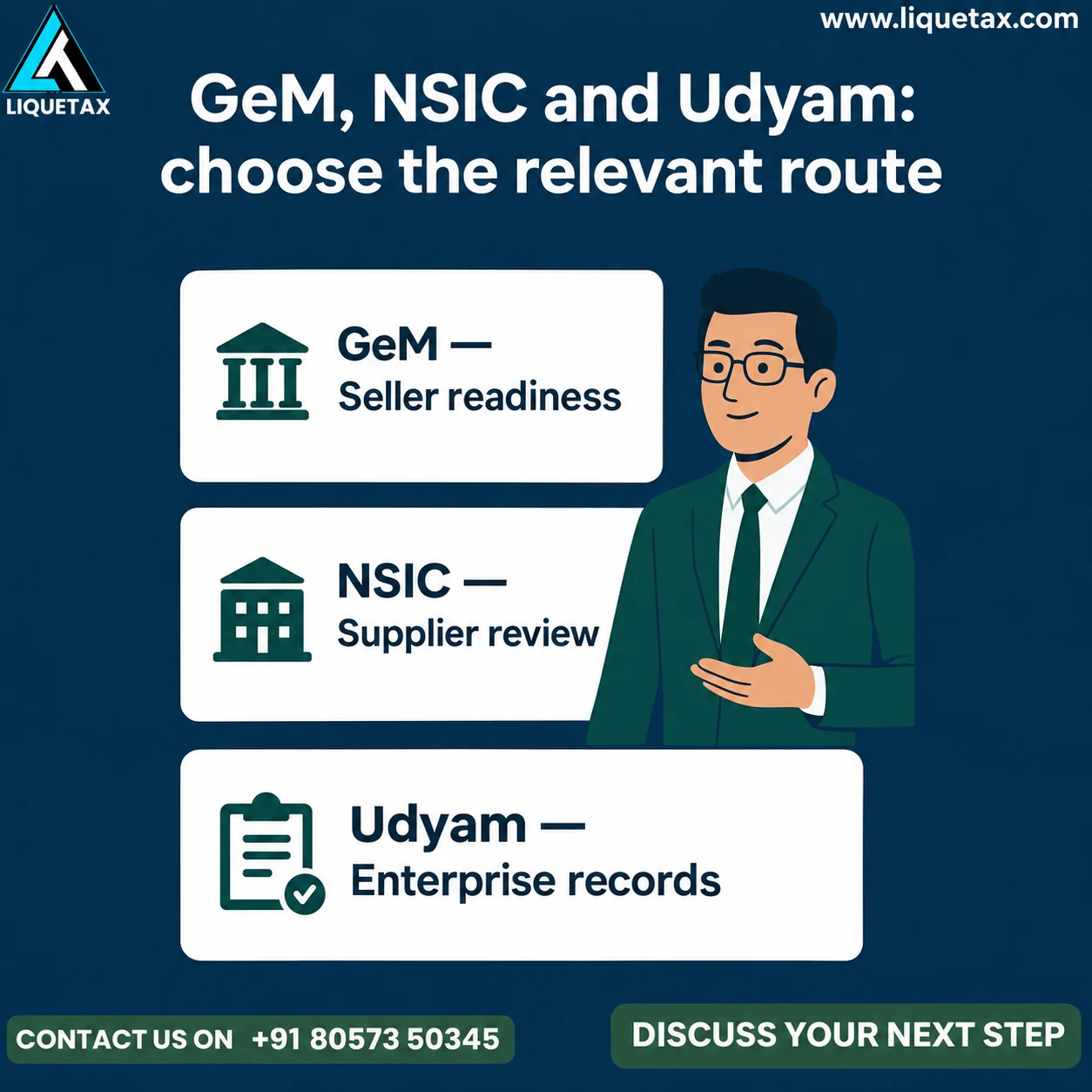
Udyam is an enterprise registration framework with a free official process. It should not be described as an order-winning certificate or guaranteed loan approval. Keep enterprise details current and check the specific benefit being sought.
GeM participation involves seller and offering records under the marketplace's current instructions. NSIC's Single Point Registration Scheme has its own eligibility and assessment requirements. The routes can be relevant together, but one should not be sold as an automatic substitute for the others.
Review the business's actual activity
Describe whether you manufacture, provide services, trade or act as an agent. NSIC's published scheme conditions should be checked for the actual activity, including exclusions. Do not assume every enterprise with an Udyam record qualifies for every NSIC route.
Prepare genuine identity, financial, product and operating records. If the business's activity changed, resolve the record and eligibility question before applying. A matching category selected on a form cannot make an unsuitable activity eligible.
Prepare the GeM offering, not just the account
Use current GeM seller instructions and relevant learning resources. Confirm the business's authorised contacts and product or service category. Account registration, catalogue readiness, vendor assessment where relevant and bid participation are different stages.
Maintain accurate specifications, brand or manufacturer authority, prices and delivery capacity. A registration service should not promise a government order merely because the seller account is active. Buyers and tenders apply their own requirements.
Read the actual procurement opportunity
Identify the buyer's specifications, eligibility, supporting documents, delivery terms and payment conditions. Review any claimed exemption against the specific policy and tender. A general benefit headline may concern only one condition.
Estimate product, logistics and service costs before bidding. Keep evidence of stock, capacity or sourcing where the bid requires it. An attractive order value can still be unsuitable if the business cannot deliver or meet the agreed terms.
Keep an evidence-based supplier plan
Make a phased plan around the next useful action: enterprise record review, seller readiness, supplier assessment or a specific bid. Do not purchase all routes simply because they appear in a comparison table. Record the reason and expected evidence for each action.
After work, retain the relevant certificates, account or application records and current status. Review changes in products, capacity and terms. Your business should know which stage is complete and which requirement still needs attention before approaching a buyer.
Purpose-based comparison
| Route | Main question |
|---|---|
| Udyam | Is the enterprise record correct and current? |
| GeM seller readiness | Can the business list and supply the actual offering? |
| NSIC SPRS | Does the activity satisfy the scheme conditions? |
| Vendor assessment | Does a specific category or route require it? |
| Tender or order | Can the business meet the actual buyer terms? |
Illustrative example
Illustrative example: a service provider already has an Udyam record and wants to participate in a government opportunity. It reviews the GeM category and tender first, then checks whether NSIC enrolment is useful and eligible. The certificates are considered in relation to the opportunity, not as a universal bundle.
Frequently asked questions
Are GeM, NSIC and Udyam the same registration?
No. They have different purposes, conditions and records.
Does Udyam guarantee NSIC eligibility?
Check the actual NSIC scheme and activity conditions, including exclusions.
Will a GeM account guarantee an order?
No. Product, buyer, tender and delivery requirements still apply.
Should every business obtain all three?
Choose the route that fits the activity and actual opportunity, after reviewing the conditions.
What should I bring for supplier-readiness support?
Bring enterprise records, product or service details, capacity evidence and the actual procurement documents.
Get clarity before your next filing
Bring the records listed above to a LIQUETAX conversation. Ask for the applicable work, documents, responsibilities and fee components in writing before you authorise a submission. Government charges, professional fees and applicable GST should be shown separately.
Book a conversationOfficial references
- Official Udyam registration portal
- NSIC: Single Point Registration Scheme
- GeM: official seller learning resources
Check the linked authority for the rule, form and notification that applies to your facts and period. This guide explains preparation and does not record a professional opinion on an individual case.