

- Choose the structure for a reason
- Confirm members and directors
- Prepare the incorporation package
- File, respond and retain the record
Choose the structure for a reason
A public limited company is a company form under the Companies Act. It is not automatically listed on a stock exchange and does not receive permission to solicit investment from the public merely because it has incorporated. Public issues and listing require their own legal framework and approvals. Clarify the intended ownership, funding and governance before choosing this form.
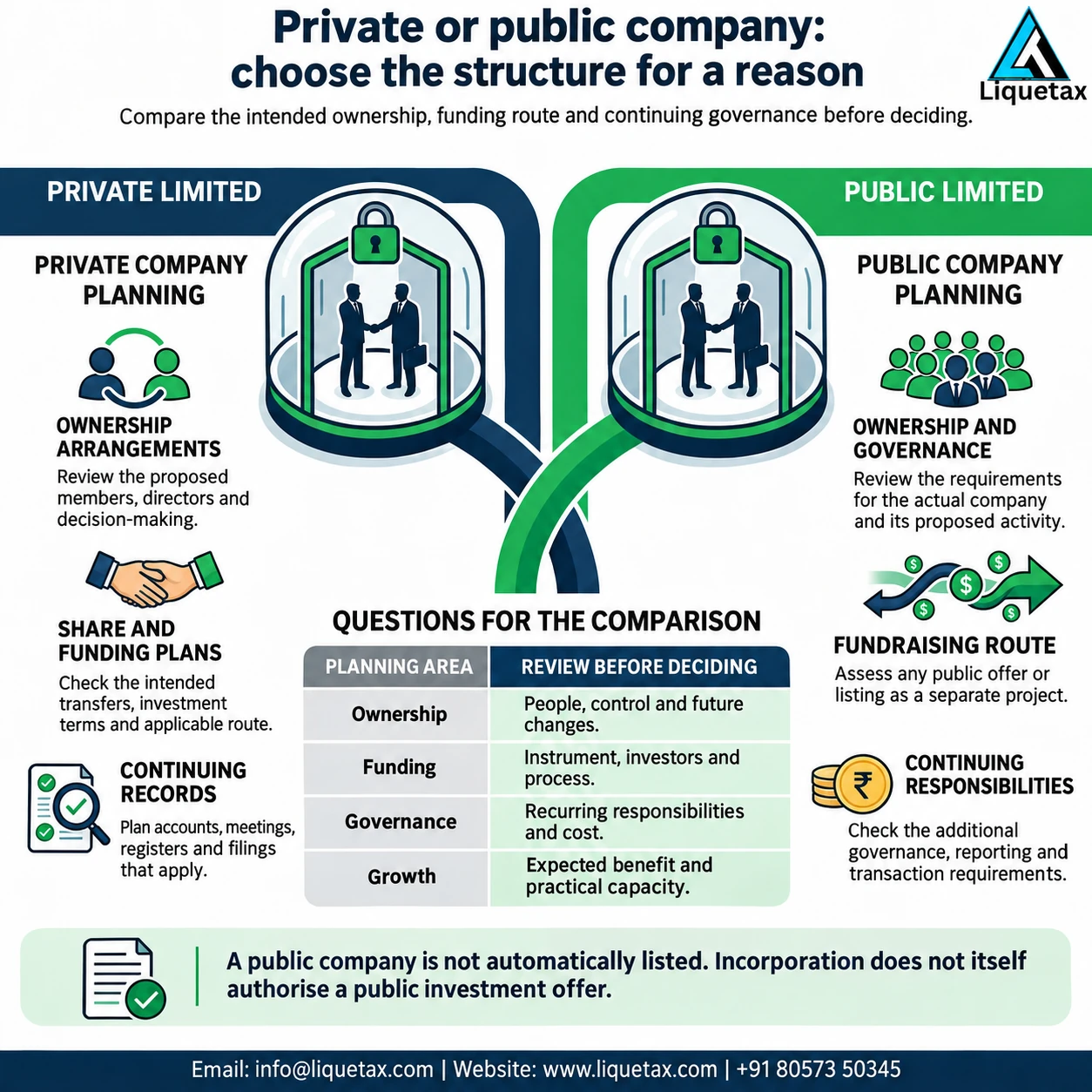
An unlisted public company may be appropriate for a particular ownership or business plan, but it carries obligations beyond those of some smaller private companies. Compare the recurring governance and compliance burden with the expected benefit. A broad claim that public-company status always improves credit or guarantees fundraising is not a sound basis for the decision.
Confirm members and directors
A public company generally requires at least seven members and three directors at incorporation. At least one director must meet the Companies Act residence requirement. Check eligibility, consents, existing identification details and any sector-specific conditions. Membership and directorship are different roles even when the same individuals hold both.
There is no general statutory minimum paid-up capital amount now prescribed merely by this company category, but the company still needs a workable capital plan. Regulated activities may have separate capital requirements. Agree authorised capital, subscriptions, share rights and the funding needed to operate. Do not treat the absence of a general minimum as permission to ignore capital obligations.
Prepare the incorporation package
Select a name and use the applicable SPICe+ reservation route. Search similar company, LLP and trademark identities before committing to a brand. Draft objects that reflect the business and articles that support its governance. The correct constitutional and linked-form route depends on the subscribers and circumstances.
Gather identity and residential evidence, director consents, necessary declarations and registered-office documents. Verify the owner’s permission and the complete address. Overseas or corporate subscribers can require additional execution or authorization evidence. Arrange the required digital signatures and confirm that the final share allocation matches every form before signing.
File, respond and retain the record
Submit the integrated incorporation application and linked forms through MCA. Check the live fee calculation and applicable state stamp duty. A fixed national package price cannot represent every company’s official charges. Track the application reference, payment status and any resubmission instructions.
After approval, preserve the certificate, submitted forms, memorandum, articles and receipts. Integrated PAN/TAN services do not remove the bank’s own onboarding requirements. Give the directors a handover showing the legal name, capital, subscriptions, office arrangements and outstanding post-incorporation tasks. The certificate does not prove that every business licence has been obtained.
Prepare for governance and fundraising
Establish statutory registers, accounting, auditor arrangements, meetings, disclosures and annual filing responsibilities. Review which additional public-company requirements apply by size, activity and other criteria, including committees, managerial appointments, dematerialisation and reporting. A public company cannot simply assume the concessions available to a qualifying small private company.
Before raising funds, obtain transaction-specific advice on the proposed instrument, persons approached and offering process. Keep approvals, valuation and disclosure evidence where applicable. A private placement is not interchangeable with a public offer. Advertising an investment without checking the legal route can create serious problems even when the underlying company is validly incorporated.
Practical checklist
- Record the business reason for using a public-company structure.
- Confirm at least seven members, three directors and the resident-director requirement.
- Approve ownership, capital, objects and governance before signing.
- Verify subscriber authority and registered-office evidence.
- Create a continuing-compliance and fundraising review plan before launch.
Illustrative example
A group with seven founders considers an unlisted public company because of its planned ownership structure. It separately reviews whether a proposed fundraising campaign is a private placement or a public offer. The incorporation documents and fundraising advice are treated as different workstreams. This illustration does not imply that incorporation authorizes an IPO or ensures investor interest.
Frequently asked questions
Is every public company listed?
No. Many public companies are unlisted. Listing involves additional legal, market and exchange requirements.
Can incorporation alone permit a public offer?
No. Public fundraising requires compliance with the applicable offering and securities framework. Obtain advice before soliciting investors.
How many members are needed?
A public company ordinarily requires at least seven members. Maintaining the statutory structure remains important after incorporation.
Is a large minimum paid-up capital compulsory?
Not merely because it is a public company under the general incorporation rule. Sector-specific capital conditions and the actual financing plan may still apply.
Are annual filings optional if business has not started?
No automatic exemption follows from inactivity. Review the company’s status and applicable corporate, tax and other filing obligations.
Official references and next step
- India Code: Companies Act, 2013
- MCA: SPICe+ and linked filing FAQs
- MCA: current forms, notices and help
For help applying this checklist to your documents, contact LIQUETAX with the relevant facts and the support you need. Request a written scope and fee breakdown before work begins.