
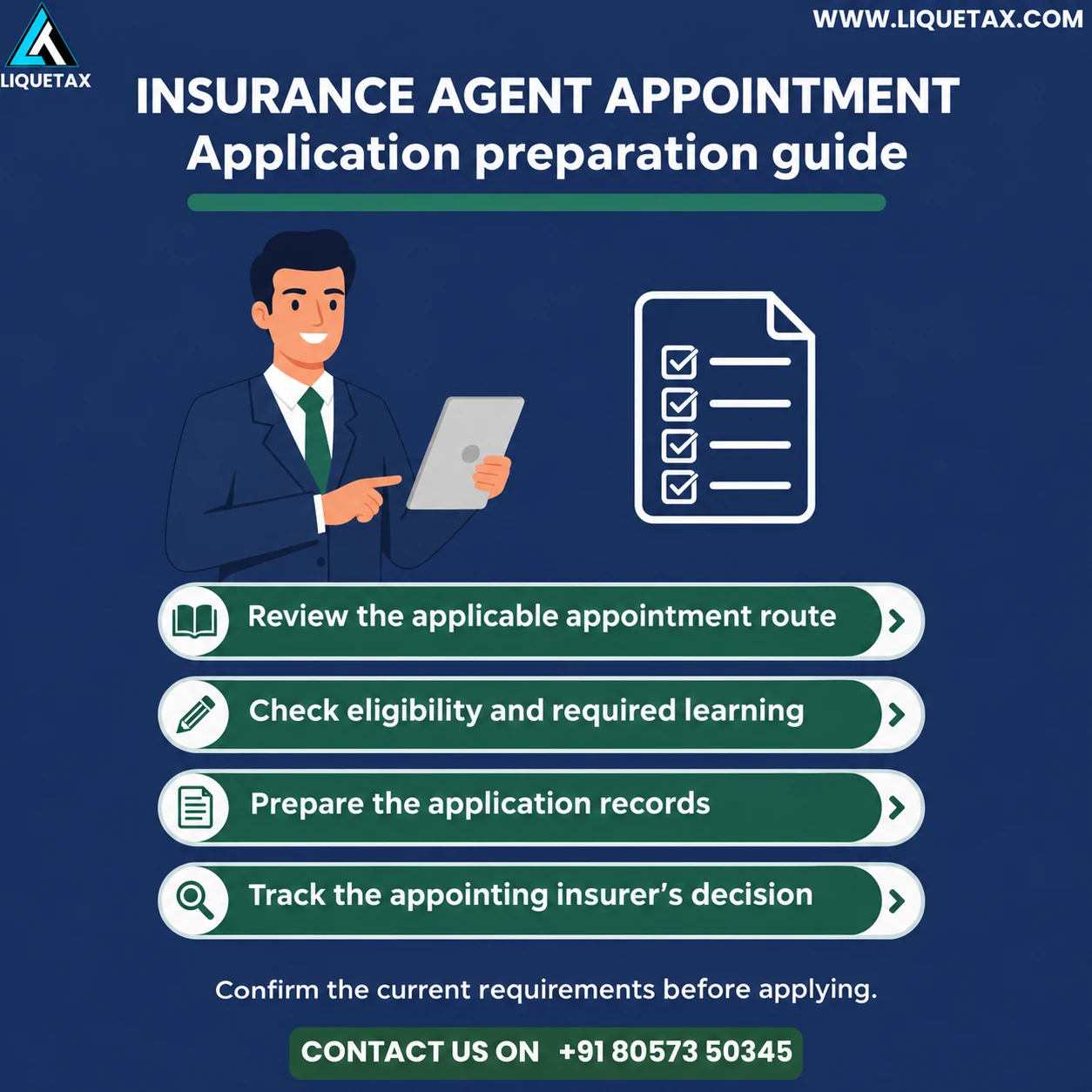
- Identify the role before choosing a process
- Check eligibility and disclose relevant history
- Complete the required learning and assessment
- Read the appointment and conduct requirements
Identify the role before choosing a process
An individual insurance agent, corporate agent, broker and other insurance distribution participant do not follow one identical registration route. Begin by deciding the role you intend to perform and the insurer or category involved. A generic advertisement for an IRDA licence can conceal these differences.
For individual agents, the IRDAI Appointment of Insurance Agents Regulations provide the insurer-appointment framework. Do not rely on old instructions suggesting that every individual simply applies to IRDAI for a standalone licence with the same renewal cycle as an intermediary.
Contact the proposed insurer through an official channel
Obtain the insurer’s current candidate requirements, application process and designated contact. Ask what training, examination and supporting documents are required for the proposed appointment. Do not assume a fixed number of hours or a fee from an old guide remains applicable to every case.
Verify the identity of anyone collecting money or documents. Keep payment descriptions and receipts. A person selling a promise of guaranteed appointment or commission income is not a substitute for the insurer’s official candidate process.
Check eligibility and disclose relevant history
Review the qualifications, examination requirements and disqualifications applicable to the individual. Supply truthful identity, address, education and other requested records. Previous appointments, termination history or other relevant information should be disclosed as required rather than hidden to simplify the application.
Confirm the permissible insurer relationships for the role. Do not assume that an individual can represent any number of insurers merely because they sell different products. Corporate-agent and broker permissions should not be copied into an individual-agent application.
Complete the required learning and assessment
Use the training and examination arrangements recognised for the appointment process. Study the products, policy terms, exclusions, customer needs, disclosures and conduct obligations. Passing an examination is one stage; it does not itself authorise a person to solicit business before appointment.
Keep the examination result and other records requested by the insurer. Resolve name or identity inconsistencies before submission. If additional assessment or clarification is required, follow the official process rather than purchasing an unverifiable certificate from an intermediary.
Read the appointment and conduct requirements
Once appointed, verify the insurer, agent identity and scope of authority. Keep the appointment record and identification available as required. Understand what may be represented to customers, what records to maintain and how complaints and policy servicing are handled.
Do not promise returns, conceal exclusions or describe insurance as a guaranteed tax-saving product without assessing the actual terms and applicable rules. Customer information should be handled through the insurer’s authorised process. Commission expectations do not justify inaccurate advice or signatures on incomplete forms.
Maintain a current relationship with the insurer
Follow the applicable ongoing training, conduct and update requirements. Review changes in contact details, qualifications, appointments and product authorisation. If moving to another insurer or leaving the role, follow the relevant cessation and appointment procedures rather than assuming an old card remains usable.
For illustration, a candidate can prepare a checklist linking the insurer’s requirements to identity evidence, examination status and the appointment decision. That provides a clear path without inventing a universal three-month approval promise, a fixed annual CPD number or a guaranteed income from selling policies.
Practical review before you proceed
Keep a versioned application folder containing the legal-entity details, scope decision, official checklist, supporting evidence, signed declarations, payment receipts and correspondence. Assign responsibility for checking messages and responding to queries. Before submission, compare the final preview with original records and verify that every declaration is supportable. After approval, read the conditions and record expiry, retention, update and reporting tasks where applicable. If a product, premises, owner or activity changes, review the permission before relying on the old document for a materially different operation.
Frequently asked questions
Does passing the examination authorise me to sell immediately?
No. Complete the applicable insurer appointment and authority requirements. An examination result alone should not be presented to customers as proof that the insurer has appointed you or authorised solicitation.
Is an individual agent the same as an insurance broker?
No. The roles have different regulatory arrangements and responsibilities. Identify the intended role first, then use the corresponding current process. A broker’s registration requirements should not be copied into an individual-agent checklist.
Is there one universal training duration for all applicants?
Use the current requirements applicable to the role and insurer process. Avoid relying on an old fixed-hour statement without verification. Obtain the official candidate instructions before enrolling or paying.
Can an appointment guarantee commission income?
No. Income depends on lawful sales, servicing, the arrangement and many commercial factors. A candidate should understand conduct obligations and costs without treating recruitment promises as a guaranteed financial outcome.
What should I do when changing insurer relationships?
Review the applicable appointment and cessation requirements with the insurers and disclose relevant history. Do not assume that a previous appointment automatically transfers or permits unlimited simultaneous representation.
Official sources and next step
Checked on 9 October 2026. Use the official material below for the applicable form, current conditions and case-specific instructions.
Contact LIQUETAX with your records and the issue you need resolved. Request a written scope and fee quote before work begins; approval remains with the relevant authority.