
- 1. Choose the structure
Compare ownership and continuing costs.
- 2. Prepare the records
Match name, identity and office evidence.
- 3. Review the application
Check authority and genuine particulars.
- 4. Plan the follow-up
Organise operations after approval.
Start with the purpose of the business
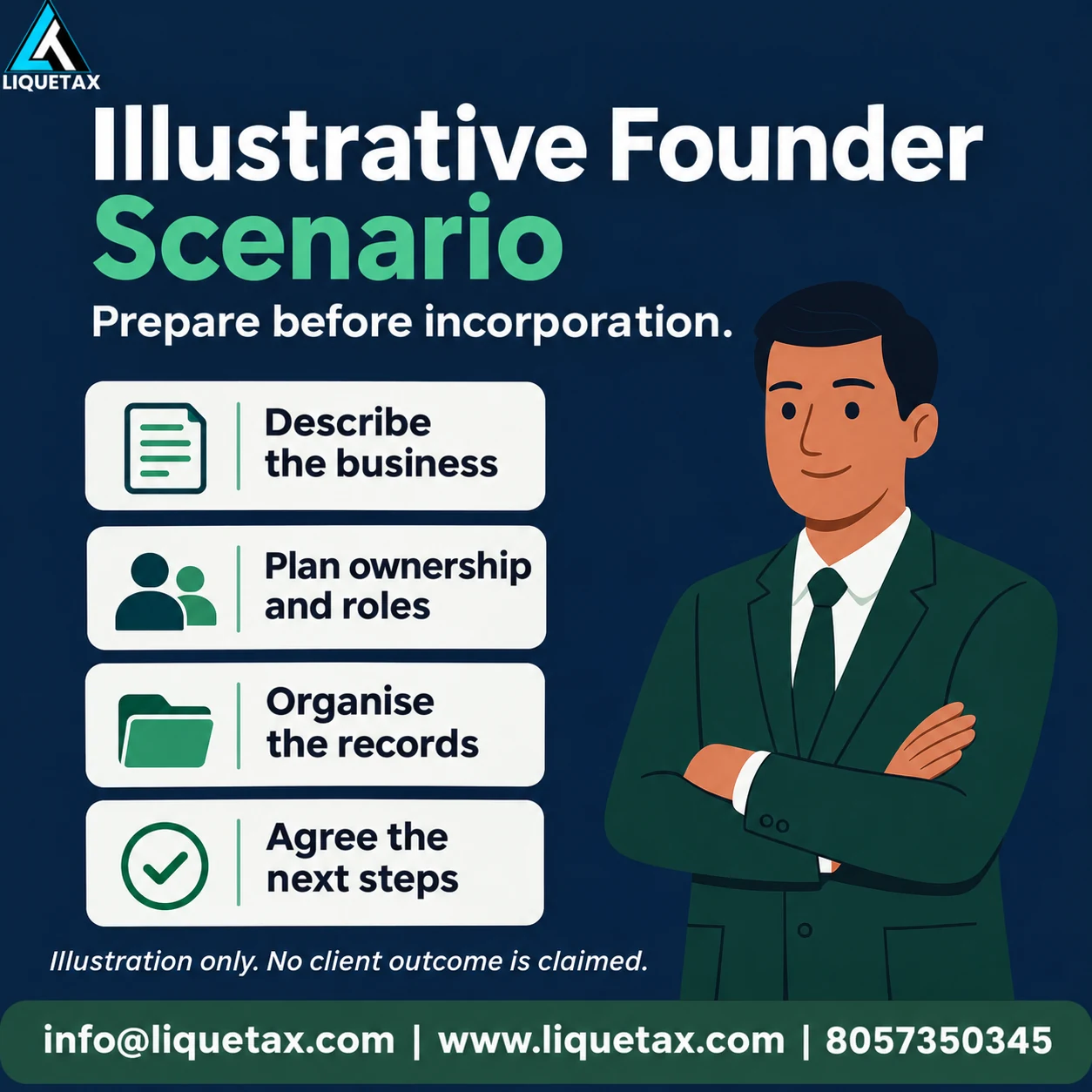
The illustrative founder writes a short description of the service, intended customers, owners and funding plan. They compare a proprietorship, LLP and company using the real commercial needs. A company is not chosen merely because a promotion says it is the fastest way to start.
Continuing compliance is included in the budget alongside setup. The founder asks which registrations are actually needed for the activity and which are optional. This avoids spending the entire budget on a bundle without understanding the later work.
Review the name before committing to it
The founder prepares name alternatives and considers whether the proposed wording fits the activity. Brand and trademark questions are reviewed separately from company-name approval. A domain purchase is not treated as proof that the name will be approved or safe to use.
The founder waits before placing a large print order. A suitable staged plan allows records and commercial preparation to continue while the name is reviewed. This is a planning choice, not a measured account of a real customer's speed or savings.
Prepare consistent identity, office and authority evidence
The application file contains the relevant founder and director records, proposed office arrangement and constitution information. Names and addresses are checked for consistency. Genuine differences are explained before the form is finalised.
If premises are used with permission or under rent, the appropriate supporting records are gathered. The founder confirms who will sign and how necessary authentication will be completed. Missing evidence is listed rather than replaced with invented details.
Review status and clarification requests
The founder reviews the final particulars and authorises submission through the agreed process. They retain the application reference and monitor official communication. An adviser may help prepare a clarification response, but the authority controls its own review and decision.
The plan leaves room for requests and corrections. A prepared file can reduce avoidable queries, but it cannot guarantee approval within a fixed number of days. The founder reports the actual status to prospective customers and partners.
Prepare the work after incorporation
After a granted certificate, the founder reviews approved particulars and receives a handover of completed and pending actions. Banking, capital records, governance, accounts, tax and licences are considered according to the actual company.
A calendar assigns who collects records, who reviews them and how completion is evidenced. The founder keeps the documents centrally so that a later change of adviser does not lose the filing history. The useful lesson is readiness and control, supported by the real records.
Founder readiness checklist
| Decision or record | Review |
|---|---|
| Structure and budget | Ownership, liability and continuing costs. |
| Name alternatives | Company-name and separate brand questions. |
| Identity and authority | Consistent records and authorised signatories. |
| Office arrangement | Genuine premises and supporting evidence. |
| Follow-up calendar | Operational, tax and company-specific next steps. |
Illustrative example
Illustrative planning choice: the founder postpones a branding expense until the name review is complete and uses that time to organise office and identity records. This describes a practical sequence without claiming an actual three-day incorporation.
Frequently asked questions
Is three-day government approval guaranteed?
No. The authority's process and any clarification request can affect timing.
Is this a real LIQUETAX client story?
The page is explicitly an educational scenario and does not assert a verified client outcome.
Should every bootstrapped founder choose a company?
Compare the actual ownership, liability, investment and continuing-compliance needs first.
Can incomplete documents be fixed by inventing details?
No. Use genuine evidence and resolve the gap before confirming the relevant declaration.
What happens after a certificate is granted?
Review the actual banking, governance, capital, tax, licence and filing work that remains for the company.
Get clarity before your next filing
Bring the records listed above to a LIQUETAX conversation. Ask for the applicable work, documents, responsibilities and fee components in writing before you authorise a submission. Government charges, professional fees and applicable GST should be shown separately.
Book a conversationOfficial references
Check the linked authority for the rule, form and notification that applies to your facts and period. This guide explains preparation and does not record a professional opinion on an individual case.