
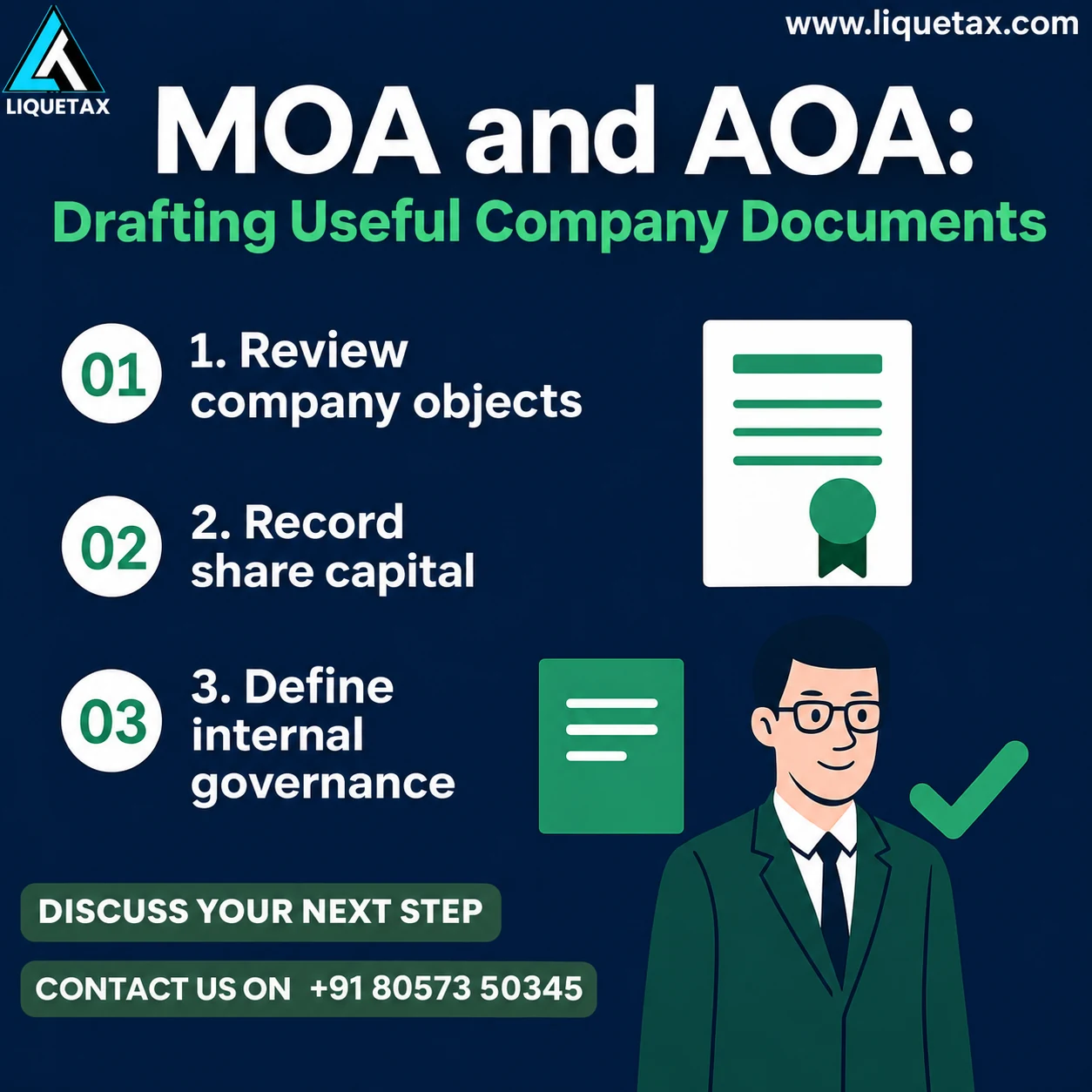
- Understand the role of each document
- Draft objects around actual activities
- Make capital and ownership consistent
- Use model articles deliberately
Understand the role of each document
The memorandum of association records fundamental features of a company, including its name, registered-office state, objects, liability and capital where applicable. The articles of association set out internal regulations, including management and members’ rights. Read them together with the Companies Act; a provision in a private document cannot override a mandatory statutory rule.
These documents should reflect the company being formed. Copying another business’s objects or investment rights can create inconsistencies between the founders’ expectations and the legal records. Start with an agreed description of the business, share ownership, directors and decision-making before producing the formal drafts.
Draft objects around actual activities
Explain the goods or services the company intends to provide and the matters necessary to pursue those objects. Avoid filling the memorandum with unrelated regulated activities merely to appear comprehensive. An object allowing a financial or other regulated activity does not grant the licence required to carry it out.
Consider reasonable future plans without using vague claims that the company can do anything whatsoever. Discuss a material new activity before committing to contracts if it may fall outside the objects. The solution may involve an appropriate amendment and other approvals; do not assume every business decision can be validated retrospectively.
Make capital and ownership consistent
Distinguish authorised capital from shares actually subscribed and paid for. Reconcile the memorandum’s subscriber information with the incorporation form and the founders’ agreed ownership table. Check share classes and rights against the articles and any intended financing structure. A verbal promise to issue shares later should not be presented as an already completed allotment.
The articles should address the company’s needs for share transfers, meetings, voting, director appointments and authority, subject to law. If founders agree reserved matters or other investor rights, review how the relevant documents work together. Contradictory provisions create uncertainty exactly when a disagreement or funding transaction arises.
Use model articles deliberately
Model provisions such as the relevant table in Schedule I can provide a starting point where applicable. Adoption of model provisions does not mean the company has no articles or no need to complete the correct incorporation documents. Check which clauses are adopted, excluded or altered and whether the final text suits the entity and share structure.
The execution route depends on the incorporation circumstances. Electronic memorandum and articles forms are available for eligible cases, while particular subscribers or situations may require attachments and additional authentication. Do not assume that every applicant must print the same documents on stamp paper or use an obsolete digital-signature category. Follow the current MCA instructions.
Maintain the approved version and amend properly
Before signing, compare names, capital, subscribers, objects and governance clauses across all linked documents. Ask each founder to review the provisions affecting ownership and control. Save the final submitted and registered versions separately from drafting notes, together with the relevant approvals and filing acknowledgements.
The procedure for a later amendment depends on what changes. Changes to objects, articles, capital, name or registered-office state do not all follow an identical route. Check the required resolution, filing, timing and external approval for the particular change. Update the controlled copy only after completing the proper process, and communicate material changes to the people who rely on it.
Practical checklist
- Approve the business description, ownership table and proposed governance before drafting.
- Check objects against current activities and any required sector licences.
- Reconcile authorised capital, subscribed shares and subscriber details.
- Review model clauses and any founder or investor arrangements for conflicts.
- Preserve registered versions and document the exact procedure for later amendments.
Illustrative example
Two founders agree that significant borrowing requires joint approval, but their draft articles give broad authority without reflecting the intended control. Before filing, they review a lawful way to align the documents and decision process. This illustrates why constitutional documents need substantive review; it is not a promise that one clause can prevent every future dispute.
Frequently asked questions
Are the memorandum and articles interchangeable?
No. They serve different purposes and need to work together with the Companies Act and other applicable documents.
Do private companies need articles?
Yes. Using applicable model provisions is a drafting choice; it does not eliminate the company’s articles or the relevant filing requirements.
Can objects authorize a regulated business?
Objects describe company purposes. The licences and conditions for the activity must be satisfied separately.
Does every amendment use the same resolution?
No. The route depends on the provision and change. Check approvals and filings specifically rather than applying one rule to all amendments.
Should signed drafts replace the registered copy?
No. Keep the registered version as the controlled reference and preserve drafts separately. Update it through the appropriate amendment process.
Official references and next step
For help applying this checklist to your documents, contact LIQUETAX with the relevant facts and the support you need. Request a written scope and fee breakdown before work begins.