
- Confirm whether the proposed operation is permitted
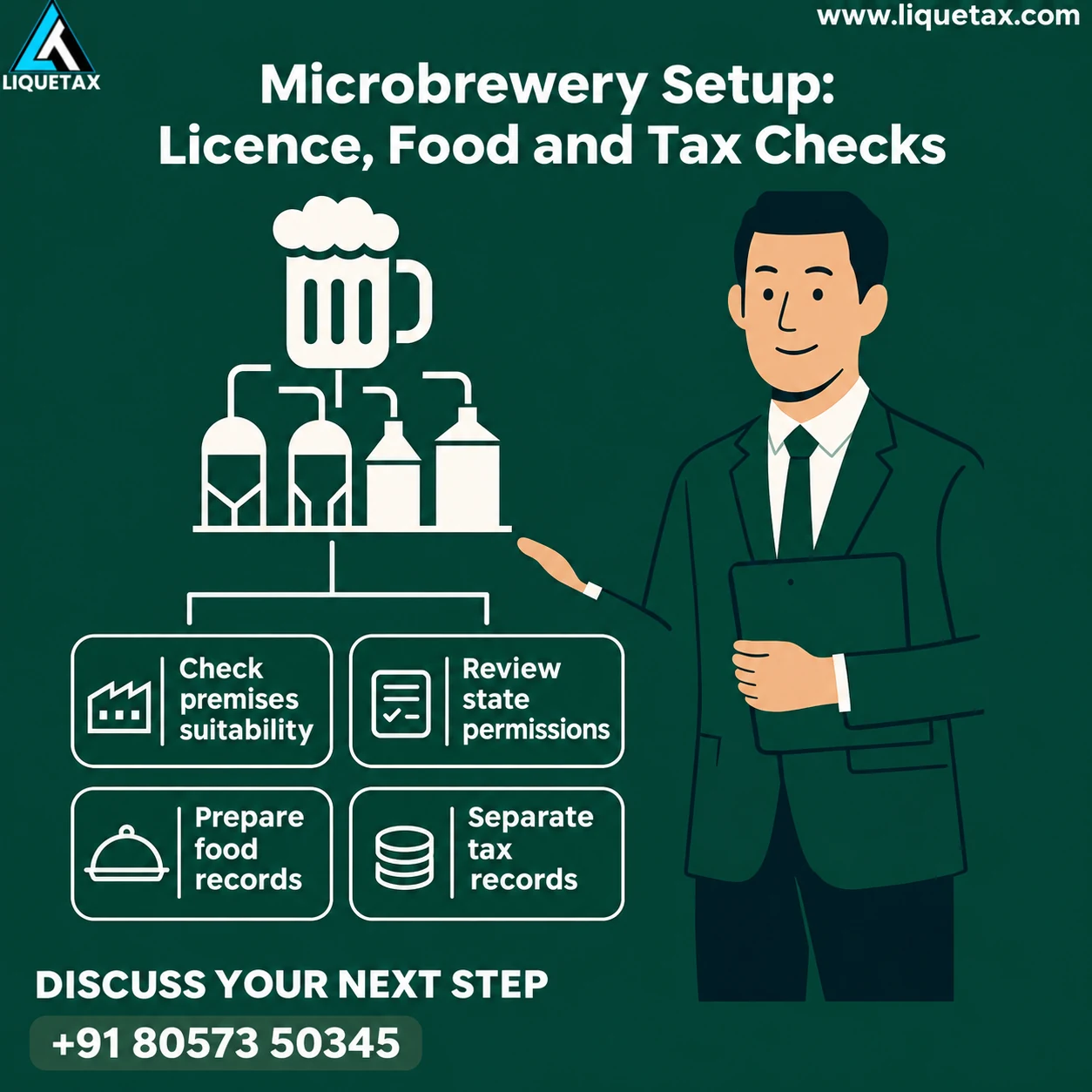
- Check the premises before committing
- Handle food licensing as a separate workstream
- Separate alcohol and restaurant tax treatment
A microbrewery project needs a location-specific permission plan before major spending on premises or equipment. Brewing, serving alcohol, operating a restaurant and selling packaged products can require different permissions. There is no single India-wide microbrewery licence package, fixed approval period or reliable universal capital-cost figure. Start with the proposed state and exact business model.
Confirm whether the proposed operation is permitted
Identify whether you will brew only for consumption on the premises, package beer, distribute it elsewhere or operate through another producer. Ask the state excise authority which licence category and conditions cover that model. State rules may restrict location, capacity, sale channels, applicant eligibility or premises. A restaurant’s existing alcohol-serving permission should not be assumed to authorise manufacturing beer.
Check the premises before committing
Review land use, building permission, occupancy, fire access, water supply, drainage, waste handling and pollution-control requirements. Confirm whether the lease permits brewing and the necessary alterations, and whether landlord consent and technical drawings are needed. A site can be commercially attractive but unsuitable for licensing. Make the approval assumptions explicit in the project plan before purchasing equipment or announcing an opening date.
Handle food licensing as a separate workstream
FSSAI licensing or registration depends on the food-business activities and applicable eligibility. Use FoSCoS to identify manufacturing and restaurant requirements for the actual premises and scale. Food-safety obligations include hygiene, safe water, production controls, records and applicable product standards. An FSSAI licence does not grant permission to manufacture or sell liquor under state excise law; the two approvals serve different purposes.
Separate alcohol and restaurant tax treatment
Alcoholic liquor for human consumption is outside the GST levy, while applicable state excise and sales-tax or VAT obligations require review. Food, non-alcoholic drinks and other supplies can fall under GST according to their classification and current notifications. Mixed operations require careful invoicing and accounting. Do not apply one blanket GST rate to the entire bill or assume all input tax on the premises is recoverable.
Build operational controls before opening
Document procurement, brewing batches, storage, stock movements, wastage, sales and returns using the records required by the relevant authority. Set up age-verification, sale-hour and other licence-condition controls applicable to the state. Keep renewals, inspections and reporting dates in a monitored calendar. A licence approval is the start of ongoing compliance, not permission to disregard conditions when the venue becomes busy.
Budget from verified requirements
Obtain written authority requirements and supplier quotations for the selected location and capacity. Separate deposits, government fees, professional work, equipment, civil work and working capital. Revisit costs if the licence category or premises plan changes. Do not rely on generic claims of guaranteed 60–70% margins or a fixed six-week launch. Commercial projections need their own market and operating assumptions.
Practical checklist
- Specify the state, premises, brewing capacity and permitted sale channels.
- Confirm the applicable excise category before equipment or fit-out commitments.
- Map building, fire, pollution, municipal and food-business requirements.
- Set up separate alcohol and GST-taxable supply accounting.
- Document operating conditions, records, renewals and staff responsibilities.
Worked example
Illustration: a restaurant owner plans to install a small brewing system and serve only on site. The owner first checks whether the existing serving licence permits brewing, whether a separate microbrewery approval is available and whether the building supports the proposed process. FSSAI and tax registrations are then assessed alongside local clearances. Buying the brewing equipment first would not establish eligibility or guarantee the remaining approvals.
Frequently asked questions
Does FSSAI permission replace a liquor licence?
No. Food safety and state excise approvals address different legal requirements.
Is beer charged GST like ordinary goods?
Alcoholic liquor for human consumption is excluded from GST. Applicable state taxes and other taxable supplies still require separate analysis.
Can I use another state’s licence checklist?
It may help identify questions, but the actual state rules, category and premises conditions control the application.
Are all input GST credits available?
No. Mixed taxable and non-GST operations and other credit restrictions require a proper review.
Can an adviser guarantee the opening date?
No. Approval, construction and operational readiness depend on authority review and actual project conditions.
Official references
- Karnataka State Excise Department
- FSSAI: licensing and registration
- FoSCoS: food business application
- CBIC: GST levy and alcoholic liquor exclusion
- India Code: Central Goods and Services Tax Act
For help reviewing your documents and the correct next step, contact LIQUETAX. The scope and any professional fee should be agreed in writing after the facts are checked. This article provides general information; individual eligibility depends on the applicable law and records.