
- Choose the correct income period
- Separate a nil payment from no filing obligation
- Claim genuine excess tax through an eligible route
- Review losses before deciding that filing is unnecessary
A zero tax balance can arise because income is low, a rebate applies, tax was already deducted or losses reduce the computation. These situations are not interchangeable. Decide first whether the law requires a return. Only after that should you consider whether voluntary filing has a useful, accurate purpose in your particular circumstances.
Choose the correct income period
For income earned from 1 April 2025 to 31 March 2026, select Assessment Year (AY) 2026-27 and apply the Income-tax Act, 1961. Income earned from 1 April 2026 belongs to Tax Year 2026-27 under the Income-tax Act, 2025. These are different periods. A return or notice about an earlier year does not move to the new Act merely because you handle it after April 2026.
Separate a nil payment from no filing obligation
TDS or advance tax can cover the entire liability without removing the need to file. A rebate can reduce tax for an eligible resident individual even though income is above the basic exemption. Taxpayer type, residency, specified transactions and foreign-asset conditions can also affect filing duties. Companies and firms do not simply apply the same income threshold as a salaried individual. Check the complete statutory test.
Claim genuine excess tax through an eligible route
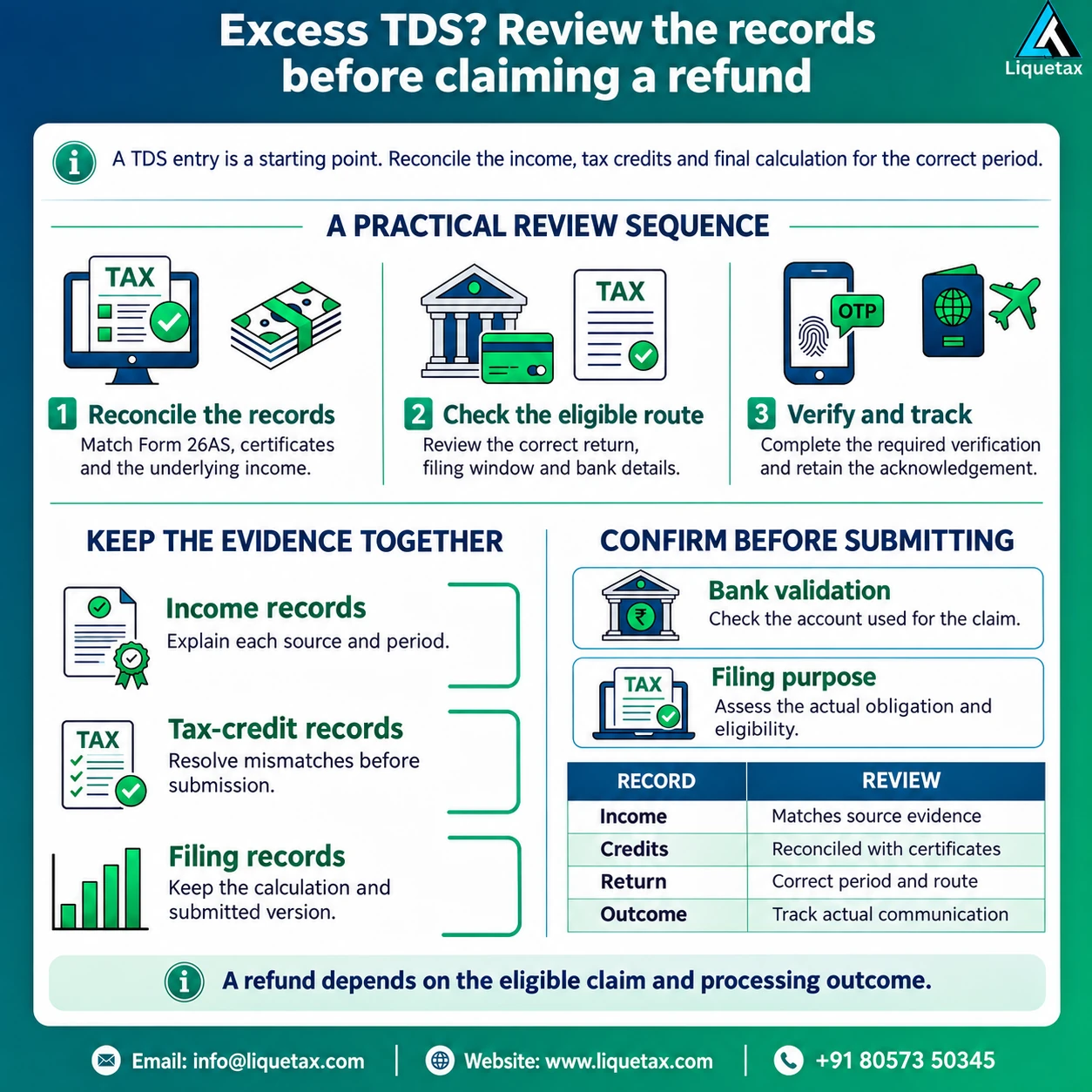
Where tax credits exceed final liability, an eligible original or belated return may establish the claim for a refund. Reconcile Form 26AS, certificates and the underlying income, and check the available filing window. Complete verification and bank validation. A refund is not guaranteed merely because a certificate shows TDS. ITR-U cannot be used to create or increase a refund after an ordinary window has closed.
Review losses before deciding that filing is unnecessary
A business or investment loss can matter in future years, but carry-forward rules depend on the type of loss and timely compliance conditions. Record the transaction and computation properly and assess the applicable return requirement. Do not assume all losses can be preserved by a late voluntary return, or that every loss disappears after late filing. The relevant category determines the answer.
Use returns as an accurate financial record
A return and computation can help explain declared income when an institution requests documentation. They do not guarantee loan sanction, a visa, tenancy approval or a particular interest rate. Keep bank and source records consistent with the return. Inventing income to build a financial profile is not an acceptable shortcut. If there was genuinely no income, report the facts rather than manufacturing a salary or business figure.
Weigh the administrative work and follow-through
A voluntary return still needs the correct form, complete relevant disclosures and verification. Review the draft just as carefully as a mandatory return. Retain its acknowledgement and monitor any later communication. Filing a misleading simplified form or omitting a relevant transaction to save time can create more work than the intended benefit. If no obligation or useful purpose exists, document that assessment instead of assuming everyone needs a nil return every year.
Practical checklist
- Explain why the tax balance is zero: income, rebate, credits or losses.
- Check mandatory filing rules before describing the return as voluntary.
- Identify the actual purpose, such as an eligible refund or loss record.
- Choose the correct form and use genuine income and source documents.
- Complete verification and retain the computation and acknowledgement.
Worked example
Illustration: a resident employee has nil final tax after the applicable rebate but has income above the relevant basic exemption. That person should review the filing obligation rather than assuming the return is voluntary. Another person below the threshold with genuine excess TDS may have a valid refund-related reason to file. Neither should invent extra deductions or income to obtain a more attractive document or larger refund.
Frequently asked questions
Is a return compulsory whenever tax is zero?
Not necessarily. Apply the statutory filing conditions; the zero balance alone does not answer the question either way.
Can I file only to build a financial record?
A truthful eligible return can document declared facts, but it must not invent income and does not guarantee third-party approval.
Does the rebate ceiling replace the basic exemption?
No. Rebate affects calculated tax while filing duties follow separate tests.
Can a nil-tax return preserve every loss?
No. Check the relevant loss category, timing and statutory conditions.
Can I get old TDS refunded through ITR-U?
Not by creating or increasing a refund. Assess the proper available route and any case-specific condonation process.
Official references
- Income Tax Department: returns and updated returns
- Income Tax Department: AY 2026-27 salary tax guidance
- Income Tax Department: e-verification manual
For help reviewing your documents and the correct next step, contact LIQUETAX. The scope and any professional fee should be agreed in writing after the facts are checked. This article provides general information; individual eligibility depends on the applicable law and records.