
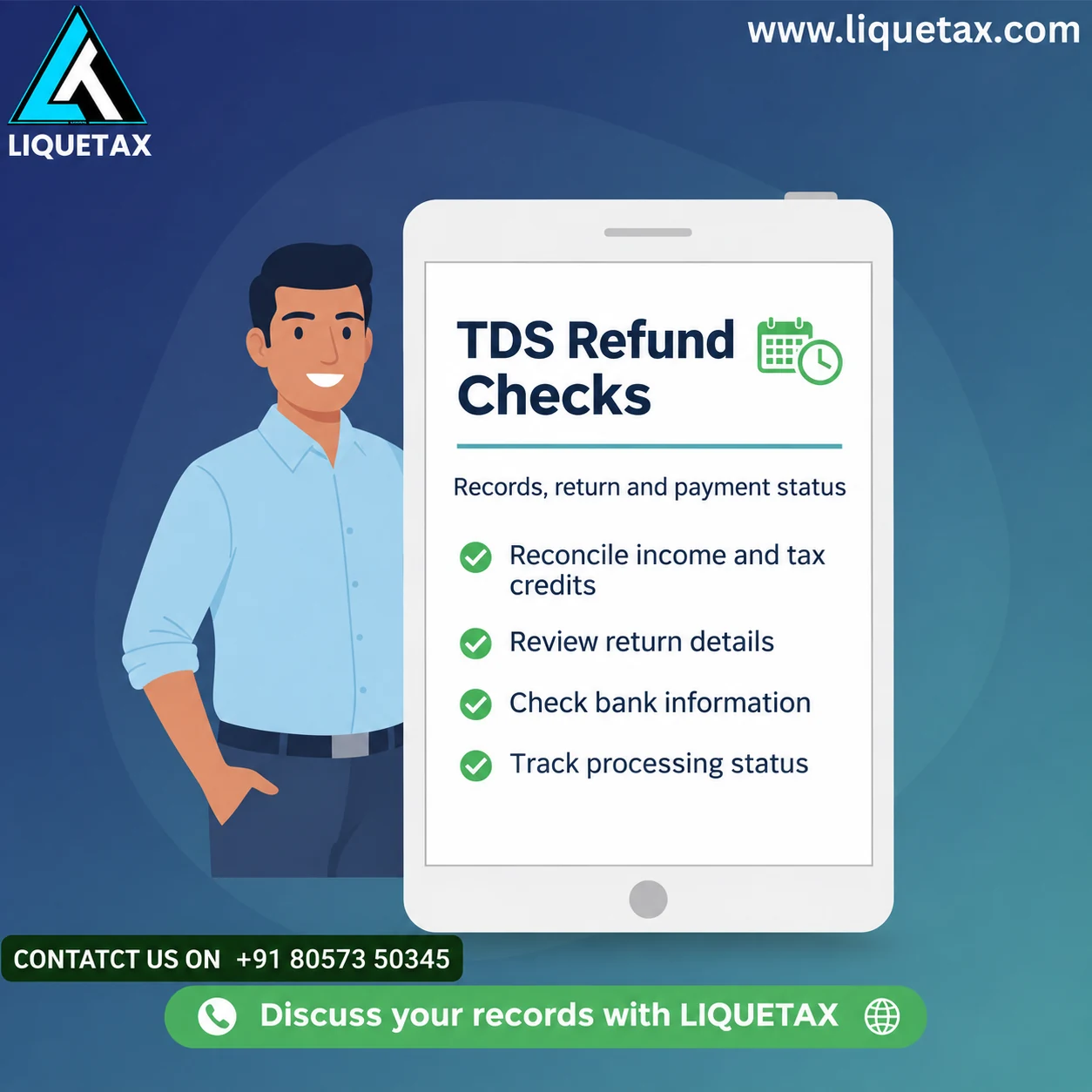
- 1. Collect certificates
Identify payer, period and deducted tax.
- 2. Match credits
Review the relevant official tax records.
- 3. Check the return
Confirm income, liability and filing route.
- 4. Track the refund
Read processing and payment status.
Understand why TDS and final liability can differ
An employer, bank or customer may deduct tax based on the payment and applicable withholding rules. Your final liability depends on the complete income and lawful treatment for the relevant period. A deduction can be higher or lower than that final amount.
Collect records from all relevant payers. Keep salary, interest and business withholding identifiable. Do not assume that a low-income statement or a single certificate is enough to determine the final return, especially when other sources of income exist.
Match the credit before claiming it
Compare TDS certificates with the relevant tax-credit information and your own income records. Check PAN, period, payer and amount. Investigate missing or incorrect entries instead of entering an unsupported number merely to make the refund estimate larger.
If the payer's reporting needs correction, raise a specific request with the payer and retain the evidence. An adviser can help identify the mismatch, but the underlying reporting or payment record may need action by the party responsible for it.
Use the appropriate return and permitted filing route
Select the return based on the taxpayer's actual income and conditions. Include complete income, genuine deductions and eligible credits. Review the correct period and framework before applying rates or copying a previous return.
Check the current statutory route and applicable deadlines, including any official extension for the relevant category. Avoid a universal 'last date' that ignores the taxpayer and filing type. A belated, revised, rectification or other route is not interchangeable and may have different eligibility or refund consequences.
Confirm verification and processing
After filing, confirm the acknowledgement and verification status. Keep the submitted return and computation. The refund shown in that return is a claim and remains distinct from a processed amount and a completed bank payment.
Read the processing communication if the result differs. Compare credits, income and calculation before deciding on a response. A new return should not be submitted simply because a payment has not arrived, without checking the actual status and available route.
Prepare the bank and follow-up records
Review the refund bank account's validation and relevant nomination status through the official portal. Where a refund was issued but payment failed, the refund-reissue process may be the suitable next step. It does not replace return processing.
Retain payment status, reissue or grievance acknowledgements and the dates of follow-up. No preparation service can assure a particular refund percentage or payment time. A clear file lets the reviewer focus on the actual issue and gives you evidence of each authorised action.
TDS refund evidence checklist
| Record | What to check |
|---|---|
| Payer certificates | Correct PAN, period and deduction. |
| Tax-credit information | Credit availability and mismatches. |
| Income records | Complete sources, not only TDS-bearing receipts. |
| Filed return | Applicable form, computation and verification. |
| Refund and bank status | Processing, payment or failed-payment route. |
Illustrative example
Illustrative example: a bank deducted tax from interest but the taxpayer also has business income. The final refund position should be calculated from the complete return, not just the bank certificate. Missing credit information should be investigated before an unsupported claim is made.
Frequently asked questions
Will all tax deducted be refunded?
No. A refund depends on eligible credits exceeding the final liability for the relevant period.
What if my PAN is wrong in a certificate?
Raise the specific issue with the payer and have the reporting and available credit checked before relying on it.
Can I claim from a payment screenshot alone?
Keep proper certificates, credit records and the underlying income evidence. A screenshot may not explain the full credit.
Is the deadline identical for every taxpayer?
No. Check the period, taxpayer category, filing route and applicable official extension.
When is refund reissue appropriate?
It concerns an issued refund whose payment failed. Confirm that stage through the official record.
Get clarity before your next filing
Bring the records listed above to a LIQUETAX conversation. Ask for the applicable work, documents, responsibilities and fee components in writing before you authorise a submission. Government charges, professional fees and applicable GST should be shown separately.
Book a conversationOfficial references
- Income Tax Department: refund status guide
- Income Tax Department: bank-account validation
- Income Tax Department: refund reissue guide
Check the linked authority for the rule, form and notification that applies to your facts and period. This guide explains preparation and does not record a professional opinion on an individual case.