
- 1. Identify the year
Connect income to the right return.
- 2. Reconcile credits
Check withholding and tax payments.
- 3. Compute liability
Use the applicable framework and records.
- 4. Compare status
Separate a possible claim from a paid refund.
Do not use '2026 refund' as the only identifier
The calendar year in a headline may be the year of filing, processing or payment. It is not enough to identify the income period. Write the financial year and assessment year for the return concerned, or the appropriate tax-year framework for current-period planning.
A refund received during 2026 can relate to an older return. Keep it linked to the corresponding acknowledgement and processing record. When reviewing more than one year, create separate worksheets so that credits and refund payments are not accidentally counted twice.
Gather complete income before estimating a refund
Collect salary records, freelance or business income, bank interest, investments, property income and other relevant receipts. Use the records appropriate to the actual activity. A salary TDS certificate does not necessarily describe the taxpayer's complete income.
Compare available tax information with your own records. Investigate duplicates, missing entries and amounts that do not belong to you. Do not automatically remove a genuine receipt because it is absent from a portal summary, or accept an incorrect entry without review.
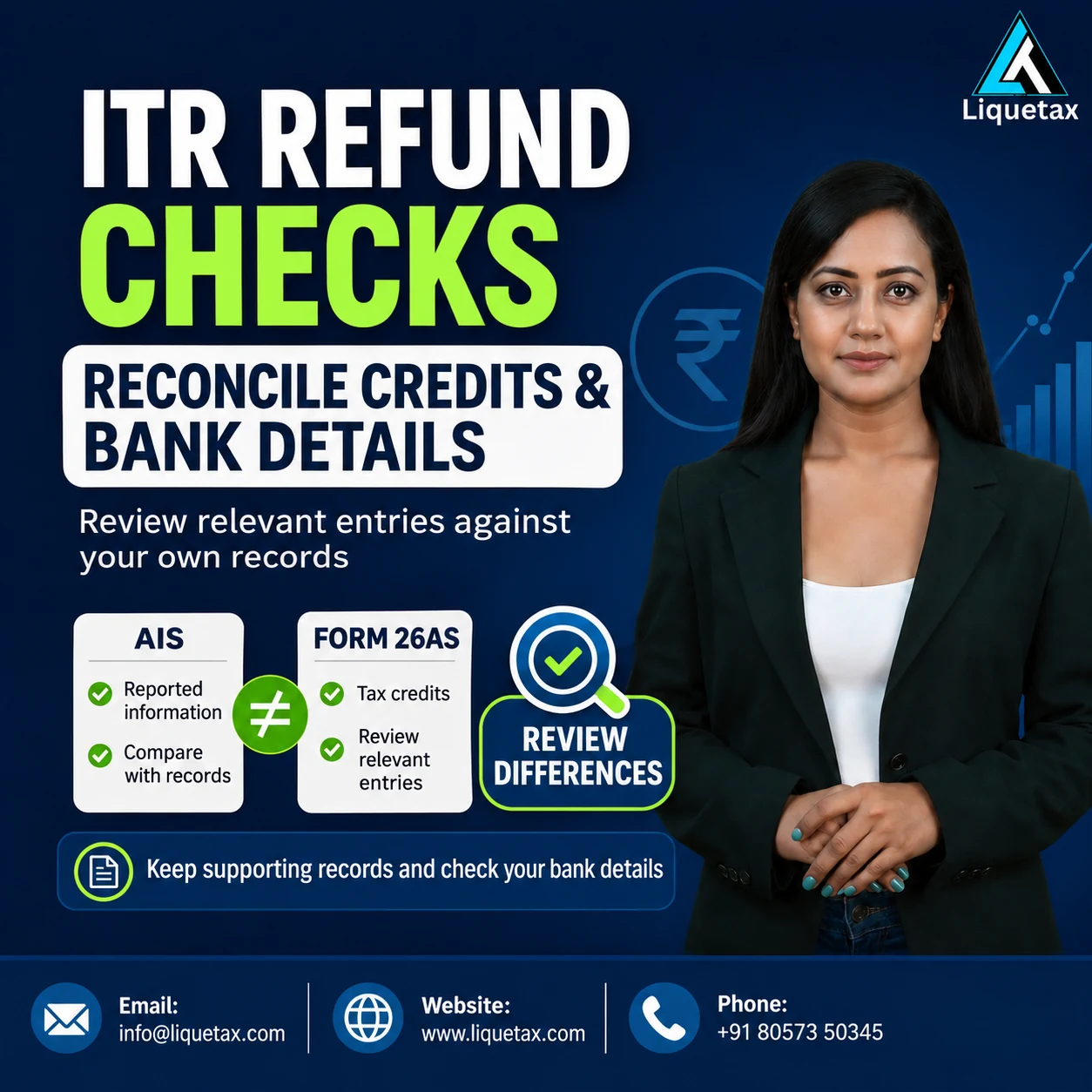
Reconcile the credits and tax already paid
Review the tax withheld by employers, customers, banks or other payers against the relevant credit records. Keep the certificates and payment challans. If the payer's data appears incorrect, raise the specific issue with that payer and preserve the communication.
Match payments to the correct PAN and period. The fact that money was deducted from a receipt does not guarantee that the credit is correctly available in the return. Your refund estimate should show the amount supported and any credit still requiring correction or confirmation.
Use lawful deductions and the correct option
Calculate liability using the applicable period and eligible regime or filing route. Include only genuine deductions supported by records and allowed under that option. A list of deductions available under one framework should not be copied into another without checking eligibility.
Compare the final liability with eligible tax credits and payments. Keep the working that explains the difference. A calculation suggesting a refund is still separate from the filed claim, department processing and actual bank payment.
Check earlier submissions before taking action
If a return has already been filed, read the submitted copy and official status. Confirm whether the claim was processed, adjusted, paid or failed at the payment stage. The available correction or response route depends on the actual record and applicable conditions.
If no return was filed for the relevant period, review the current permitted filing route and deadline before acting. A general statement that refunds can always be claimed at any time is not reliable. Keep the year, action and reason explicit in the review.
A period-wise refund worksheet
| Item | Record the evidence |
|---|---|
| Income period | Year and relevant acknowledgement. |
| Total income | Source-wise figures and supporting records. |
| Eligible deductions | Evidence and applicable option. |
| Tax credits and payments | Certificates, credit records and challans. |
| Earlier refund activity | Processing, payment and reissue status. |
Illustrative example
Illustrative arithmetic only: if reviewed tax liability is ₹28,000 and eligible tax already paid is ₹40,000, the difference is ₹12,000. That figure describes a possible excess payment; the filed claim, processing result and bank payment still need separate confirmation.
Frequently asked questions
Does TDS automatically mean I will receive a refund?
No. Compare eligible credits with the final tax liability after considering all relevant income and the correct framework.
Can a refund paid in 2026 relate to an older year?
Yes. Link it to the actual return and acknowledgement instead of relying on the payment year.
Should I claim every deduction listed online?
No. Check the selected option, actual eligibility and genuine supporting records.
What if a tax credit is missing?
Investigate the relevant payer's reporting and payment evidence. Keep the discrepancy visible until it is resolved.
Is this worksheet proof that the department owes me money?
It supports a review. The official claim, processing and payment records establish the current status.
Get clarity before your next filing
Bring the records listed above to a LIQUETAX conversation. Ask for the applicable work, documents, responsibilities and fee components in writing before you authorise a submission. Government charges, professional fees and applicable GST should be shown separately.
Book a conversationOfficial references
Check the linked authority for the rule, form and notification that applies to your facts and period. This guide explains preparation and does not record a professional opinion on an individual case.