
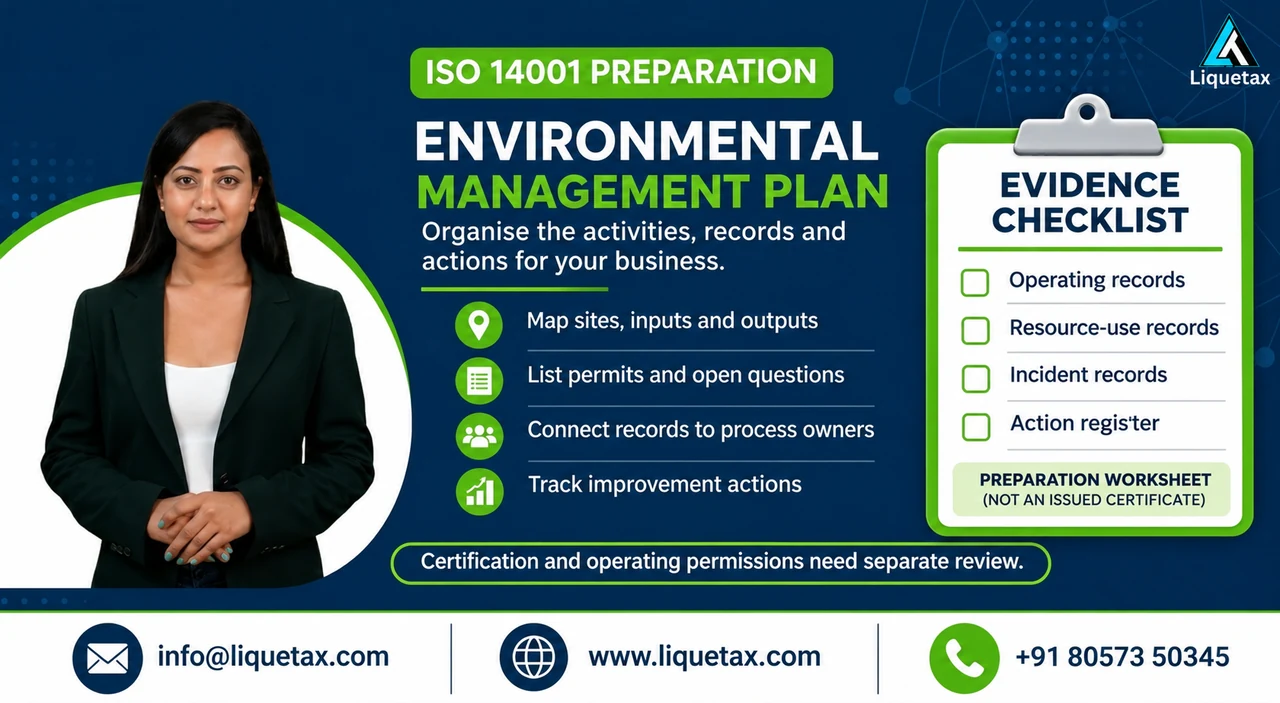
- Map activitiesRecord sites, inputs and outputs.
- Check obligationsList actual permits and unresolved questions.
- Track evidenceConnect logs to owners and processes.
- Review actionsMeasure and follow up improvements.
An environmental-management project should begin with how your business uses resources and handles its operating impacts. A factory, warehouse and office have different practical questions. Use the actual site and activities to build a manageable action plan, then assess the certification route and any separate permissions.
Begin with the current edition and your existing record
ISO’s public catalogue identifies ISO 14001:2026 as the published edition from April 2026. The older edition in this retained URL should not be treated as current guidance. If your business already holds a certificate, confirm the transition plan and certificate position with the issuing body. A standard’s publication date is not, by itself, an individual certificate’s expiry date.
Make a simple operating map
List the premises, processes, materials and outsourced work. Walk through a normal operating day and record resource use, storage, waste handling and unusual events that require an action. For a small manufacturer, start with receiving materials, production, cleaning and dispatch. An office may begin with purchasing, electricity use and disposal arrangements. These are planning examples; the actual impacts and records must come from your operations.
Keep certification and permissions in separate columns
Maintain a register of the permits, consents and other obligations your business has identified with the appropriate adviser. Include the actual record, issuing authority, responsible person and action needed. An environmental-management certificate does not replace a pollution-control consent, waste permission or another applicable requirement. Where applicability is uncertain, record the question and arrange the specialist assessment instead of marking it complete because a consultant supplied a manual.
Gather evidence your staff can explain
Organise relevant bills, operating logs, waste-handover records, equipment checks, incident records and training evidence. Match each document to a process and owner. Avoid collecting a large folder without knowing what question each record answers. When a record is missing, log the gap and agree how future evidence will be created. Do not fabricate historical quantities, disposal receipts or training attendance to make the folder look complete.
Choose useful improvement actions
Select a small number of problems the team can act on: unexplained resource use, repeated spills, mixed storage or missing handover records, for example. Set a starting measurement, owner and realistic review date. Compare like-for-like periods and explain changes in production before claiming improvement. A reduction target is a business plan, not evidence that a saving has already occurred. Use results to identify the next practical action.
Agree the work and costs before starting
Ask LIQUETAX to define the preparation tasks, sites, documents and coordination included in the engagement. Keep external certification, testing and any permission work itemised separately. Explain whether you want an initial readiness assessment, implementation support or a review of an existing system. The certification body chooses its assessment and makes its own decision. Do not accept a promise that a certificate resolves every environmental issue or automatically qualifies you for a buyer’s tender.
What an effective handover should contain
Request the approved scope, operating map, evidence index, unresolved legal-applicability questions and action register. Assign someone to keep these records useful after the consultant’s work ends. Before advertising certification, verify the certificate’s entity, sites, scope and status. Discuss material operational changes with the appropriate adviser and issuing body. A current-looking badge is less useful than a clear record of what the business manages and what remains unresolved.
Questions before you act
Will ISO 14001 replace my environmental permissions?
No. Keep permissions and applicable operating obligations separately assessed and tracked. Certification is a different assurance process.
Do I need to discard my existing certificate immediately?
Do not make that assumption from the publication of a new edition. Ask the certification body to confirm the transition instructions and the actual certificate position.
Keep the transition review separate from the permit register
For an existing environmental-management system, gather the current certificate, site scope, assessment findings and the body’s transition instructions. Compare them with operations that changed since the last review: processes, materials, outsourced work or waste handling. Assign an owner and evidence item to each gap instead of replacing the system with a generic new manual.
Maintain a separate register for applicable permissions, conditions and reporting responsibilities. Certification does not renew a consent or grant permission to operate. When an activity changes, check both the management-system implications and the relevant authority requirements. Use a sample operating record to see whether staff understand the controls in practice.
Official references and their limits
- ISO: ISO 14001:2026 catalogue and lifecycle ↗
Public catalogue checked, not the full paid standard. Published April 2026; transition arrangements need the certification body's written confirmation.
- ISO: Certification and accreditation explained ↗
Explains independent certification and verification routes; does not certify LIQUETAX or any particular certificate.
Older guidance must be read with subsequent changes. Reachability of a reference is not proof that it answers your particular case.
Continue with the relevant question
Prepare your next step
Read the related service guide →
Ask LIQUETAX about your requirement →
Share a short description first. Use an agreed secure channel for identity documents, bank details and tax records. Never send passwords or OTPs in a general enquiry.