
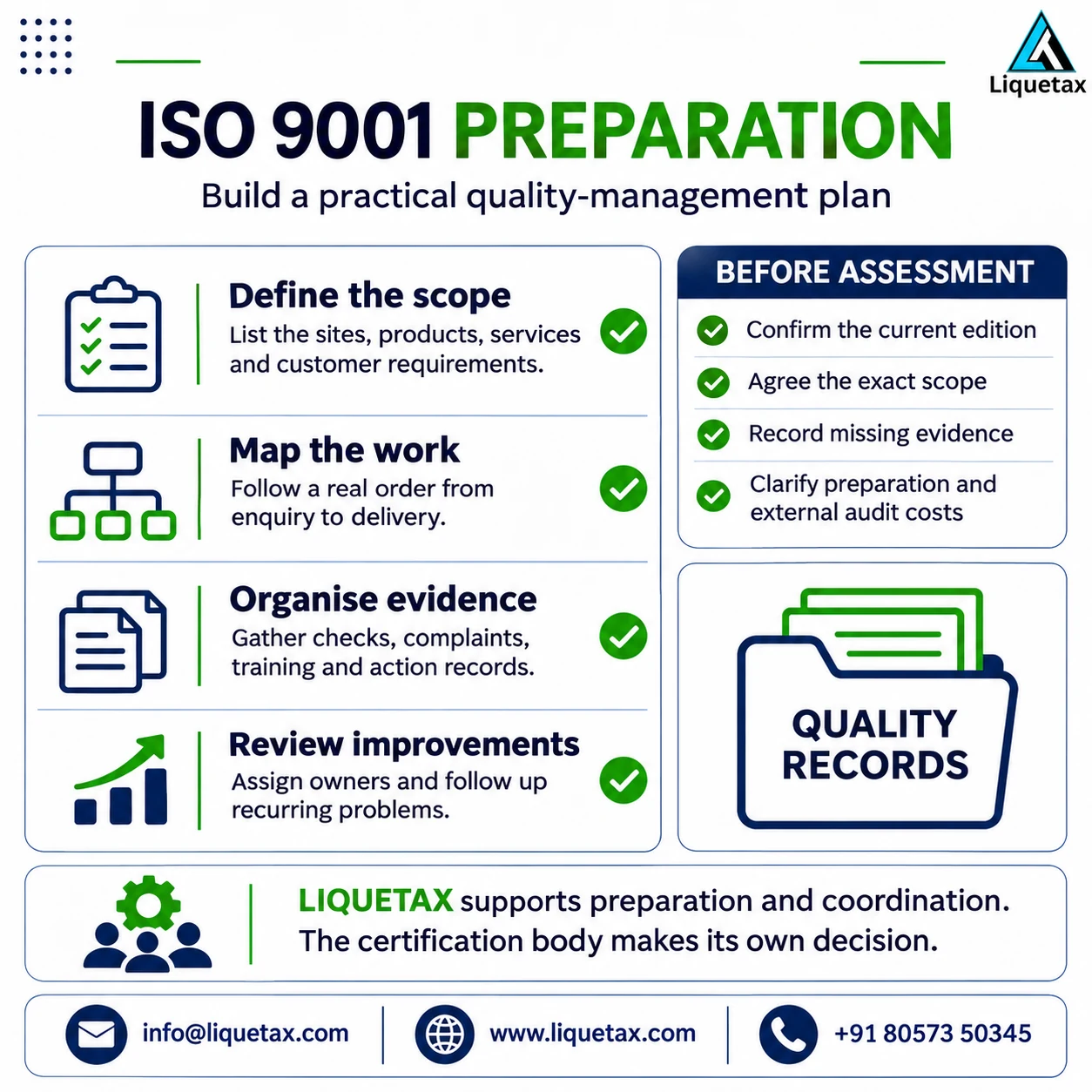
- Define scopeList sites, products and customer requirements.
- Map the workFollow one real order from enquiry to delivery.
- Build evidenceRecord checks, exceptions and improvements.
- Plan assessmentAgree the external audit and follow-up.
A buyer asking for ISO 9001 is asking about the way your business manages quality, not just a certificate image. Start with the products or services covered, the sites involved and the customer requirement. Build a system your team can use on an ordinary working day before arranging certification.
Check the edition before you buy a package
ISO announced ISO 9001:2026 on 16 September 2026. This retained URL refers to an older edition; use this updated preparation guide instead of treating the address as proof of the standard you should adopt. If you already hold a certificate, ask your certification body for written transition instructions and the position of your actual certificate. Do not assume that every earlier certificate became invalid on publication day.
Write a scope that matches the business
Describe what customers buy, which locations perform the work and which activities are outsourced. For example, a Noida component trader may need reliable purchasing, inspection and dispatch records; a software-support firm will need a different process map. Define the intended certificate scope before requesting quotations, and compare it with the exact buyer or tender wording. A broad-looking certificate can still be unsuitable for the contract you want.
Use real records, not a copied manual
Choose a recent customer order and follow it from enquiry to delivery. Identify who checks requirements, approves purchases, verifies output and handles complaints. Write short instructions where a missing decision causes errors. Gather actual evidence such as order reviews, inspection results, training records and corrective-action follow-up. A document that nobody follows should trigger a process discussion rather than an invented signature or retrospective attendance sheet.
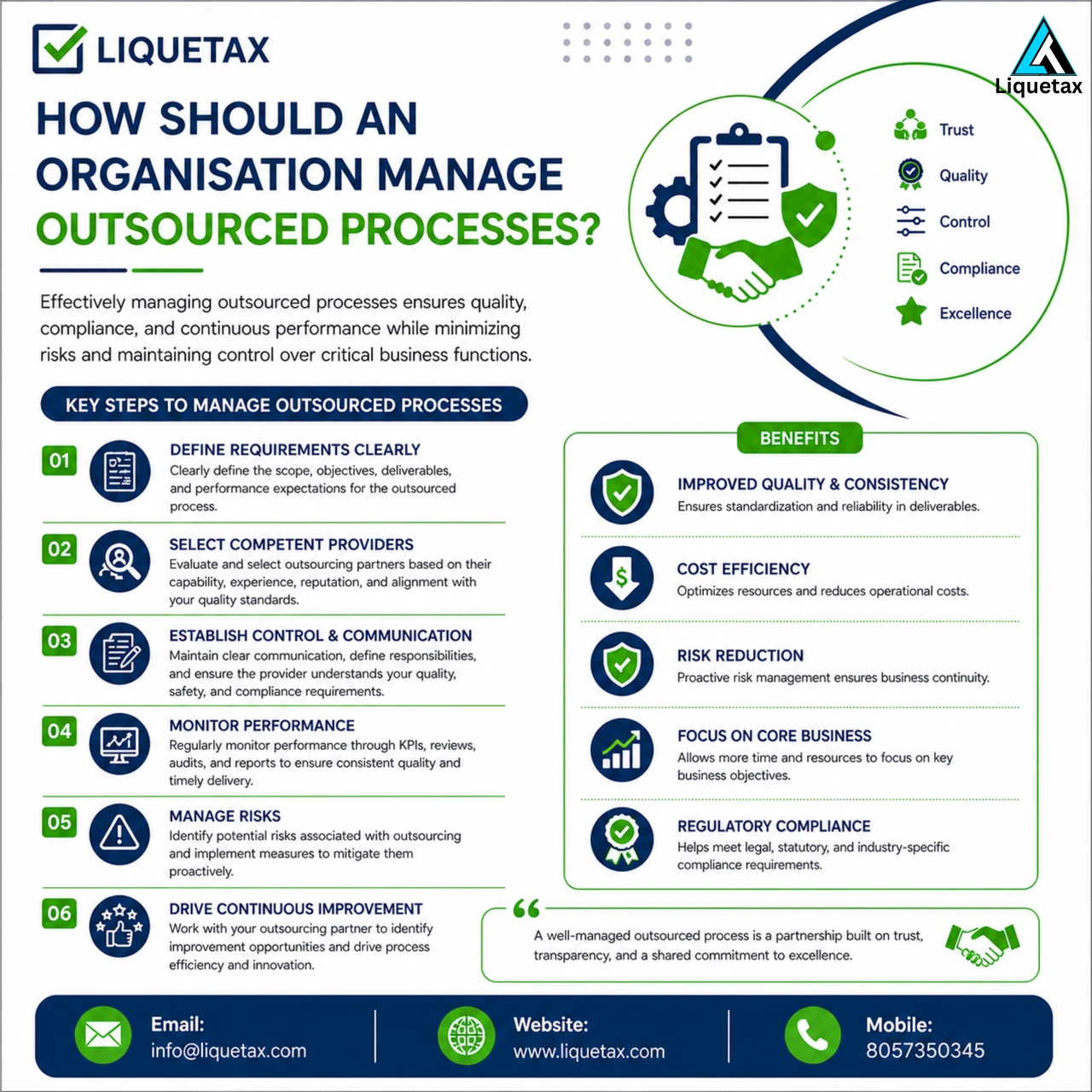
Make quality measurable for your team
Select a few measures that reflect real customer problems: repeat complaints, rework, delivery mistakes or unresolved supplier defects. Define how each is counted and who investigates an exception. Review a small sample first, then improve the process before extending it. These are suggested operating measures, not a promise of savings or a complete interpretation of every standard clause. The relevant standard and your actual work determine the assessment.
Separate preparation from certification
LIQUETAX can help organise the agreed process brief, readiness checklist, documents and coordination. The certification body conducts its assessment and makes its own certification decision. Compare quotations for preparation, external audit and ongoing support separately. Confirm the sites, activities, audit arrangements and exclusions in writing. Avoid buying an assurance of automatic tender acceptance: the buyer assesses its own qualification requirements.
What to bring to a readiness discussion
Prepare your activity and site list, customer or tender requirement, existing certificate if any, process owners, a recent order file and known quality problems. Tell the team whether you need first certification, a transition plan or a correction to the scope. Ask for a deliverable list, missing-evidence register and action owners. Confirm which tasks your employees must complete and how the preparation estimate will be updated when information is late.
Keep the system working after the assessment
Assign owners for new complaints, process changes and outstanding actions. Keep the assessment findings with the evidence used to resolve them. Check certificate particulars and the body’s verification route before using a certification claim in marketing. Review a change of address, product or operating model with the body when relevant. The useful result is a quality process that supports customer work, with certification claims that match the actual record.
Questions before you act
Does LIQUETAX issue the ISO certificate?
LIQUETAX’s role is the preparation and coordination agreed in writing. Certification is an external body’s decision; ISO itself does not certify businesses.
Should I discard my existing quality records when the edition changes?
No. Keep the records that show how your processes operate. Review the new edition and your certification body’s transition requirements, then identify the changes and evidence needed for your actual scope. Do not relabel the certificate before the body has completed the appropriate process.
Build a transition register for the certificate you actually hold
Start with your existing certificate, covered sites, scope and certification body. Ask the body for its written transition arrangement and identify the next scheduled assessment. Record the standard edition, requested evidence, action owner and agreed review point. This is more useful than ordering a replacement manual or changing the edition printed on marketing material.
Sample a recent customer complaint or failed delivery and follow the action through investigation, correction and effectiveness review. Use the result to identify gaps in the way your team works. Keep the transition plan tied to real process evidence; publication of a new edition does not itself demonstrate that your organisation meets it.
Official references and their limits
- ISO: ISO 9001:2026 publication announcement ↗
Confirms publication on 16 September 2026. Does not establish a particular certificate's transition deadline, validity or audit outcome.
- ISO: Certification and accreditation explained ↗
Explains independent certification and verification routes; does not certify LIQUETAX or any particular certificate.
Older guidance must be read with subsequent changes. Reachability of a reference is not proof that it answers your particular case.
Continue with the relevant question
Prepare your next step
Read the related service guide →
Ask LIQUETAX about your requirement →
Share a short description first. Use an agreed secure channel for identity documents, bank details and tax records. Never send passwords or OTPs in a general enquiry.