
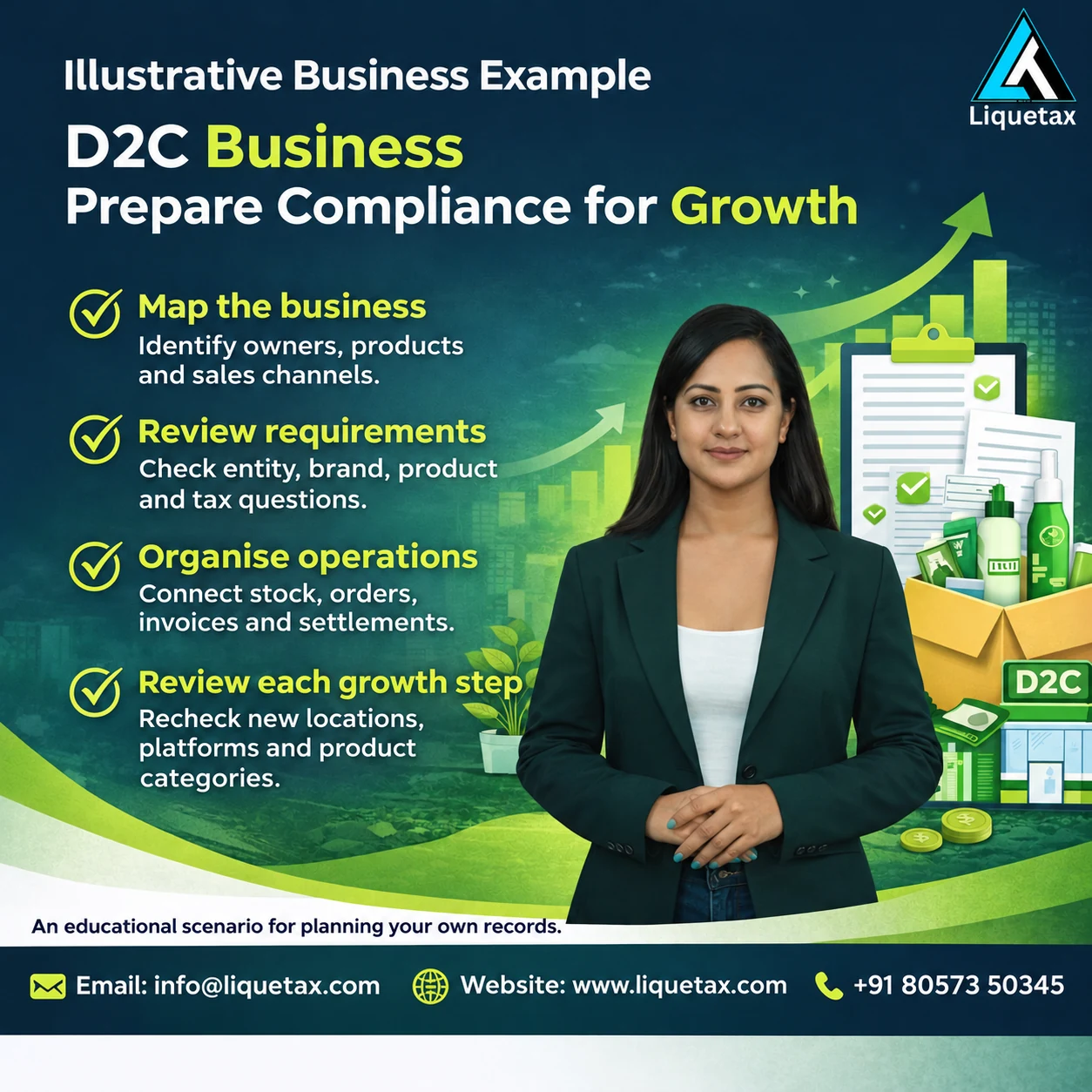
- 1. Map the business
Identify owners, products and channels.
- 2. Review requirements
Check entity, brand, product and tax.
- 3. Organise operations
Connect stock, orders and settlements.
- 4. Review growth
Recheck each new location or category.
Stage one: write down ownership and the product model
The illustrative founders begin by describing who owns the business and what each person contributes. They compare suitable structures using liability, investment plans and continuing obligations. Their ownership and signing arrangements are recorded before they create multiple seller accounts.
They also identify who manufactures, packs and sells the product. This matters because product and labelling responsibilities may fall on different parties. A company registration decision is useful, but it does not settle every product requirement.
Stage two: check the brand and launch permissions
Before printing a large packaging order, the founders review the proposed name and relevant trademark risks. They keep the designer's rights and permitted artwork clear. Domain and social-handle availability are treated as practical matters rather than proof of trademark clearance.
The team reviews product-specific licences and labels using the actual category. It distinguishes the manufacturer, brand owner and marketplace seller roles. Any unresolved permission is made visible in the launch plan instead of being hidden by an ambitious sales date.
Stage three: prepare GST and marketplace records
A registration review considers the supplies, turnover, states, stock locations and sales channels. The business also checks each platform's current onboarding policy. Legal requirements and platform policy are recorded separately.
The founders prepare consistent identity and banking records and decide who will maintain invoices, credit notes and returns. They track the actual application and approval status. An application reference is not represented to customers as a granted GSTIN.
Stage four: reconcile orders to money received
The team creates an order-level sales register covering cancellations, returns and adjustments. It retains platform charges and settlement statements alongside bank receipts. This allows gross sales and net collections to be explained without guessing from the bank balance.
Stock movements, damaged returns and replacement orders are also recorded. The information helps the founders review product margins and gives the filing preparer usable evidence. A growing sales chart is only helpful when it can be connected to real transactions.
Stage five: review the next expansion
Before adding a fulfilment warehouse or product category, the founders review the new location and requirements. They assign responsibility for record collection, approval and customer communication. Contracts describe the actual service and who authorises each action.
The scenario's useful result is a clearer decision file and operating checklist. It does not establish a real client case or a measured tax saving. A business seeking support can bring the same records to a LIQUETAX conversation and agree a suitable scope based on its own needs.
D2C growth decision register
| Workstream | Question to resolve |
|---|---|
| Ownership | Who owns, funds and authorises the business? |
| Brand and product | What rights, licences and labels apply? |
| Tax and platforms | What legal and onboarding requirements apply? |
| Orders and money | How do sales, returns, fees and receipts reconcile? |
| Expansion | What changes before a new warehouse or category? |
Illustrative example
Illustrative decision: the founders delay a bulk packaging print while a brand conflict is reviewed. They continue preparing product records and costing. This explains a practical planning choice without claiming that an actual customer achieved a particular result.
Frequently asked questions
Is this a verified customer case study?
It is explicitly an educational scenario. No real customer identity, saving or measured outcome is asserted.
Will every D2C business use the same structure?
No. Ownership, liability, funding and operating plans influence the suitable choice.
Does a marketplace account settle GST?
No. Review the applicable law and the platform's policy separately.
Why keep order-level records?
They explain cancellations, returns and fees that can make gross sales differ from bank settlements.
When should the plan be revisited?
Before adding an owner, product category, warehouse or sales channel, and when applicable requirements change.
Get clarity before your next filing
Bring the records listed above to a LIQUETAX conversation. Ask for the applicable work, documents, responsibilities and fee components in writing before you authorise a submission. Government charges, professional fees and applicable GST should be shown separately.
Book a conversationOfficial references
- Companies Act, 2013: India Code
- GSTN: normal taxpayer registration guide
- IP India: Trade Marks Act, 1999
Check the linked authority for the rule, form and notification that applies to your facts and period. This guide explains preparation and does not record a professional opinion on an individual case.