
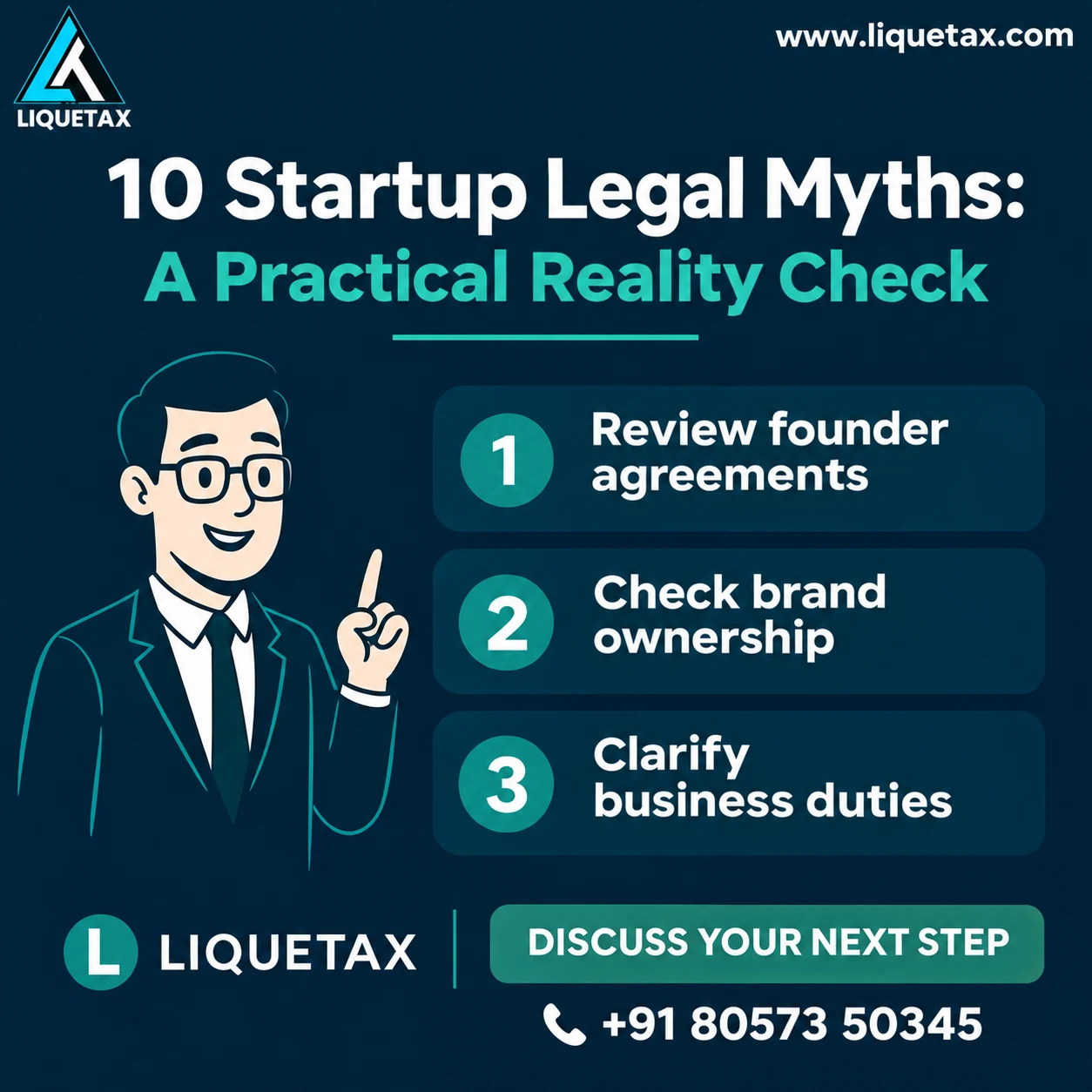
- 1. Incorporation gives permission for every activity
- 2. Friends do not need a founder agreement
- 3. A company name gives trademark ownership
- 4. Paying for content transfers every right
1. Incorporation gives permission for every activity
A certificate creates the company; it does not replace food, financial-service, local premises or other sector permissions. List the actual products, services and locations, then identify the licences needed before launch. A business object in the memorandum is not itself a regulator’s operating approval.
2. Friends do not need a founder agreement
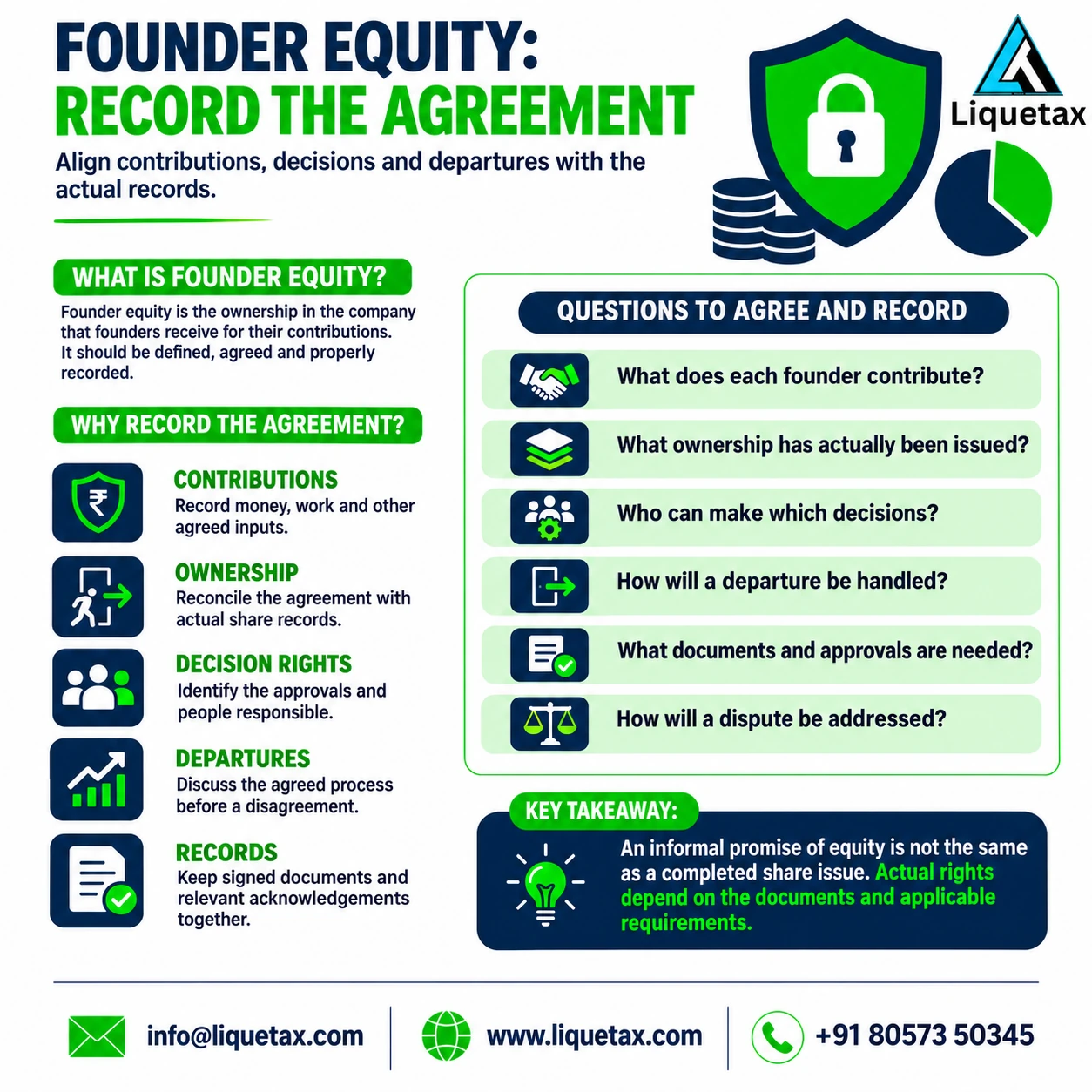
Good relationships can still face different expectations about work, money and exits. Record contributions, ownership, decision rights, departures and dispute handling. Align the agreement with the company’s articles and actual share records. An informal promise of equity is not the same as a properly completed share issue.
3. A company name gives trademark ownership
MCA name approval and trademark rights are separate. Search similar brands and relevant goods or services before investing in packaging or advertising. A domain registration also does not prove trademark clearance. Record who should own the brand if a founder files before the company exists.
4. Paying for content transfers every right
Check contracts for software, designs, photographs and writing. Ownership or permitted use depends on the work, the law and agreed rights. Preserve assignments and licences. An agency invoice may include third-party assets subject to restrictions that prevent unrestricted reuse on packaging, another website or a client project.
5. Anything online is free to copy
Public accessibility does not mean public-domain status. Check licences, permissions and applicable exceptions before using images, articles or code. Giving credit does not automatically authorize copying. Keep evidence of permitted use so a later team can understand why material was included and which conditions must be maintained.
6. Limited liability removes every personal risk
Entity separation has limits. A founder can remain exposed through a personal guarantee, their own wrongdoing or statutory responsibility. Read guarantees and indemnities before signing. Maintain genuine separation of personal and business money, and assess insurance or contractual protections for risks that incorporation does not remove.
7. Every startup automatically receives a tax holiday
Incorporation and recognition under a startup programme do not automatically establish every tax benefit. Each relief has its own eligibility, application and continuing conditions for the relevant period. Model actual tax treatment before including a saving in a budget or promising an investor a particular result.
8. A downloaded contract fits every transaction
Templates can identify topics, but delivery, acceptance, payment, liability, data and termination terms need to fit the deal. Check governing law and dispute procedures. A short review before signing is easier than resolving incompatible obligations after the customer expects services the team never intended to provide.
9. Investor money can be accepted before paperwork
The instrument, offer route, approvals, valuation and reporting need assessment before funds are accepted. Foreign investment adds its own conditions. Keep a clear cap table and transaction record. A term sheet or encouraging email is not proof that the company has completed a lawful share issue.
10. No revenue means no compliance
An incorporated entity can retain filing, accounting, audit and record duties while inactive. Identify its actual status and applicable obligations. A company does not become formally dormant merely by stopping sales. Build a calendar using legal triggers and responsible people rather than assuming that nothing is due until the first invoice.
Practical checklist
- List licences for the actual activity and each operating location.
- Reconcile founder promises with signed documents and ownership records.
- Keep intellectual-property assignments and third-party licences together.
- Review funding and material contracts before accepting obligations or money.
- Assign recurring and event-based compliance tasks, including inactive periods.
Illustrative example
A startup prepares for its first investor discussion. Its founders discover that the brand application is in one founder’s name, the developer contract is only a licence and the cap table includes promised but unissued shares. They resolve these matters before describing the assets and ownership to investors. This is a hypothetical checklist example, not a funding success story.
Frequently asked questions
Does a lawyer need to review every small purchase?
Prioritise material, unusual or high-risk commitments. Use a clear internal approval process and obtain qualified advice when the legal consequences are uncertain.
Can online templates still help?
Yes, as a starting point for identifying issues. They need review against the actual transaction, ownership and governing requirements.
Should I register every form of IP?
Identify which assets matter and which rights apply. Registration is not required or available for every idea or item of content.
Can founder disputes be prevented completely?
No agreement guarantees that. Clear rights, records and dispute procedures can reduce ambiguity and help manage disagreements.
What should a compliance calendar record?
The obligation, applicability, deadline rule, source, responsible person, evidence needed and completed acknowledgement. Update it when business facts change.
Official references and next step
- India Code: Companies Act, 2013
- MCA: SPICe+ and linked filing FAQs
- Copyright Office: copyright questions and website works
- IP India: basics of trademarks
For help applying this checklist to your documents, contact LIQUETAX with the relevant facts and the support you need. Request a written scope and fee breakdown before work begins.