

- 1. Define the area
Identify the state, districts and services you intend to cover.
- 2. Check eligibility
Review the entity, management and disclosures against the applicable rules.
- 3. Prepare people
Arrange prescribed training, verification and supervisor records.
- 4. Read the licence
Confirm the approved area, conditions and expiry before operating.
Start with the right licence and authority
PSARA is the correct abbreviation; the PASARA wording retained in this page URL is a legacy spelling. A GST registration, Udyam certificate or company incorporation does not replace the security-agency licence. Start with the Controlling Authority for the state or Union Territory where the agency will operate. Ask which notified rules, application route and territorial coverage apply to your plan.
Write a short business scope: where guards will be deployed, whether you provide ordinary guarding or specialised activities, who will supervise them and where agency records will be maintained. Cash transportation and armed services can raise additional requirements. Describe these activities honestly rather than selecting a convenient category and expanding the business informally after approval.
Review ownership and management before applying
Collect the constitution documents, ownership information and details of the people managing the agency. The Act contains eligibility and disqualification provisions; citizenship, ownership, convictions and relevant employment history require careful review. Do not assume that being a director of an Indian company settles every PSARA eligibility question. Obtain an assessment for the actual structure and disclose relevant matters in the prescribed manner.
Check names, addresses and identity details across the application and supporting documents. If a document contains an old address or an inconsistent spelling, resolve it or explain the difference before filing. Identify the person who will sign the application and respond to queries. A complete, traceable file is more useful than several certificates collected without a clear connection to the applicant.
Treat training and verification as operating requirements
The Act requires prescribed training and skills for guards and supervisors. MHA publishes the Central Model Rules, 2020, but the relevant state or Union Territory rules and the Controlling Authority’s instructions must be checked. Confirm the training arrangement, recognition or acceptance of the institute, required records and how successful completion will be documented. A generic training agreement alone does not establish that every person is ready for deployment.
Create a separate personnel folder for each guard or supervisor. Include identity, employment details, the applicable antecedent-verification evidence, training completion and deployment instructions. Keep access restricted because these records contain personal information. Establish a practical process for replacing staff, recording attendance and escalating incidents; the client should know who to contact when a person is absent or an incident occurs.
Submit a checkable application and manage queries
Use the current official application channel for the selected jurisdiction. Prepare an enclosure index, retain the uploaded documents and record the application reference and payment acknowledgement. Where an affidavit or declaration is required, have its facts checked by the signatory. Do not submit a convenient declaration that the management cannot support with records.
When a query arrives, record the issue, requested document, response date and responsible person. Answer the specific question and preserve the response acknowledgement. The authority determines the application outcome. An adviser can help organise evidence and follow-up, but a promised approval date or a supposed connection with the licensing authority should not guide your purchase decision.
Budget clearly and plan renewal early
The central Act provides a five-year licence term unless cancelled. Section 8 requires a renewal application not less than forty-five days before expiry. Check your actual licence, jurisdictional instructions and filing arrangements, and set reminders well before that point. Do not rely on a generic claim that a first licence lasts one year or that renewal can safely wait until the last month.
Request separate written amounts for government charges, training, verification, documentation support and any applicable tax. Confirm whether a quoted service covers queries, corrections, additional districts and renewal preparation. Staffing, wages, uniforms and equipment are operating costs beyond the application itself. Use current official payment instructions and your own staffing plan instead of copying a nationwide package price from an old article.
Keep the agency ready after approval
Read the licence conditions before accepting a deployment outside the approved area or changing management or address. Keep a renewal calendar and an orderly file of licence copies, training evidence, personnel records and communications with the authority. Review labour, payroll, insurance and client-contract obligations separately; a PSARA licence does not answer every employment or commercial question.
A useful client handover identifies the site supervisor, guard roster, shift pattern, emergency escalation and reporting process. Review what your agency can actually deliver before agreeing to a service-level commitment. This preparation helps customers compare the scope of security work and gives the agency a practical record of who is responsible for each task.
Documents and decisions to prepare
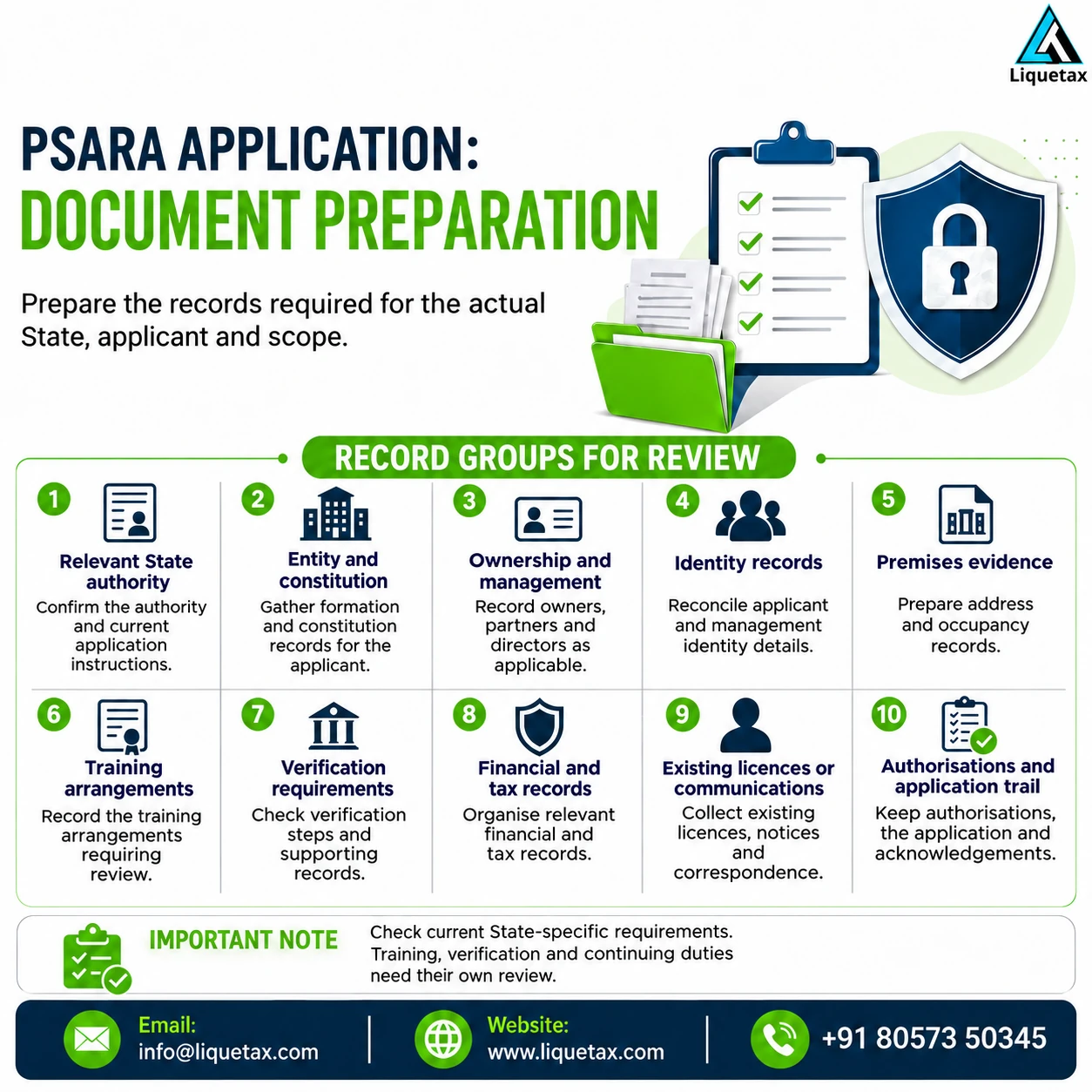
| File or decision | Purpose |
|---|---|
| Entity and ownership records | Identify the applicant and its management accurately. |
| Operating-area note | Connect proposed districts and activities with licence coverage. |
| Prescribed disclosures | Support eligibility declarations with genuine records. |
| Training arrangement and certificates | Show the relevant training pathway and individual completion. |
| Personnel verification file | Keep the required guard and supervisor evidence traceable. |
| Licence and renewal diary | Track conditions, changes and the actual expiry date. |
Illustrative example
Illustrative example: an agency plans deployments in two districts and receives an enquiry for a third. Before accepting the new site, the founder should check the existing licence coverage and amendment or fresh-application requirements. A commercial opportunity does not itself extend the approved operating area.
Frequently asked questions
Is the correct term PSARA or PASARA?
PSARA is the correct abbreviation for the Private Security Agencies (Regulation) Act, 2005. The existing page URL retains its older spelling.
Does company registration replace a PSARA licence?
No. Incorporation creates the business entity; the security-agency licence and its conditions require a separate assessment.
How long is the licence valid?
The central Act provides five years unless cancelled. Read the actual licence and applicable jurisdictional instructions for your agency.
When should renewal preparation begin?
Prepare early. Section 8 requires the renewal application not less than forty-five days before expiry; confirm the filing route and required enclosures.
Can LIQUETAX promise approval or client contracts?
No. The authority decides licensing and customers decide commercial contracts. Ask for a written preparation scope, responsibilities and charges.
Prepare a realistic security-agency setup plan
Bring your proposed locations, entity records and training plan to a LIQUETAX conversation. Ask what can be checked before application, what the authority must decide and which aftercare tasks remain yours. Agree the document list and fee components before authorising any submission.
Book a preparation conversationOfficial references
- MHA: PSARA Act, 2005, including licence and renewal provisions
- MHA: Private Security Agencies Central Model Rules, 2020
Check the relevant authority, current forms and the facts of your case before acting. This source-checked educational guide does not record a professional endorsement or promise an approval, penalty waiver or processing time.