
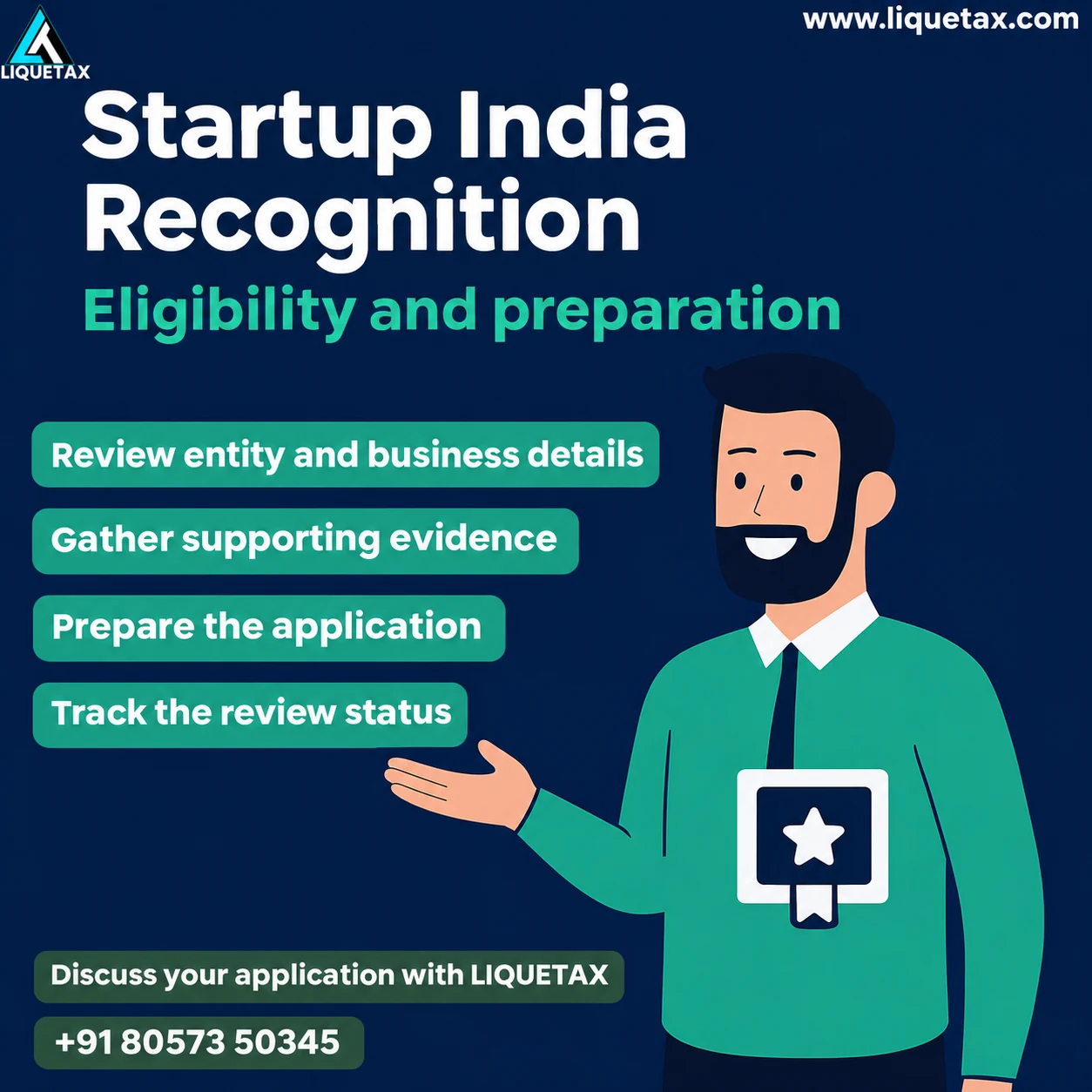
- 1. Check eligibility
Use the current official framework.
- 2. Describe the business
Explain the product, problem and model.
- 3. Prepare evidence
Match entity records and genuine activity.
- 4. Track the application
Respond accurately and retain the outcome.
Use the revised recognition framework
The February 2026 government announcement increased the general turnover ceiling to ₹200 crore and introduced expanded Deep Tech criteria, including a 20-year age limit and ₹300 crore ceiling. It also brought eligible cooperative entities into the framework. Read the complete conditions for the actual category.
Do not assume that adding 'technology' to a business description establishes Deep Tech eligibility. Review the activity, category and evidence against the official criteria. Older ₹100-crore headlines should not be reused as the full current recognition framework.
Check the entity and its history
Collect the incorporation or registration records and genuine ownership details. Establish the date and history of the business. Review the relevant conditions concerning age, turnover and the origin of the entity using the official portal.
Recognition is not a substitute for entity incorporation, tax registration or sector permission. A founder should know which record already exists and which application is being proposed. Keep legal names and particulars consistent across the submission.
Explain the innovation or scalable model
Describe the customer problem, the product or service and what is new or improved. Explain how the model works and how it can grow. Use clear language and actual evidence instead of copying a generic paragraph claiming that every activity is revolutionary.
Prepare relevant product material, a website or other genuine supporting records where they help explain the business. If a claim concerns technology, research or intellectual property, make sure the evidence supports it. Do not invent patents, customers or a revenue history.
Review the completed application before authorising it
Use the current official portal route and application instructions. Confirm that the information and documents match the entity and actual activity. Where a clarification is requested, answer the specific point with truthful records.
Retain the submitted version, application reference and outcome. If recognition is granted, keep the certificate and review any continuing conditions or update requirements. A service provider can assist with preparation but cannot guarantee the authority's decision.
Assess each proposed benefit separately
A recognised enterprise can review relevant schemes and benefits, but eligibility and approval differ by route. Tax benefits, seed funding, credit arrangements and procurement conditions should not be advertised as automatic consequences of recognition.
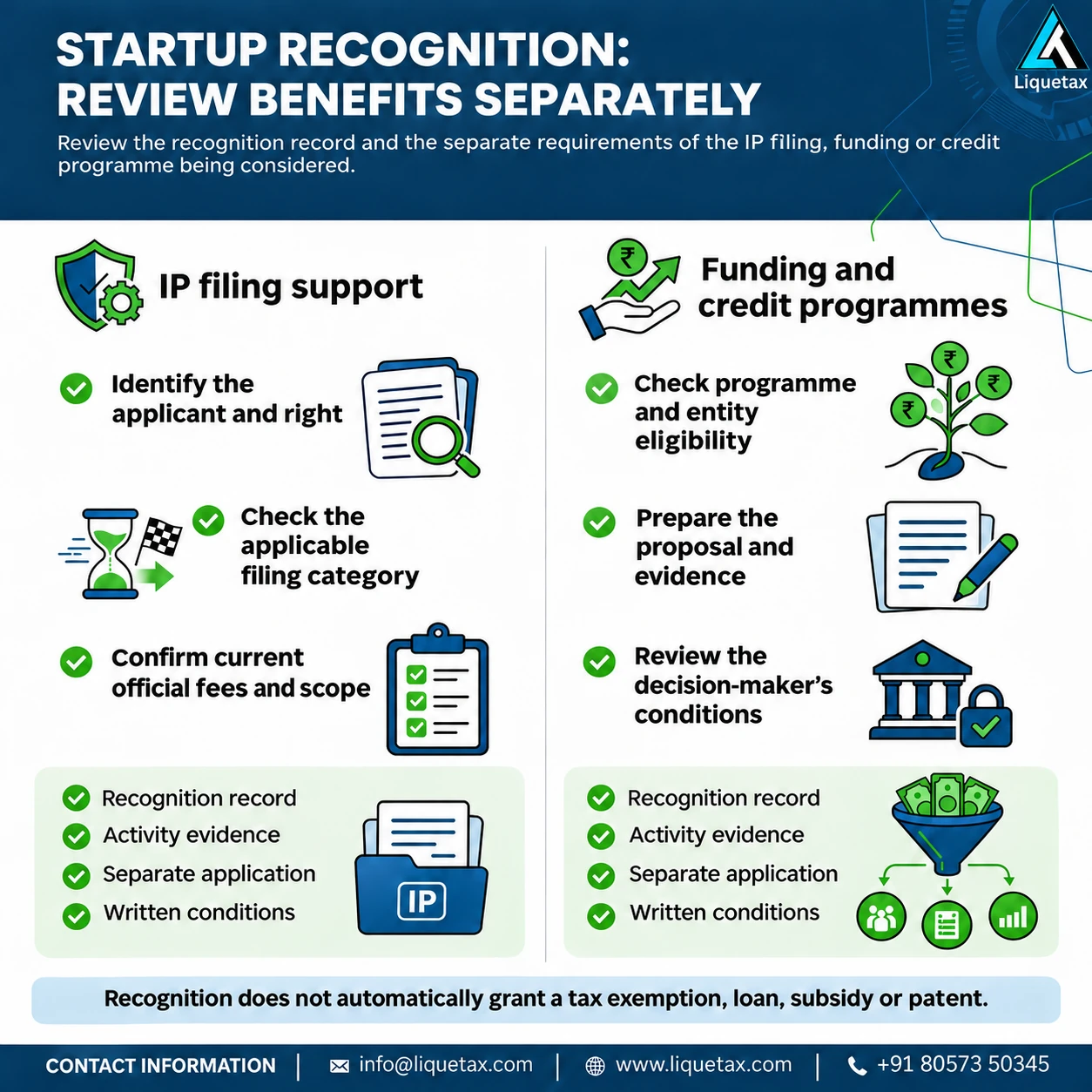
Identify the particular benefit and its current rules before spending on an application. Keep a record of the entity's actual eligibility, pending evidence and responsible decision-maker. This makes recognition part of a useful business plan rather than a certificate purchased for an unsupported promise.
Recognition preparation checklist
| Record | Review |
|---|---|
| Entity and history | Registration, date and genuine business origin. |
| Current eligibility | Category, turnover and complete conditions. |
| Business description | Problem, product, improvement and growth model. |
| Supporting evidence | Actual activity and substantiated claims. |
| Application record | Approved submission, clarification and outcome. |
Illustrative example
Illustrative example: a young product business explains the problem it solves and its real development work. It does not claim a patent or established customers that it does not have. The reviewer checks current eligibility and helps organise the evidence before submission.
Frequently asked questions
Is recognition the same as incorporation?
No. They serve different purposes and require different records.
Is the old ₹100-crore headline the complete current test?
No. The 2026 framework revised thresholds and categories; read the full current conditions.
Does using technology automatically make a Deep Tech startup?
No. Review the category's criteria and genuine supporting evidence.
Will recognition guarantee tax relief or funding?
No. Each benefit or scheme has separate conditions and approval requirements.
Can preparation support guarantee acceptance?
No. The authority decides based on the application and applicable framework.
Get clarity before your next filing
Bring the records listed above to a LIQUETAX conversation. Ask for the applicable work, documents, responsibilities and fee components in writing before you authorise a submission. Government charges, professional fees and applicable GST should be shown separately.
Book a conversationOfficial references
Check the linked authority for the rule, form and notification that applies to your facts and period. This guide explains preparation and does not record a professional opinion on an individual case.