
💰 Low Budget
You can start an NGO with as low as ₹5,000–₹10,000 in registration fees.
📜 3 Legal Forms
Choose from Trust, Society, or Section 8 Company based on your needs.
📝 Simple Process
Follow 5 easy steps: choose name, draft MOA, apply, get certificate.
🤝 Expert Help
Liquetax guides you through documentation and registration hassle-free.
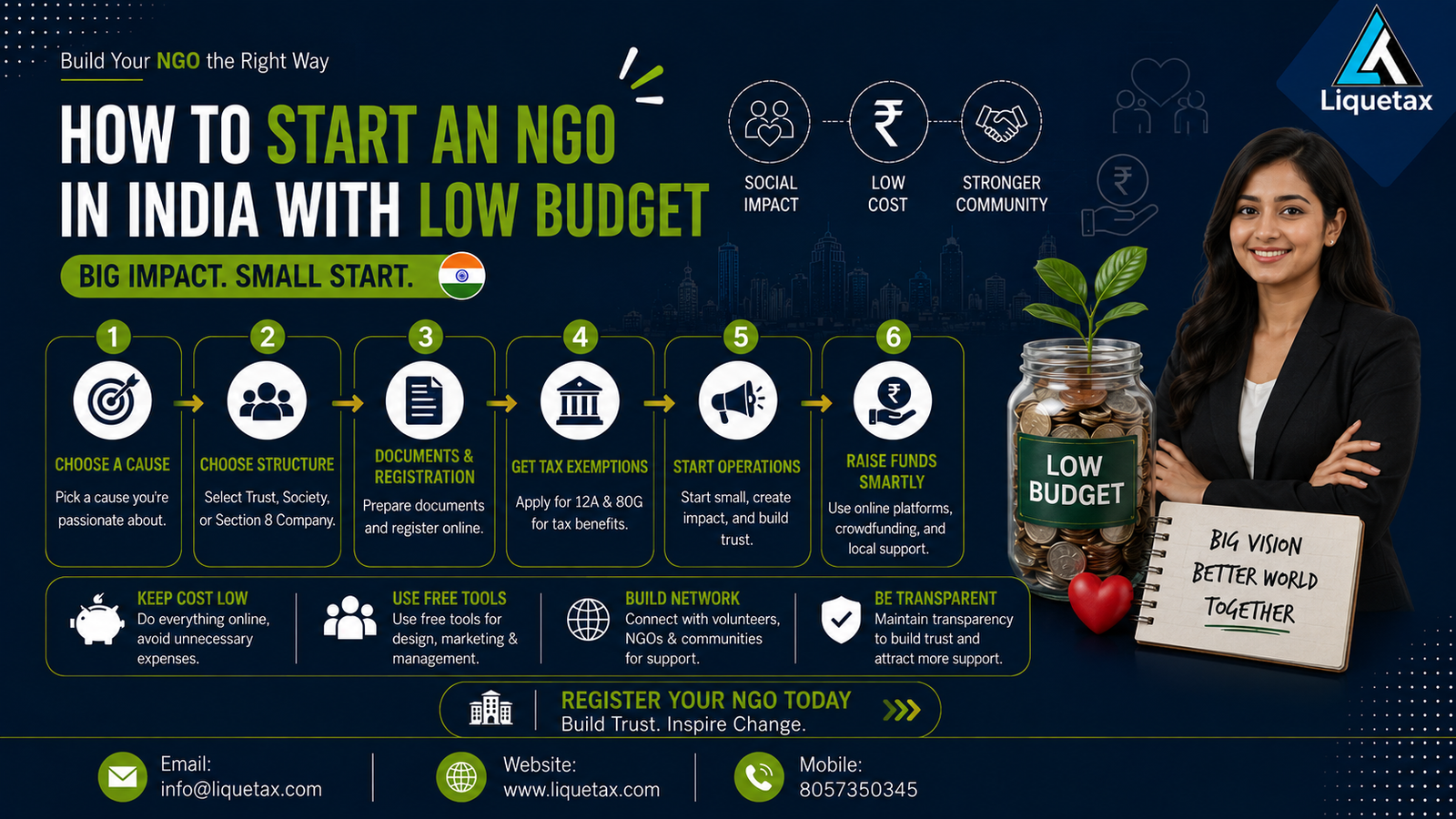
🎬 Watch: How to Start an NGO in India with Low Budget
 ▶ Tap to play
Introduction: Start an NGO in India with Low Budget
Want to make a difference but worried about the cost? You can start an NGO in India with a very low budget—often under ₹10,000. This guide walks you through the entire process, from choosing the right legal structure to getting your registration certificate, all without spending a fortune.
What is an NGO?
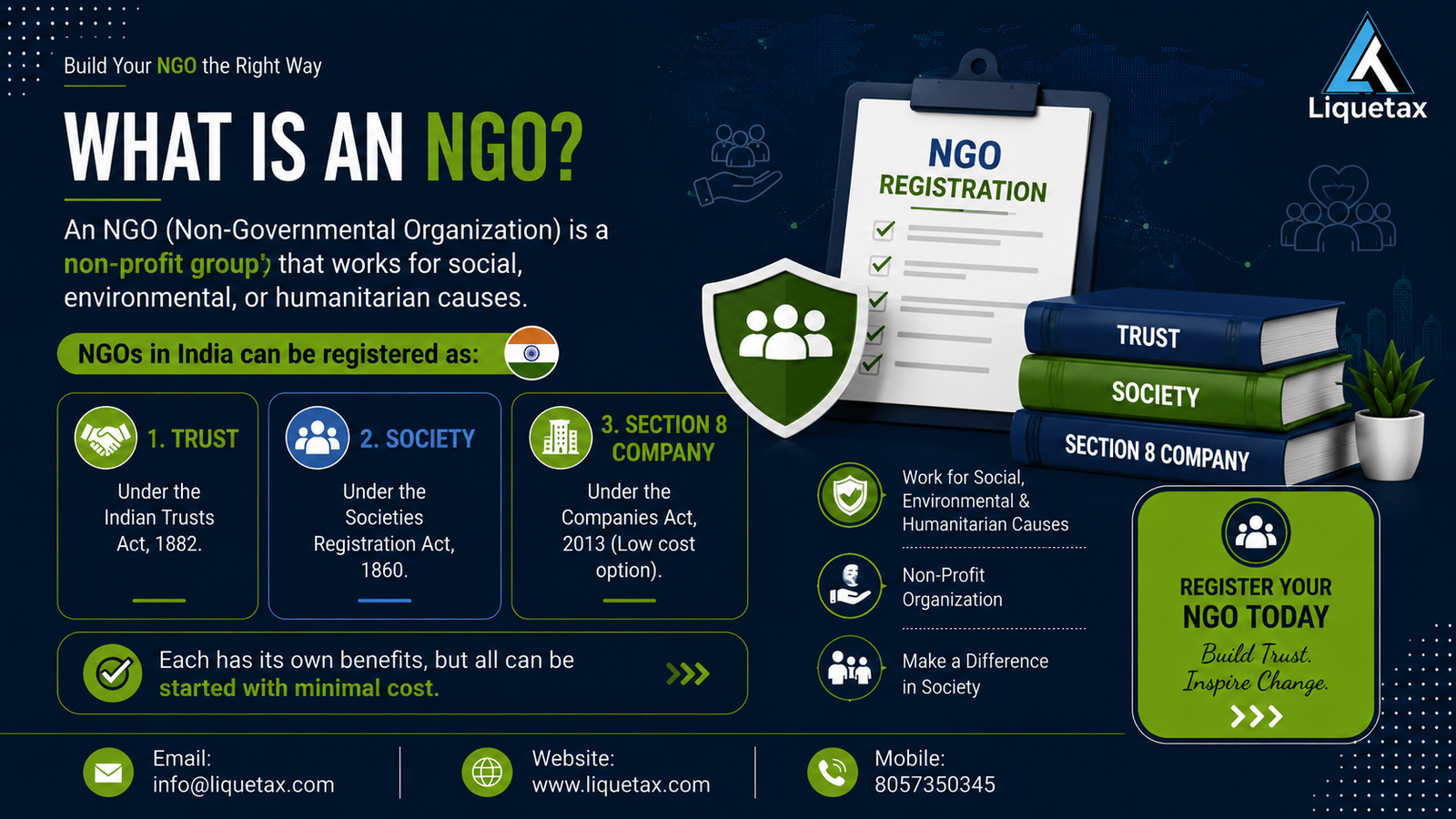
An NGO (Non-Governmental Organization) is a non-profit group that works for social, environmental, or humanitarian causes. In India, NGOs can be registered as:
- Trust: Under the Indian Trusts Act, 1882.
- Society: Under the Societies Registration Act, 1860.
- Section 8 Company: Under the Companies Act, 2013 (with a low budget option).
Each has its own benefits, but all can be started with minimal cost.
Why Start an NGO? Benefits & Importance
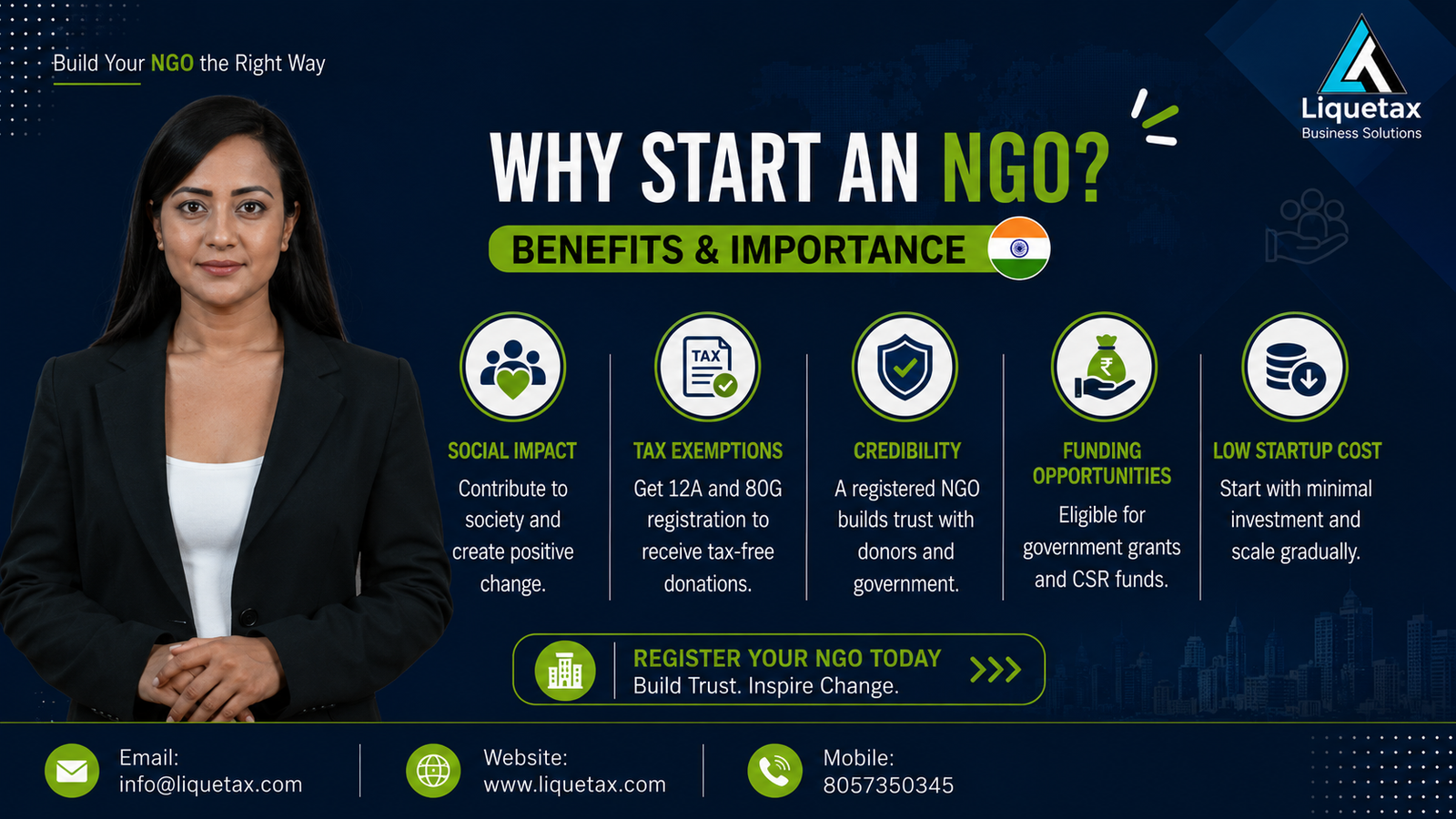
- Social impact: Contribute to society and create positive change.
- Tax exemptions: Get 12A and 80G registration to receive tax-free donations.
- Credibility: A registered NGO builds trust with donors and government.
- Funding opportunities: Eligible for government grants and CSR funds.
- Low startup cost: Start with minimal investment and scale gradually.
Eligibility & Requirements for NGO Registration
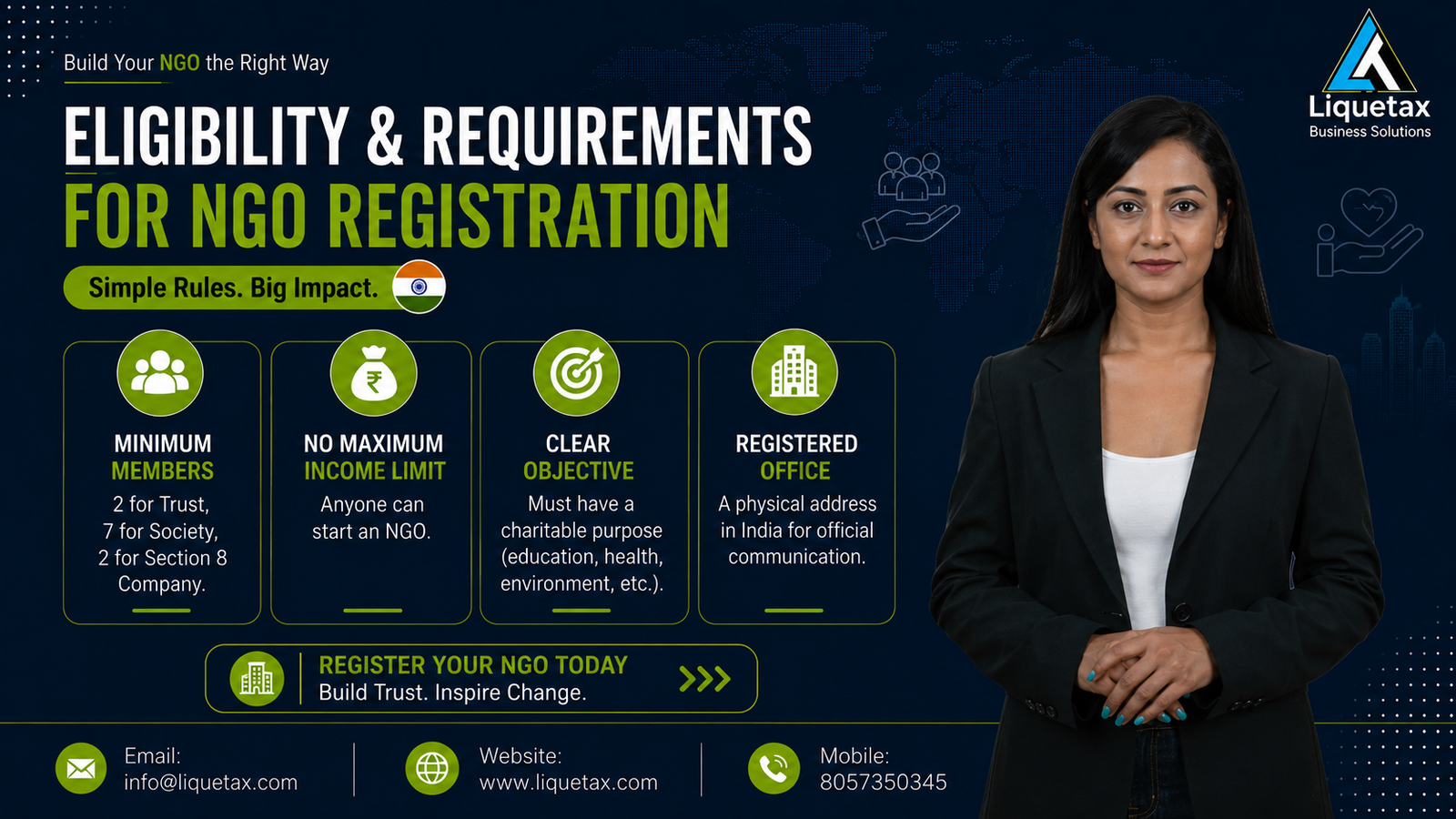
- Minimum members: 2 for Trust, 7 for Society, 2 for Section 8 Company.
- No maximum income limit: Anyone can start an NGO.
- Clear objective: Must have a charitable purpose (education, health, environment, etc.).
- Registered office: A physical address in India for official communication.
Step-by-Step Process to Start an NGO in India
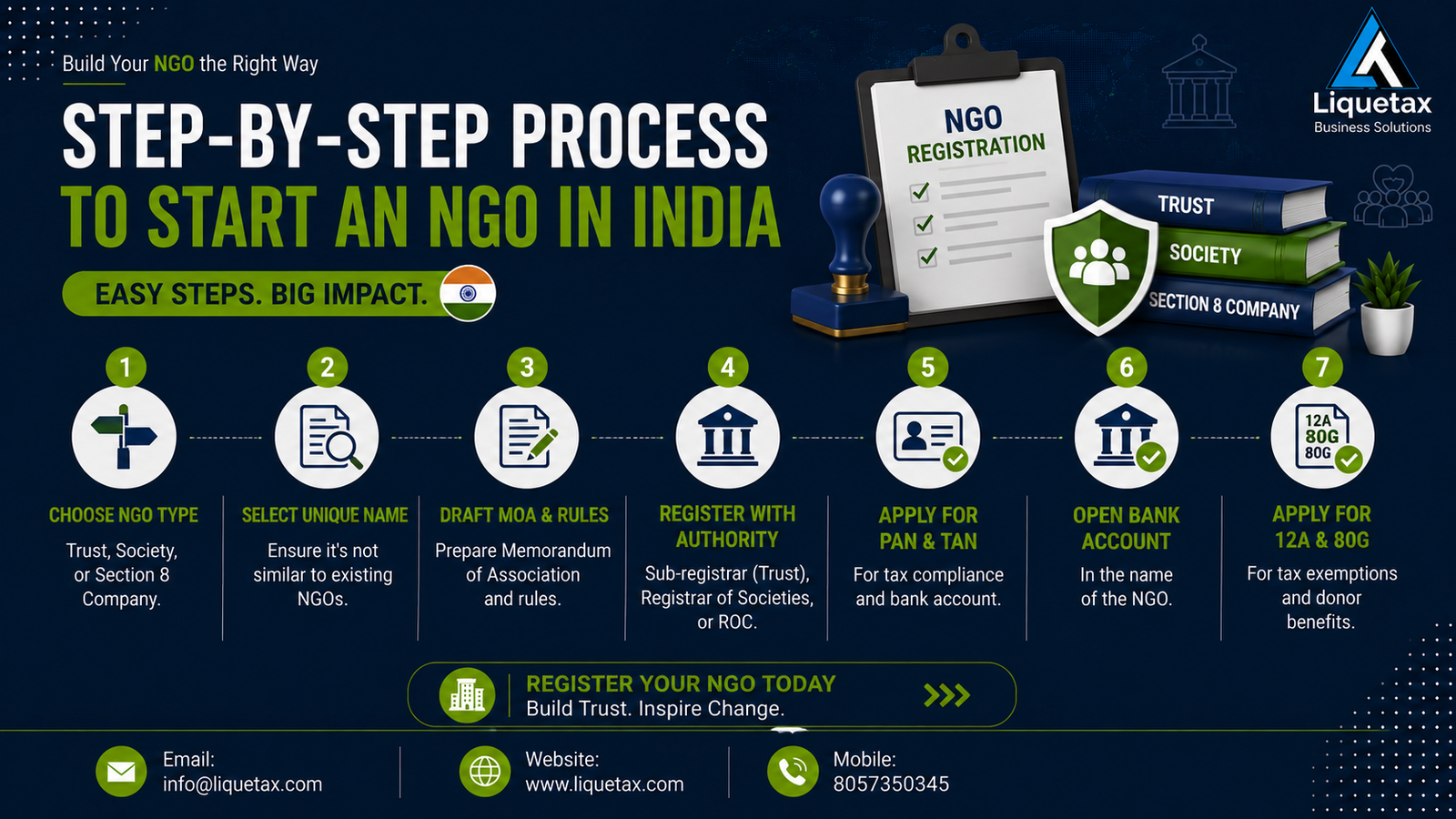
- Choose NGO type: Trust, Society, or Section 8 Company.
- Select a unique name: Ensure it's not similar to existing NGOs.
- Draft MOA & Rules: Prepare Memorandum of Association and rules.
- Register with authority: Sub-registrar (Trust), Registrar of Societies, or ROC.
- Apply for PAN & TAN: For tax compliance and bank account.
- Open bank account: In the name of the NGO.
- Apply for 12A & 80G: For tax exemptions and donor benefits.
Documents Required for NGO Registration
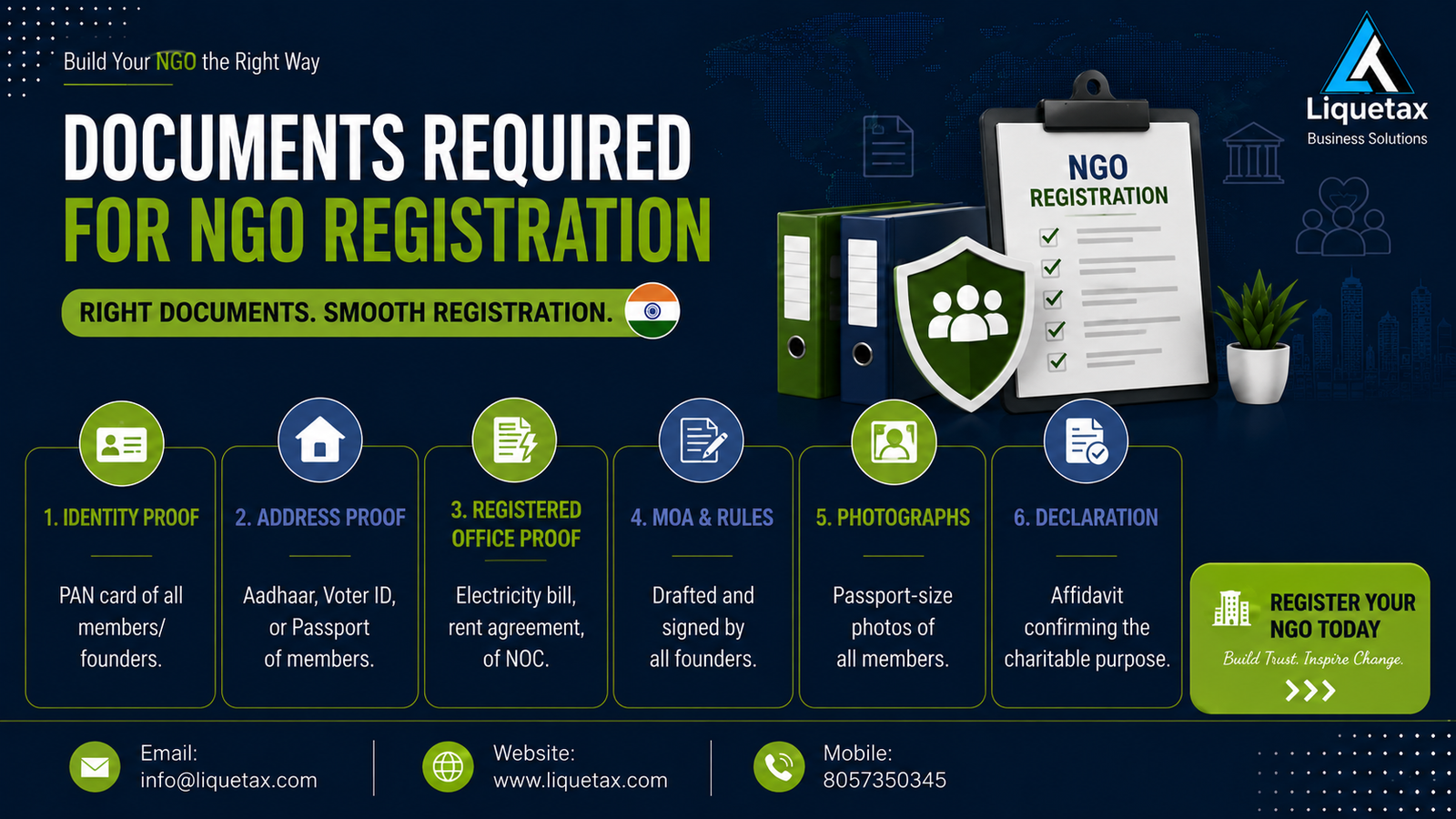
- Identity proof: PAN card of all members/founders.
- Address proof: Aadhaar, Voter ID, or Passport of members.
- Registered office proof: Electricity bill, rent agreement, or NOC.
- MOA & Rules: Drafted and signed by all founders.
- Photographs: Passport-size photos of all members.
- Declaration: Affidavit confirming the charitable purpose.
Government Fees & Cost to Start an NGO
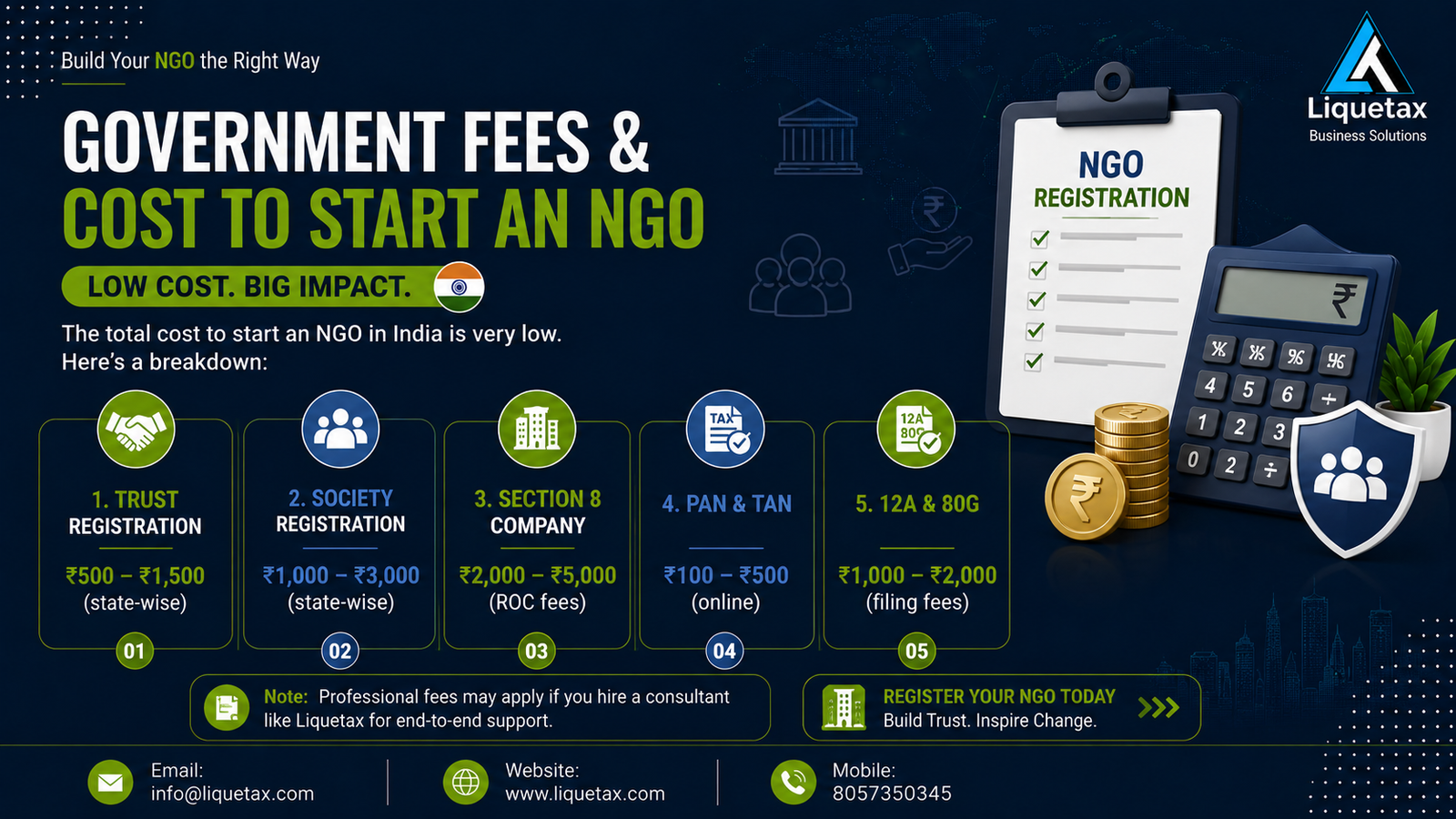
The total cost to start an NGO in India is very low. Here's a breakdown:
- Trust registration: ₹500–₹1,500 (state-wise).
- Society registration: ₹1,000–₹3,000 (state-wise).
- Section 8 Company: ₹2,000–₹5,000 (ROC fees).
- PAN & TAN: ₹100–₹500 (online).
- 12A & 80G: ₹1,000–₹2,000 (filing fees).
How Liquetax Can Help You Start an NGO with Low Budget
- Expert guidance: We help you choose the right legal structure for your NGO.
- Document preparation: Draft MOA, rules, and declarations.
- Registration support: File applications with the correct authorities.
- Compliance assistance: Help with 12A, 80G, and annual filings.
- Affordable packages: Transparent pricing with no hidden costs.
- Peace of mind: We handle the paperwork so you can focus on your mission.
Choose Liquetax for a smooth and affordable NGO registration experience.
FAQs on Starting an NGO in India with Low Budget
You can start an NGO with as low as ₹5,000–₹10,000, depending on the type and state.
Trust registration is usually the cheapest and quickest option for small NGOs.
Yes, but expert help from Liquetax ensures error-free documentation and faster processing.
It typically takes 15–30 days, depending on the type and state authority.
Start Your NGO Today – Low Budget, Expert Support!
Don't let paperwork or cost stop you. Let Liquetax help you register your NGO affordably and quickly.