
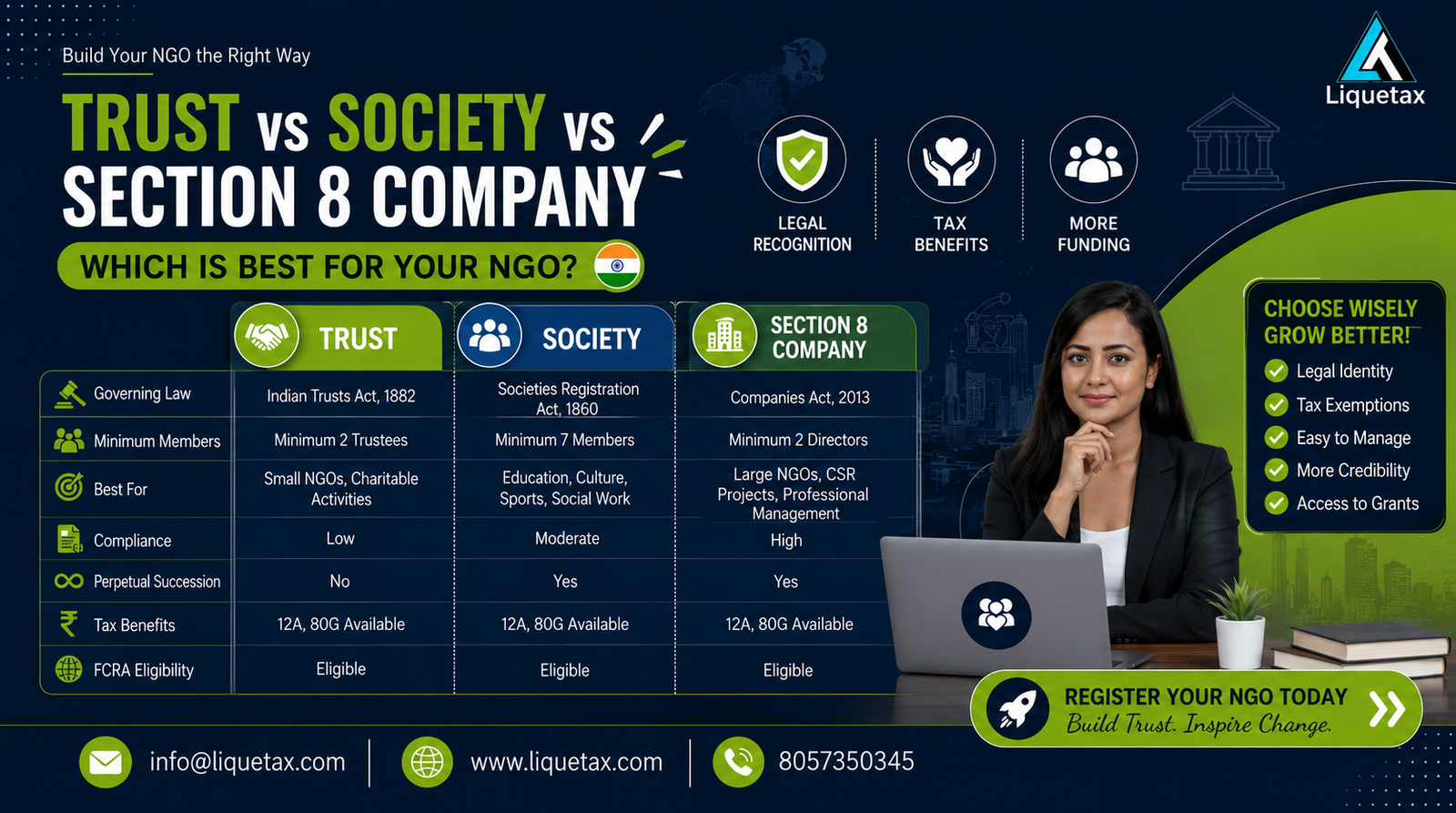
🤝 Trust
Best for charitable activities, flexible, easy to register, popular for religious & social causes.
🏛️ Society
Democratic structure, suitable for sports, culture, education, and welfare societies.
🏢 Section 8 Company
Corporate structure with limited liability, best for large-scale NGOs and professional management.
🎬 Watch: Trust vs Society vs Section 8 – Which is Best for Your NGO?
 ▶ Tap to play
Introduction: Choosing the Right Structure for Your NGO
Starting an NGO in India begins with choosing the right legal structure. Trust, Society, and Section 8 Company are the three most common options. Each has its own benefits, compliance requirements, and registration process. This guide compares them to help you make an informed decision.
What are Trust, Society, and Section 8 Company?
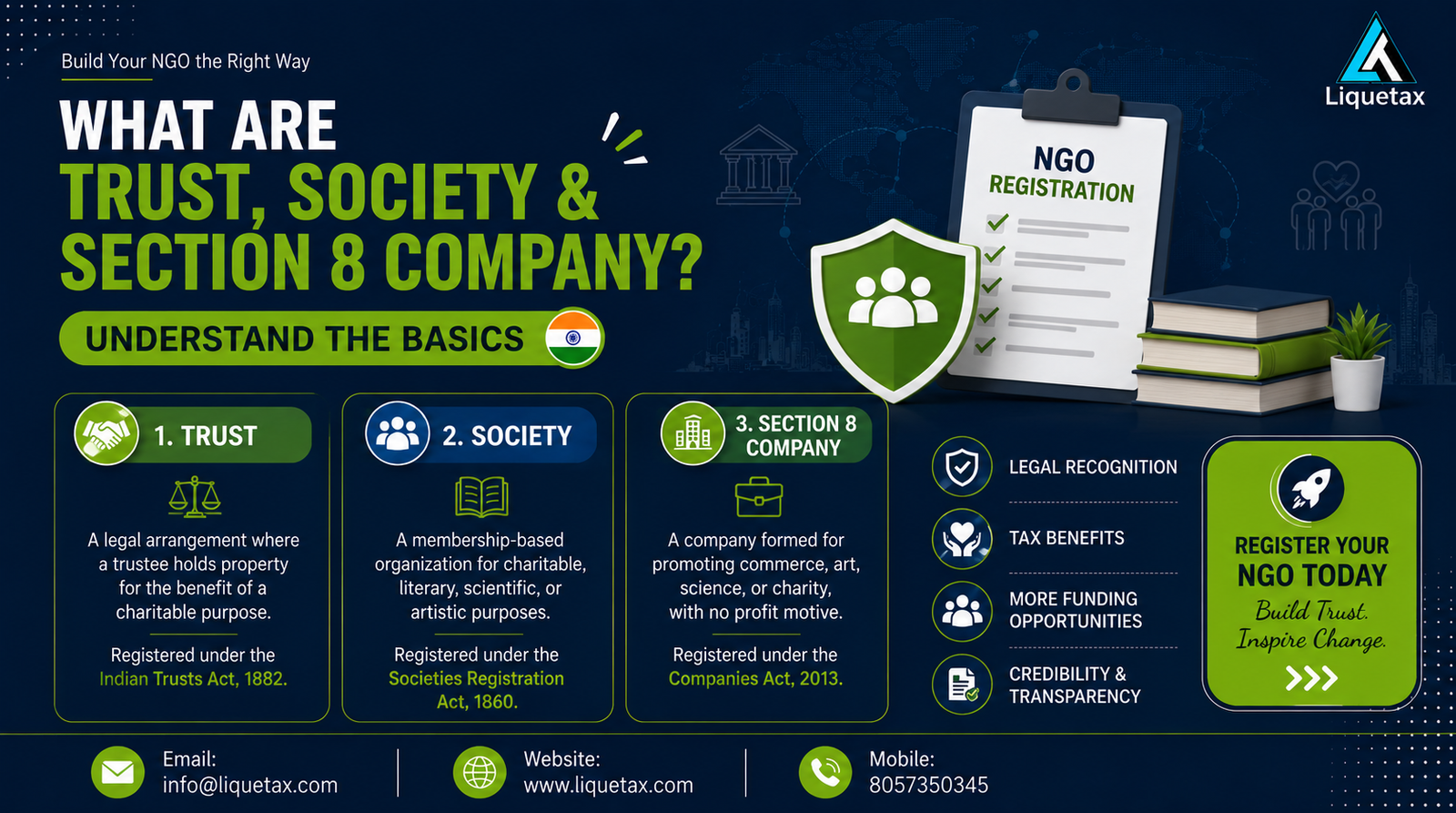
- Trust: A legal arrangement where a trustee holds property for the benefit of a charitable purpose. Registered under the Indian Trusts Act, 1882.
- Society: A membership-based organization for charitable, literary, scientific, or artistic purposes. Registered under the Societies Registration Act, 1860.
- Section 8 Company: A company formed for promoting commerce, art, science, or charity, with no profit motive. Registered under the Companies Act, 2013.
Why Choosing the Right NGO Structure Matters
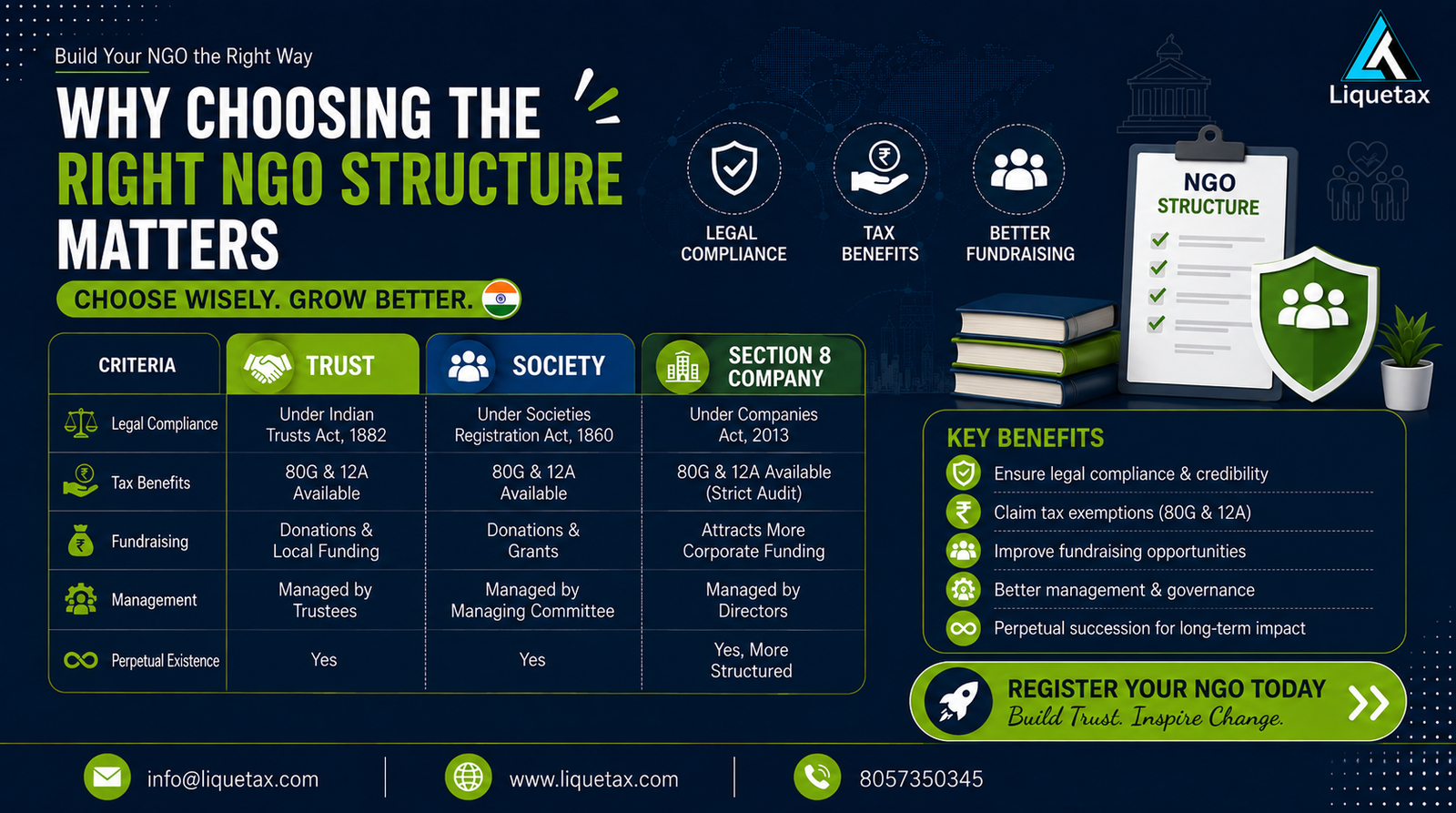
- Legal compliance: Each structure has different registration, governance, and compliance norms.
- Tax benefits: All three can claim 80G and 12A exemptions, but Section 8 Company has stricter audit requirements.
- Fundraising: Section 8 Companies attract more corporate funding due to their corporate governance.
- Management: Trusts are managed by trustees, Societies by managing committees, and Section 8 by directors.
- Perpetual existence: All three have perpetual succession, but Section 8 is more structured.
Eligibility & Requirements for NGO Registration
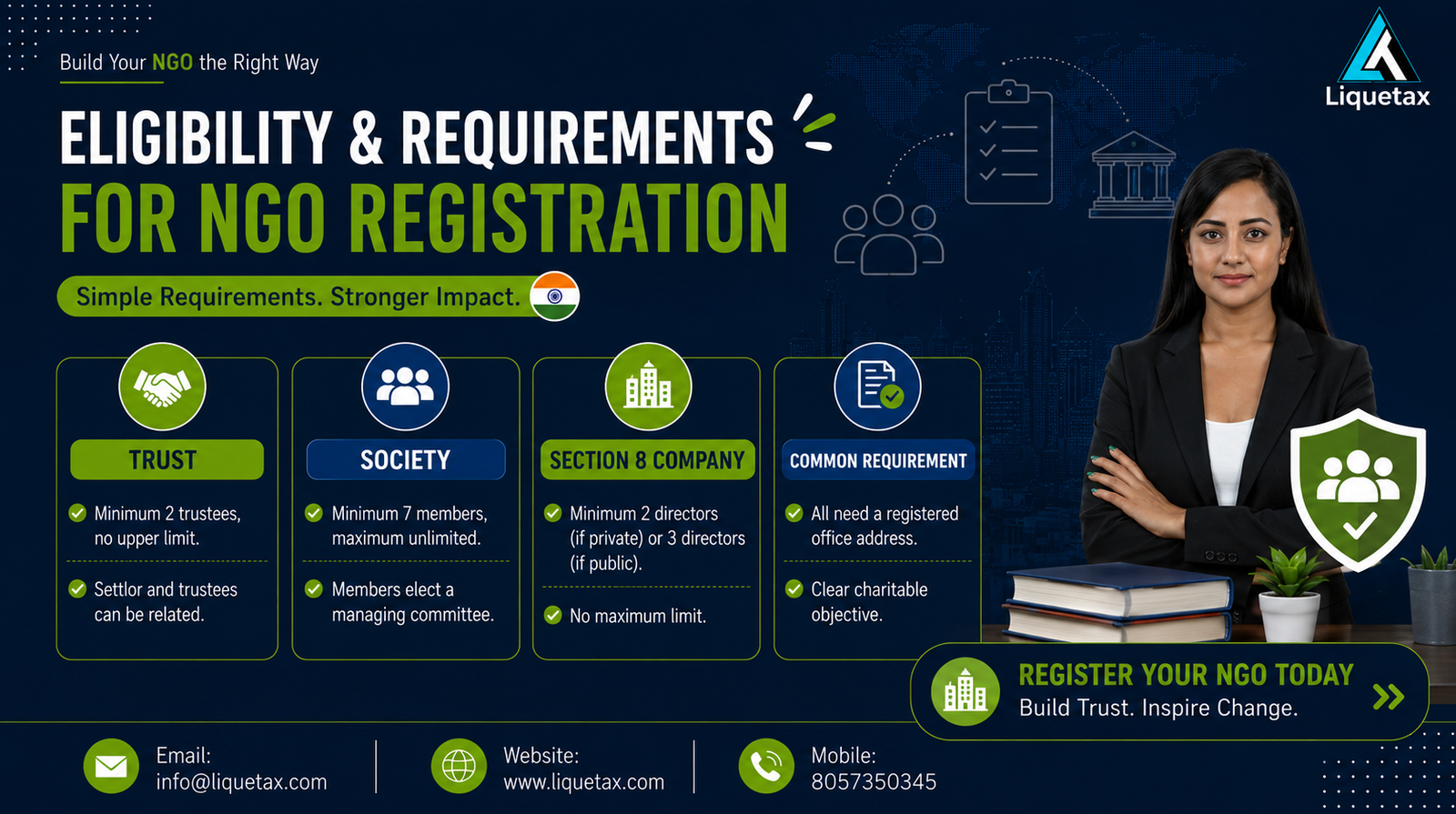
- Trust: Minimum 2 trustees, no upper limit. Settlor and trustees can be related.
- Society: Minimum 7 members, maximum unlimited. Members elect a managing committee.
- Section 8 Company: Minimum 2 directors (if private) or 3 directors (if public). No maximum limit.
- Common requirement: All need a registered office address and a clear charitable objective.
Step-by-Step Registration Process
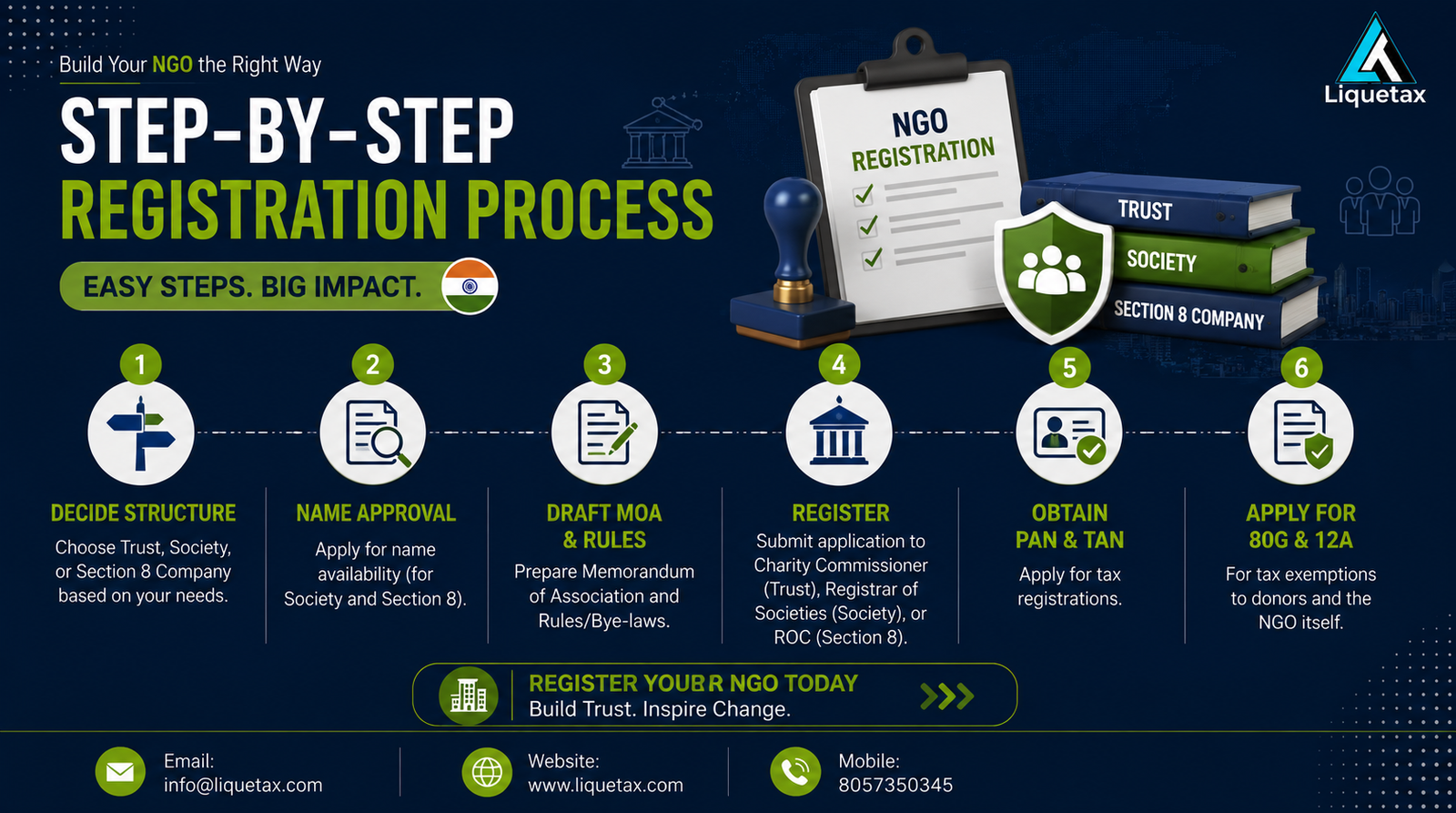
- Decide structure: Choose Trust, Society, or Section 8 Company based on your needs.
- Name approval: Apply for name availability (for Society and Section 8).
- Draft MOA & rules: Prepare Memorandum of Association and Rules/Bye-laws.
- Register: Submit application to Charity Commissioner (Trust), Registrar of Societies (Society), or ROC (Section 8).
- Obtain PAN & TAN: Apply for tax registrations.
- Apply for 80G & 12A: For tax exemptions to donors and the NGO itself.
Documents Required for NGO Registration
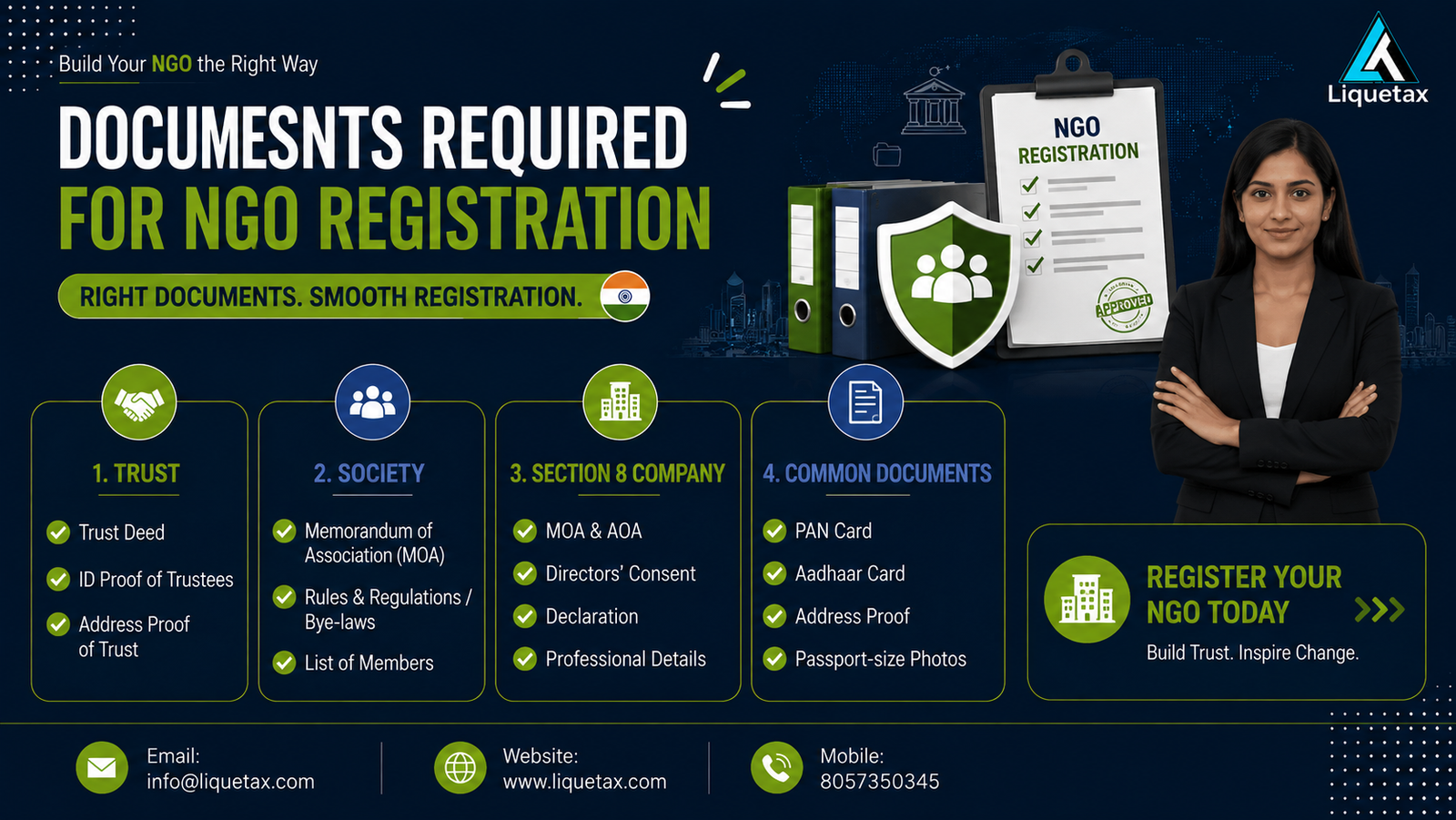
- Trust: Trust deed, ID proof of trustees, address proof of trust.
- Society: Memorandum of Association, Rules & Regulations, list of members.
- Section 8: MOA & AOA, directors' consent, declaration, and professional details.
- Common: PAN, Aadhaar, address proof, passport-size photos.
Government Fees for NGO Registration
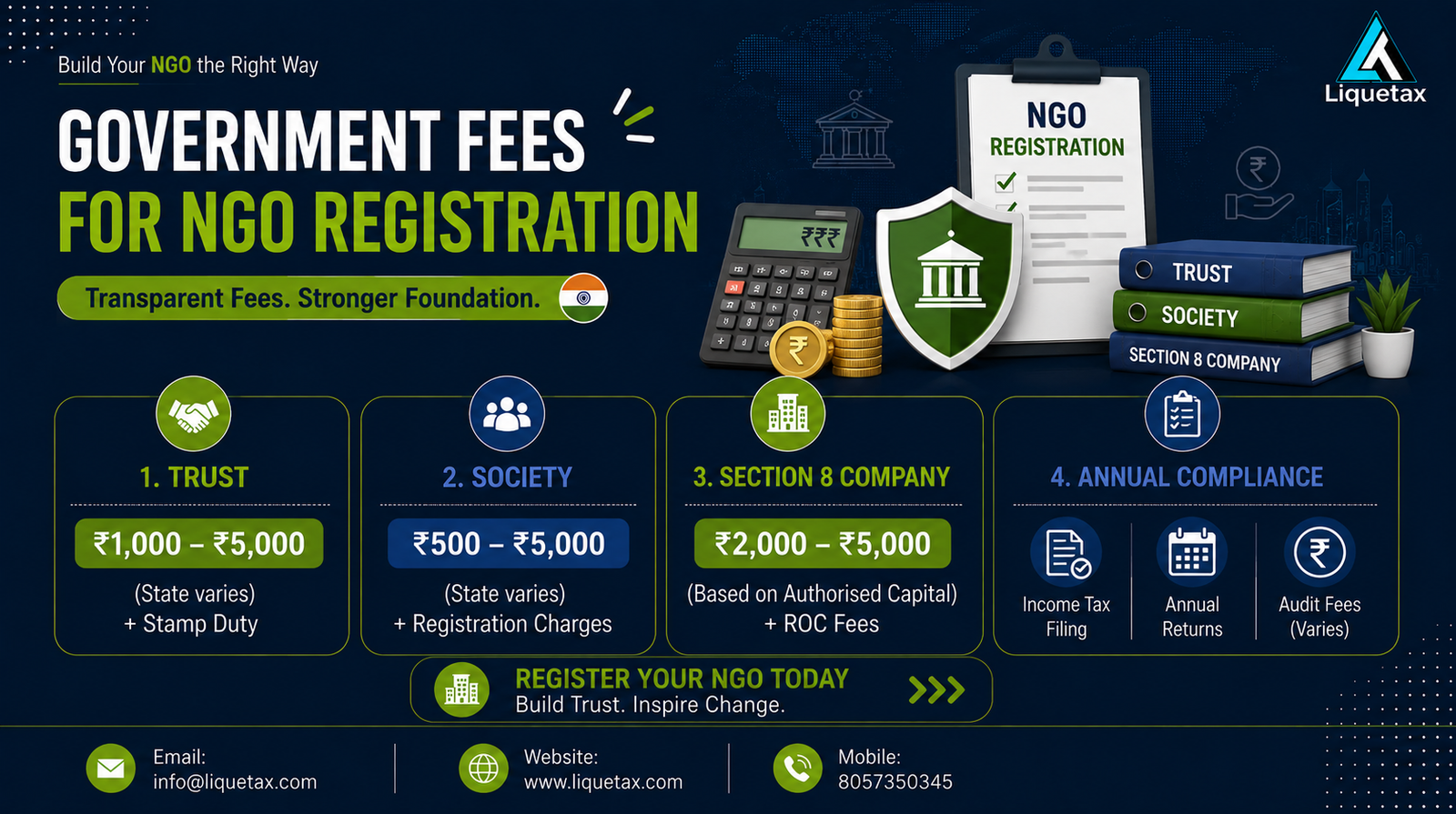
- Trust: ₹1,000 – ₹5,000 (state varies) + stamp duty.
- Society: ₹500 – ₹5,000 (state varies) + registration charges.
- Section 8: ₹2,000 – ₹5,000 (based on authorised capital) + ROC fees.
- Annual compliance: Income tax filing, annual returns, and audit fees (varies).
How Liquetax Can Help You Register Your NGO
- Structure selection: We help you choose the best structure based on your goals.
- Document preparation: We draft MOA, trust deed, and rules tailored to your needs.
- Application filing: We file registration applications with the appropriate authorities.
- Tax registration: We handle 80G, 12A, and PAN/TAN applications.
- Post-registration compliance: We guide you on annual filings and compliance.
- Notice handling: If any notice arises, we help you respond professionally.
Choose Liquetax for a smooth, hassle-free NGO registration experience.
FAQs on Trust vs Society vs Section 8 Company
Trust is simpler and more flexible, making it ideal for small charitable activities. Society is better if you want democratic member participation.
Yes, Section 8 Company can register under 12A and 80G to get income tax exemption for both the NGO and its donors.
All three can receive foreign donations, but they need FCRA registration. Section 8 Companies often find it easier to get FCRA due to their corporate governance.
Liquetax evaluates your objectives, scale, and funding needs to recommend the most suitable structure and handles the entire registration process.
Start Your NGO with the Right Structure Today!
Don't get confused – let Liquetax guide you to the best Trust, Society, or Section 8 Company for your vision. Register hassle-free.