
- A reported transaction is information, not a verdict
- Understand why a mismatch can occur
- Create a transaction reconciliation
- Correct reported information through the right channel
A reported transaction is information, not a verdict
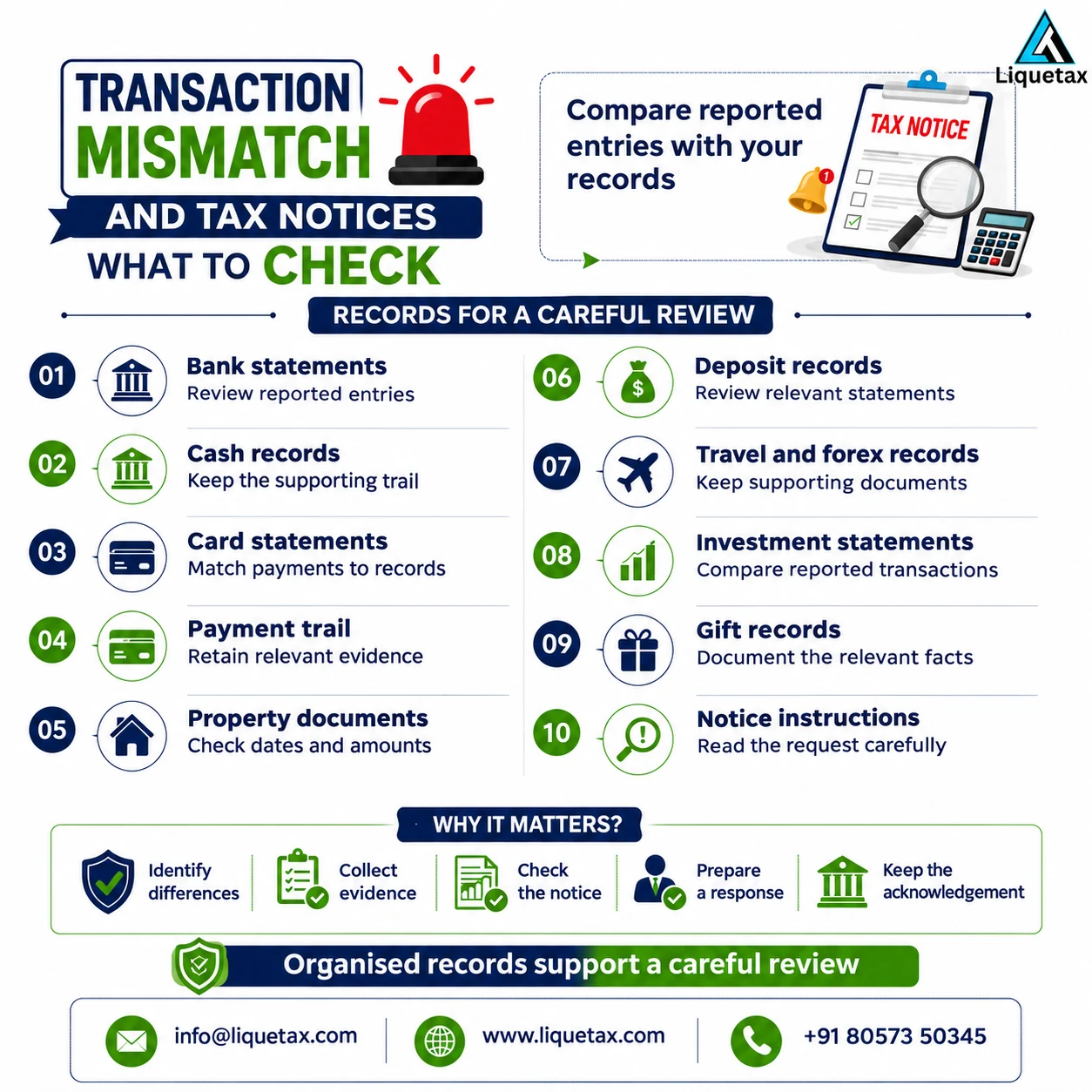
A transaction appearing in tax information can prompt a question if it does not agree with the return or other records. That does not mean every large payment is taxable, every mismatch is wrongdoing or one transaction automatically triggers a notice. The transaction’s nature, period, source and reporting context matter.
Avoid making decisions from a headline about a universal safe limit. Different reporting and tax rules apply to different transactions. Splitting payments to hide them is not a sound compliance strategy; keep transparent records and report the correct tax treatment.
Understand why a mismatch can occur
The Annual Information Statement brings together information reported to the department and permits taxpayer feedback. A record may be correct, duplicated, attributed to the wrong person, reported for a different period or stated at a gross value that is not the taxable income figure.
For example, a sale receipt, a bank transfer between your own accounts and a repayment of money previously advanced have different meanings. Do not add every credit together as income, but do not exclude receipts merely because the bank narration uses a convenient description.
Create a transaction reconciliation
For each questioned entry, record the date, amount, counterparty, account, reference and purpose. Link it to an invoice, contract, sale document, loan agreement, reimbursement statement or other genuine evidence. Reconcile the bank movement with the books and return treatment.
Where a transaction belongs jointly to several people, establish the actual ownership and share from records rather than dividing it arbitrarily. For a sale of an asset, the gross proceeds and taxable gain can differ, so retain acquisition and other relevant documents as well as the bank credit.
Correct reported information through the right channel
If AIS information is incorrect or duplicate, use the applicable feedback option and retain the acknowledgement. Contact the reporting source where a correction is needed. Explain the reason accurately; disagreement should be based on evidence, not on whether the entry increases tax.
AIS feedback does not itself amend a filed return. If the return is wrong, assess the available correction route and its conditions. If a notice has already been issued, respond through the specified process even while a reporting-source correction is being pursued.
Treat a notice as a separate task
Authenticate the document through the official portal, verify the taxpayer and year, and read the questions and deadline. The e-Proceedings and outstanding-demand facilities serve different purposes. Select the process appropriate to the document instead of uploading the same response everywhere.
Prepare a concise explanation with a numbered reconciliation and supporting attachments. If a figure is partly correct, separate what is accepted from what is disputed. Never fabricate a loan agreement, rent receipt or earlier invoice to explain a bank entry after the event.
Prevent avoidable gaps in ordinary record keeping
Review bank and tax information periodically and again before filing. Keep business and personal transactions distinguishable, explain unusual receipts when they happen and ensure payroll or investment documents are available. Ask counterparties to correct identity or reporting errors promptly.
For illustration, a taxpayer receiving money from the sale of a jointly owned asset can retain the agreement, ownership record, cost evidence and bank trail. That file supports the correct explanation without claiming that every rupee received is a gain or that no disclosure is required.
Check the period before applying section numbers
Returns for FY 2025-26, filed for AY 2026-27, continue under the 1961 Act framework. Income from April 2026 belongs to the new tax-year framework under the 2025 Act. A notice arriving in 2026 can relate to an earlier period, so identify the year before selecting forms or legal references.
Practical review before you proceed
Keep a dated working file with the relevant return, computation, acknowledgement, tax-credit statements, bank evidence and documents supporting the disputed figure or claim. Record the assessment or tax year on every working paper to avoid mixing periods. Save the final response and submission acknowledgement, and assign a follow-up date for the official account. If professional help is needed, share the complete document through a secure channel and agree the scope, deadline and fee in writing before work begins.
Frequently asked questions
Does a large bank credit automatically mean taxable income?
No. Its source and legal character must be established. Sale proceeds, loans, transfers and income are not interchangeable. Keep genuine supporting records and review the actual tax and reporting requirements for the transaction.
Can I ignore an AIS entry that is wrong?
Review it and use the appropriate feedback or reporting-source correction process with evidence. Keep the acknowledgement and ensure the filed return reflects the correct facts. Silence may leave an avoidable mismatch unexplained.
Does feedback close a formal tax notice?
No automatic closure should be assumed. A notice or proceeding may require a separate response by a stated deadline. Follow that process while referring to relevant feedback and correction evidence where useful.
Should I split a payment to stay below a reported threshold?
Do not structure records to conceal a transaction or evade reporting. The applicable rules may aggregate transactions or assess their real nature. Use transparent documentation and obtain advice on the genuine transaction.
What is the first step after a notice?
Authenticate it, identify the taxpayer and period, and record the exact questions and deadline. Then gather the relevant records and decide the correct response route. A generic thirty-day assumption is not reliable.
Official sources and next step
Checked on 9 October 2026. Use the official material below for the applicable form, current conditions and case-specific instructions.
- Income Tax Department: Annual Information Statement guidance
- Income Tax Department: e-Proceedings manual
- Income Tax Department: respond to outstanding demand
- Income Tax Department: scope of the 2025 Act
Contact LIQUETAX with your records and the issue you need resolved. Request a written scope and fee quote before work begins; approval remains with the relevant authority.