
- Choose the correct income period
- Reconcile income instead of copying one certificate
- Keep tax credits separate from the tax calculation
- Test every deduction and regime choice
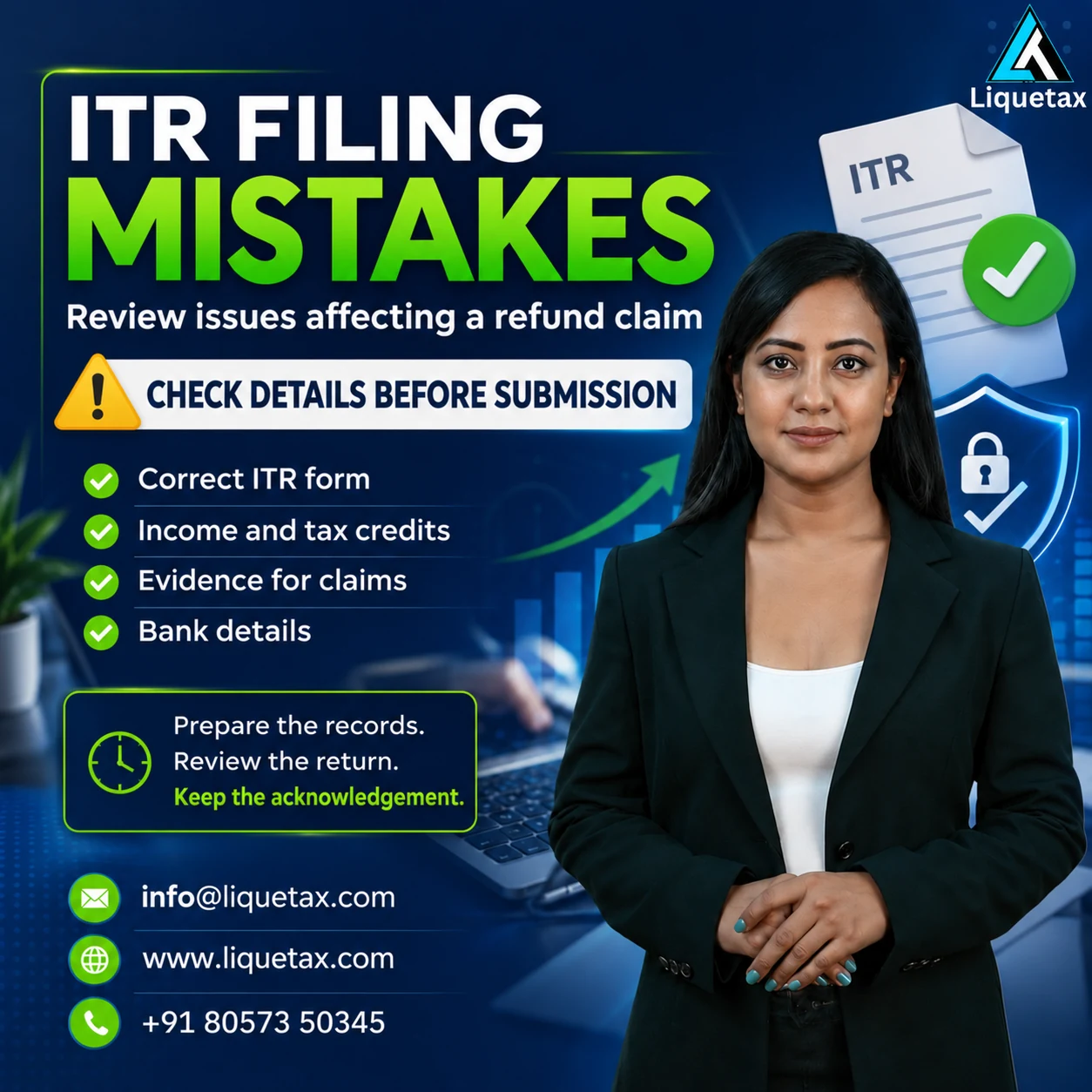
A return can be complete on screen and still contain a material error. The most useful final check is a comparison between the return, income records and tax-credit evidence. A notice is not automatically a penalty, and a refund request does not make an inaccurate claim acceptable. Review the following areas before submission and again when an intimation arrives.
Choose the correct income period
For income earned from 1 April 2025 to 31 March 2026, select Assessment Year (AY) 2026-27 and apply the Income-tax Act, 1961. Income earned from 1 April 2026 belongs to Tax Year 2026-27 under the Income-tax Act, 2025. These are different periods. A return or notice about an earlier year does not move to the new Act merely because you handle it after April 2026.
Choose the form from all income sources
Do not select ITR-1 just because you earn a salary. Capital gains, foreign assets, business income, residency and other exclusions may require another form. Use the notified form and utility for the assessment year, not an older online checklist. For AY 2026-27 the notified ITR-1 allows up to two house properties subject to its other conditions; that change does not remove the other exclusions.
Reconcile income instead of copying one certificate
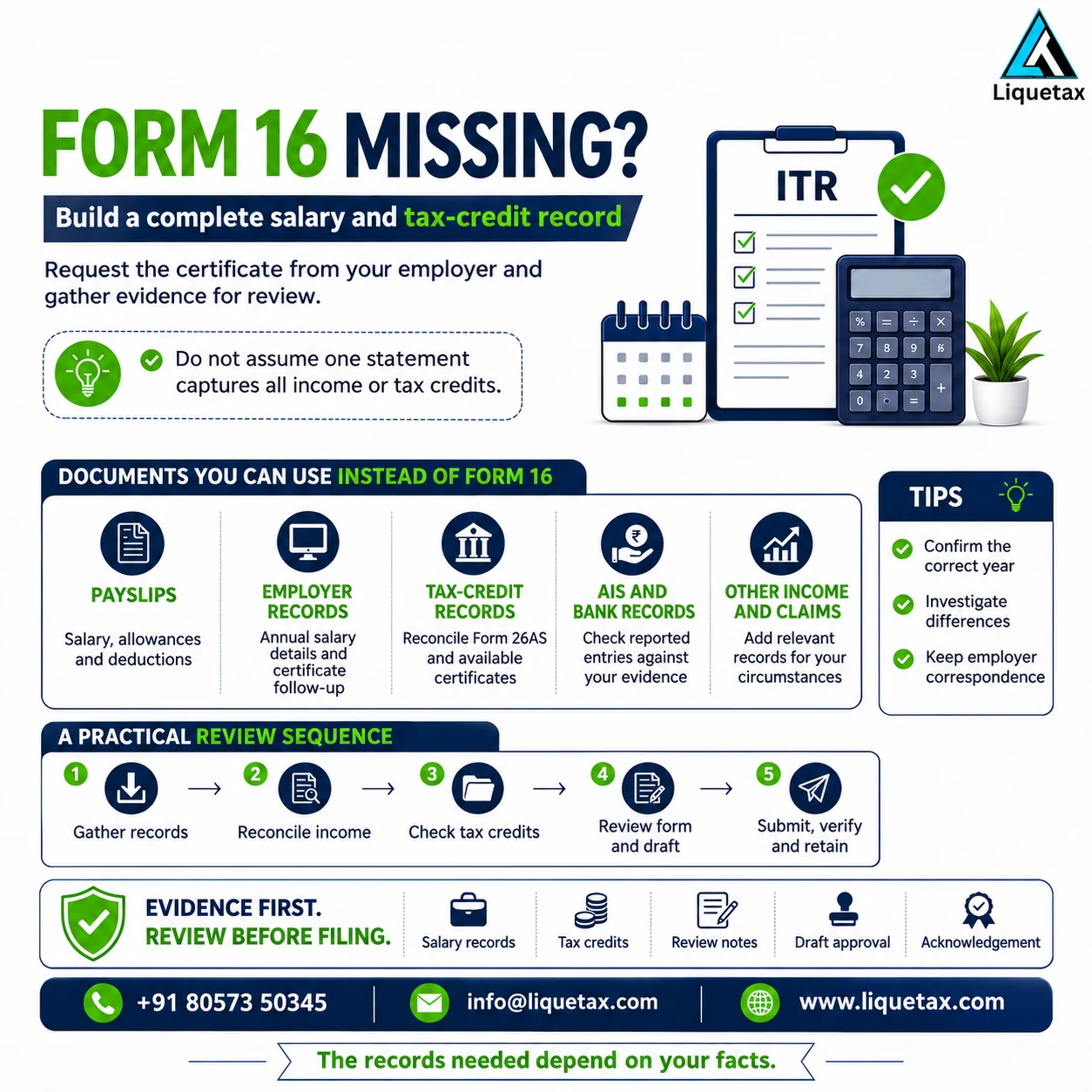
Form 16 covers the relevant employer’s salary information, not all taxable income. Include other employers, deposit interest, dividends, rental income and transactions requiring capital-gains reporting. Check AIS against original records and give feedback where information is wrong. Do not omit real income just because it has not appeared in AIS, or count a transfer between your own accounts as fresh income without analysis.
Keep tax credits separate from the tax calculation
Compare each TDS entry with Form 26AS and the corresponding income. A discrepancy between a payslip and Form 26AS may be a reporting problem, not proof of excess deduction. Ask the deductor to investigate its statement. Check the assessment year and identifying details on advance-tax and self-assessment-tax challans. Claim credit under the applicable rules, rather than simply entering the total needed for a refund.
Test every deduction and regime choice
Retain payment evidence and confirm the relevant regime permits the claim. Employer declarations do not automatically substantiate the return. Personal expenses do not become business expenses merely because a business account paid them. Business taxpayers should check Form 10-IEA and switching restrictions where applicable. A missed regime-election deadline cannot be repaired by casually selecting a different option in a late return.
Finish verification and monitor communications
Review the final tax computation, bank details and schedules before submission. Complete verification within the applicable period and save the acknowledgement. Afterwards, distinguish a defective-return notice, proposed adjustment, processing intimation and scrutiny notice. Each has a different response route. If you discover an error, assess revision, rectification or another remedy promptly; an updated return cannot be used to create or increase a refund.
Practical checklist
- List every employer, bank, investment account and income category.
- Check the correct assessment year, residency and return form.
- Reconcile Form 26AS, AIS, certificates and challans with the draft return.
- Keep evidence for every exemption, deduction and loss claimed.
- Save the submitted return, verification confirmation and subsequent notices.
Worked example
Illustration: an employee has two employers in one year. Each payroll computation considered only its own salary, and the employee initially copies the second Form 16 into the return. A combined reconciliation reveals the omitted first salary and prevents a misleading refund claim. Tax is recomputed using the full year’s income and eligible credits. This is a prevention example, not a claim that a particular taxpayer avoided a notice or penalty.
Frequently asked questions
Does every mismatch lead to a penalty?
No. A mismatch may call for explanation or correction. Consequences depend on the facts, law and actual proceedings.
Can I ignore income missing from AIS?
No. Report income according to the law and your records; AIS is not an exhaustive substitute for your books.
Is a revised return always available?
It depends on the year, statutory deadline and assessment status. Check eligibility before using that filing route.
Can I fix missing TDS by inventing a challan?
No. Investigate the deductor’s reporting and use genuine credit evidence. False entries can create further problems.
What should I do after receiving an intimation?
Compare its computation with your return, identify the precise difference and use the appropriate response or correction service.
Official references
- Notification 45/2026: notified ITR-1
- Income Tax Department: current return forms and utilities
- Income Tax Department: notice authentication and responses
- Income Tax Department: returns and updated returns
For help reviewing your documents and the correct next step, contact LIQUETAX. The scope and any professional fee should be agreed in writing after the facts are checked. This article provides general information; individual eligibility depends on the applicable law and records.