
- 1. Check the facts
Start with the actual entity and proposed activity.
- 2. Prepare evidence
Use genuine, consistent supporting records.
- 3. Review the application
Resolve missing facts before authorising submission.
- 4. Keep the outcome
Retain the filed version and follow-up responsibilities.
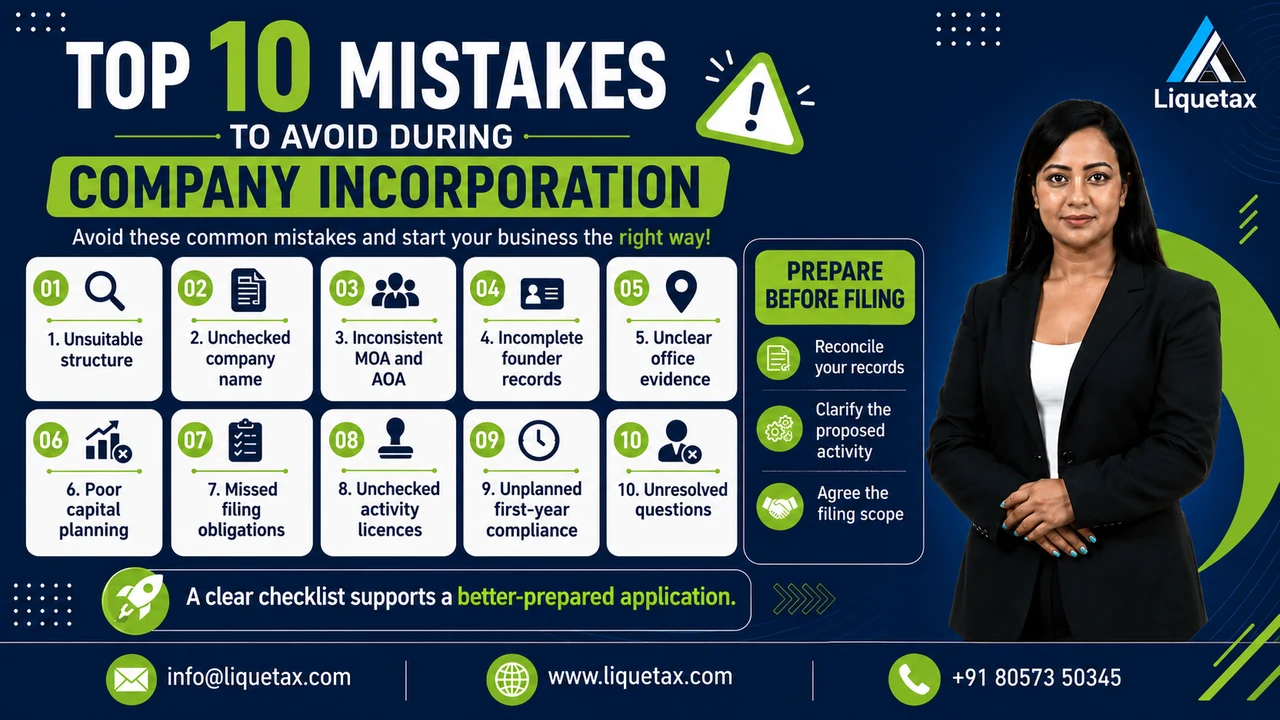
1. Choosing a structure before discussing ownership
A structure selected only because incorporation looks inexpensive can be difficult to operate later. Founders may discover that their preferred investment, ownership or management arrangements were never discussed. A company and an LLP are different legal routes.
Write down the owners, decision-making rights, expected funding and recurring compliance capacity. Ask for a comparison based on those facts before committing to company formation. Record why the selected structure fits the planned business.
2. Treating name availability as brand protection
A name that appears available in one search is not a complete brand clearance. A similar trade name, restricted expression or poorly described activity can cause questions and extra preparation work.
Prepare alternative names, explain the business activity and review both company-name requirements and relevant trademark records. Keep the search notes with the application. Do not order permanent signage or packaging solely on an informal name suggestion.
3. Using inconsistent identity details
Different spellings, incomplete addresses or an old identity record can create avoidable queries. Copying information from a previous application without checking it can repeat the same error in several attachments.
Create a single details sheet for each proposed director and subscriber. Compare it with current supporting documents and ask the individual to confirm discrepancies before forms are prepared. Do not alter a genuine document to make it match a convenient draft.
4. Buying an address without checking the evidence
A provider’s brochure does not establish that the proposed address file meets the application requirements. Inconsistent premises particulars or illegible supporting records can interrupt the filing.
Check the actual premises, permission to use them, address particulars and supporting documents required by the current MCA instructions. Confirm how official correspondence will be received. Compare the address in the form against the evidence before authorising submission.
5. Leaving digital signatures until the final day
An unprepared signing arrangement can delay an otherwise ready application. Giving another person uncontrolled access to a signing credential also creates a separate security problem.
Identify the required signers early and check the current certificate and portal association requirements. Each signer should review what they authorise and retain control of the private key. Plan assistance without sharing passwords or treating a signature as a blank approval.
6. Copying business objects without reading them
A generic description may not accurately explain the proposed activity. Copying another company’s objects can leave founders with documents that do not reflect their intended operations or sector requirements.
Describe what the business will actually sell or provide. Have the proposed objects and governing documents reviewed for that activity, ownership and applicable restrictions. Identify sector permissions separately; incorporation alone should not be represented as permission to conduct every regulated activity.
7. Leaving capital and subscription decisions unexplained
Founders sometimes approve forms without understanding who subscribes for what or how the proposed capital is recorded. Inconsistent figures can then appear in different documents.
Prepare an ownership and subscription schedule that the founders understand. Reconcile names, amounts and supporting approvals across the application pack. Ask the professional to explain the implications rather than choosing figures only to imitate another company’s application.
8. Uploading unreadable or mismatched attachments
An attachment can exist and still be unusable. Cropped pages, missing signatures and documents from the wrong version make review harder and can trigger avoidable clarification requests.
Open every final attachment at a readable size. Check completeness, names, dates and the relationship to the relevant field. Use the current MCA form instructions for document and execution requirements. Keep an agreed final folder so an older draft is not uploaded accidentally.
9. Accepting an unexplained all-inclusive quote
A single total can conceal different fee assumptions and exclusions. An estimate copied from an old article does not establish the actual authority charges or professional scope for your case.
Request an itemised quote distinguishing professional work, government charges, third-party services and applicable taxes. Clarify resubmission support, additional work and receipt handover. Confirm current applicable charges before payment; this guide does not promise one universal incorporation cost.
10. Stopping at the incorporation certificate
Formation does not complete the business’s operational and continuing-compliance work. Founders can miss practical handover tasks when nobody owns the next stage.
Agree a post-incorporation checklist with the responsible person, applicable dates and evidence of completion. Review banking, records, subscriptions, relevant registrations and continuing corporate obligations for the actual company. Keep the approved application, acknowledgements and certificate together. Distinguish an application prepared from one submitted and an authority’s final decision.
Frequently asked questions
Does this guide guarantee incorporation approval?
No. Preparation reduces avoidable errors, but the authority assesses the application.
Is an available company name a trademark clearance?
No. Review the relevant name and trademark questions separately.
Should I share my digital-signature password?
Keep signing credentials under the authorised signer’s control and review what is being signed.
Does every company pay the same total fee?
No. Ask for current case-specific charges and an itemised professional scope.
What should I receive after filing?
Keep the approved documents, submission references, decision or certificate, and a clear post-incorporation checklist.
Agree the work before sharing confidential records
Ask LIQUETAX for the proposed deliverables, responsible person, exclusions and fee components in writing. Share sensitive documents only through the agreed channel. Keep passwords, OTPs and digital-signature credentials under the authorised person’s control. Preparation support does not guarantee an authority’s decision.
Related guides
Official references and review limits
Prepared on 9 October 2026 using official portal information and indexed official guidance. Some direct document retrievals were restricted. Check the current form instructions before filing. This is editorial preparation guidance; no named professional opinion or endorsement is recorded.