
⚠️ Likelihood of Confusion
Similar to existing mark – one of the most common objections.
📝 Descriptive Mark
Mark describes goods/services – lacks distinctiveness.
⏳ Non-Use
Mark not used in commerce for 5+ years – vulnerable to cancellation.
🛡️ Deceptiveness
Mark likely to mislead public about nature/quality.
🎬 Watch: Trademark Objection – Causes & Solutions
 ▶ Tap to play
Introduction: Trademark Objection – Causes and Solutions
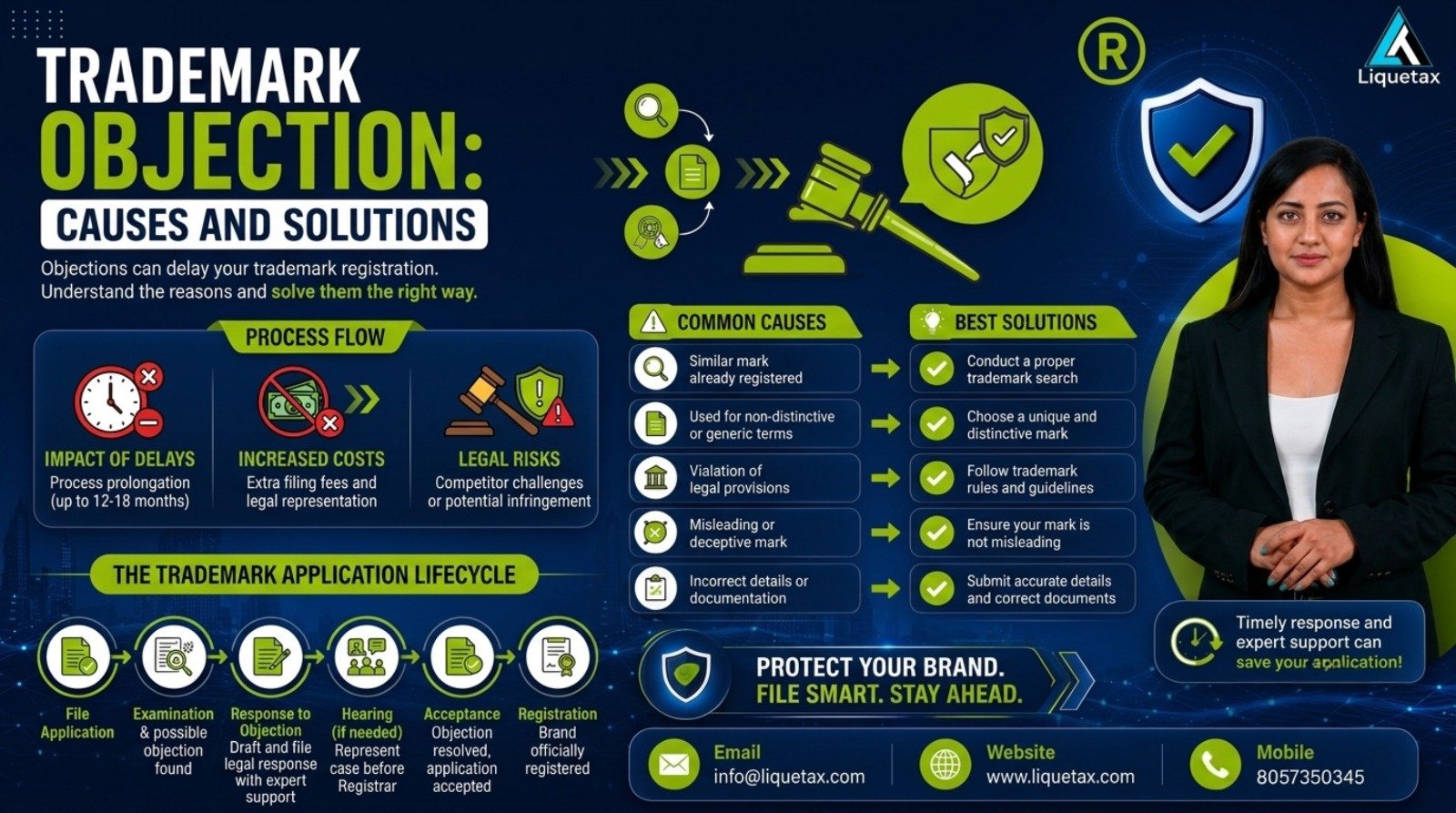
A trademark objection is a legal hurdle that can delay or derail your brand protection. It arises when the trademark examiner finds grounds to refuse your application, such as similarity to an existing mark, descriptiveness, or lack of distinctiveness. This guide explains the most common causes of trademark objections and provides practical solutions to overcome them, ensuring your brand gets the protection it deserves.
What is a Trademark Objection?
A trademark objection is a formal notice from the trademark registry indicating that your application does not meet the requirements of the Trademarks Act. It is not a rejection but a request for clarification or amendment. Common grounds for objection include:
- Likelihood of confusion: Your mark is similar to an existing registered trademark.
- Descriptiveness: The mark describes the goods or services (e.g., "Best Coffee" for coffee).
- Non-use: The mark has not been used in commerce for 5+ years.
- Deceptiveness: The mark is likely to mislead the public.
Why Resolving a Trademark Objection Matters
- Protect your brand: A registered trademark gives you exclusive rights to use the mark.
- Build trust: Trademarks signify quality and origin, building customer loyalty.
- Legal protection: A registered mark allows you to sue infringers.
- Business valuation: Trademarks are intangible assets that increase business value.
- Market expansion: A strong trademark facilitates licensing and franchising.
Ignoring an objection can lead to abandonment of your application, leaving your brand unprotected.
Eligibility & Requirements for Trademark Registration
- Distinctiveness: The mark must be capable of distinguishing your goods/services.
- Non-descriptive: The mark should not directly describe the goods/services.
- Not deceptive: The mark must not mislead the public.
- Not similar: The mark should not be identical or similar to existing registered marks.
- Use in commerce: The mark must be used or intended to be used in trade.
Step-by-Step Process to Overcome a Trademark Objection
- Receive objection notice: The trademark examiner issues a written objection.
- Analyze the objection: Understand the specific grounds cited (similarity, descriptiveness, etc.).
- Prepare a response: Draft a convincing reply with legal arguments and evidence.
- File response: Submit the reply within the prescribed time (usually 1-2 months).
- Hearing (if required): Attend a hearing before the examiner or appellate board.
- Registration: If the response is accepted, the mark proceeds to registration.
- Publication: The mark is published in the trademark journal for opposition.
Documents Required for Trademark Objection Response
- Power of Attorney: Authorizing the attorney to act on your behalf.
- Evidence of use: Invoices, advertisements, packaging showing use of the mark.
- Affidavit: Sworn statement explaining the distinctiveness of the mark.
- Legal arguments: Detailed reply addressing each ground of objection.
- Supporting documents: Any relevant judgments or precedents.
Government Fees & Penalties for Trademark Objection
- Filing fee: ₹4,500 (individual/startup) or ₹9,000 (company) for trademark application.
- Objection reply fee: No separate government fee for reply, but professional fees apply.
- Hearing fee: No hearing fee, but travel/legal costs may apply.
- Renewal fee: ₹9,000 (individual/startup) or ₹20,000 (company) every 10 years.
How Liquetax Can Help You Overcome Trademark Objections
- Expert analysis: We review the objection and prepare a strong legal response.
- Evidence preparation: We help you gather and present evidence of use and distinctiveness.
- Reply drafting: Our trademark attorneys draft a convincing reply addressing all grounds.
- Hearing representation: We represent you before the trademark office if a hearing is required.
- End-to-end support: From filing to registration, we handle everything.
With Liquetax, you can navigate trademark objections smoothly and secure your brand.
FAQs on Trademark Objection
The most common reason is likelihood of confusion with an existing registered trademark.
Yes, but it's advisable to consult a trademark attorney to draft a strong legal reply.
Your application will be abandoned, and you will lose the filing fee and priority.
It typically takes 2-6 months, depending on the complexity and whether a hearing is required.
Protect Your Brand – Overcome Trademark Objections with Liquetax
Don't let a trademark objection delay your brand protection. Let Liquetax handle your objection response efficiently and effectively.