
⚖️ Legal Structure
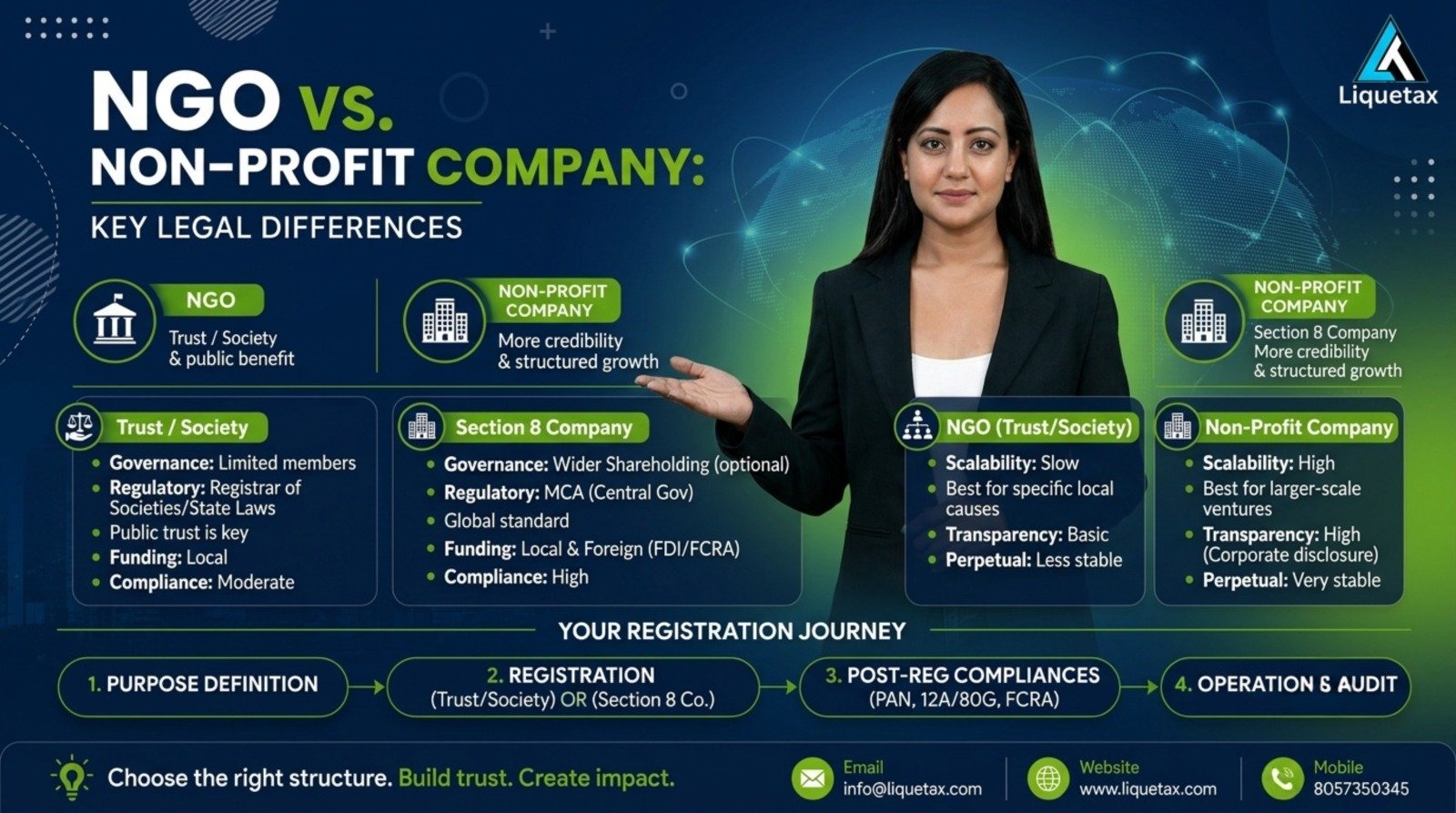
NGO is a broad term; Non-Profit Company is a specific legal entity under Section 8.
📜 Registration
NGOs can be Trusts, Societies, or Section 8 Companies. Non-Profit = Section 8 Company.
💰 Tax Benefits
Both enjoy tax exemptions under 12A & 80G, but compliance differs.
🏛️ Governance
Non-Profit Company has stricter governance (Board, ROC filings) than Trusts.
🎬 Watch: NGO vs Non-Profit Company – Legal Differences
 ▶ Tap to play
Introduction: NGO vs Non-Profit Company – What's the Difference?
Many people use the terms NGO and Non-Profit Company interchangeably, but they have distinct legal meanings in India. An NGO is a broad term that includes Trusts, Societies, and Section 8 Companies. A Non-Profit Company specifically refers to a Section 8 Company registered under the Companies Act. This guide explains the key legal differences to help you choose the right structure for your social or charitable mission.
What is NGO and Non-Profit Company?
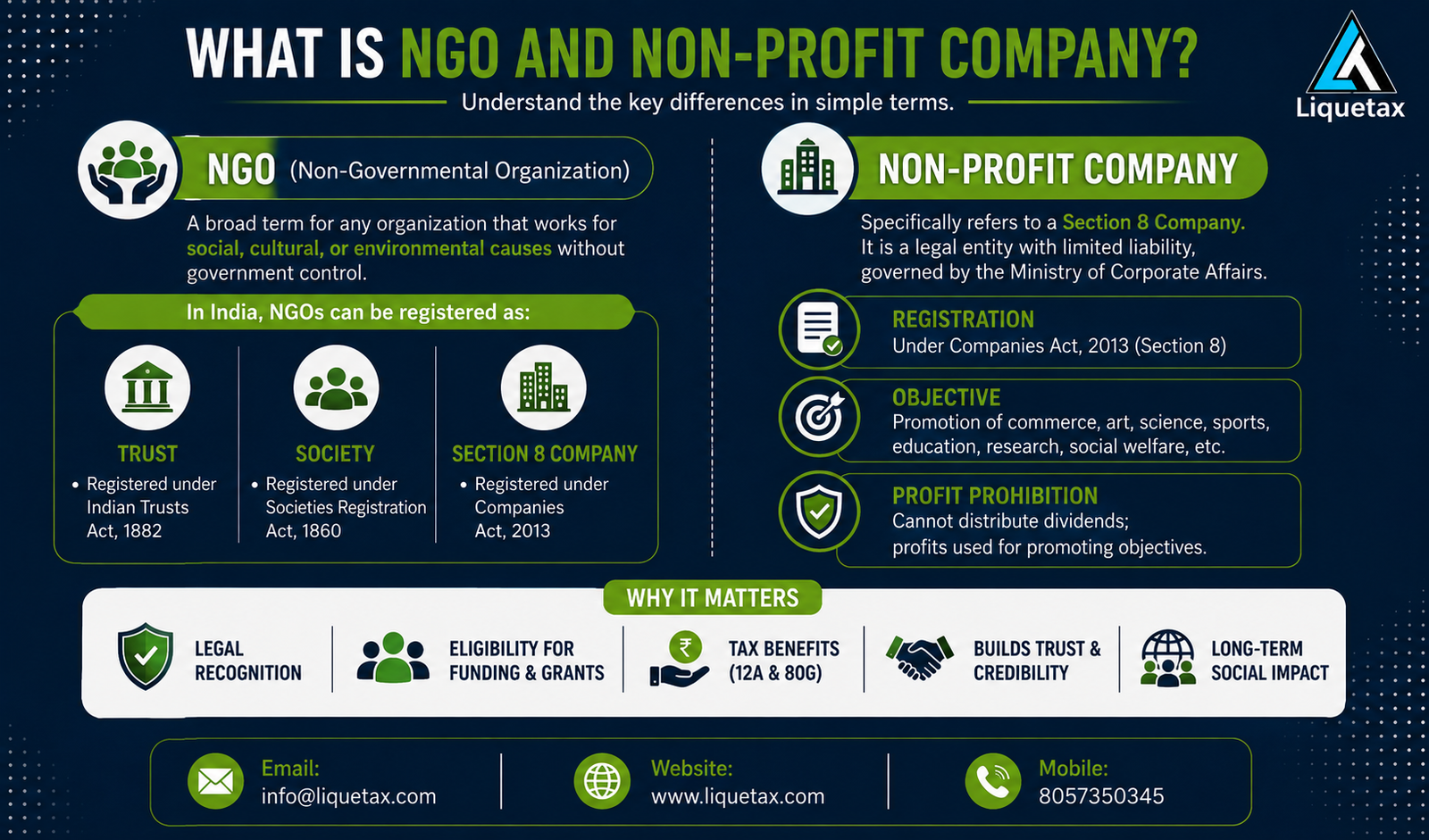
NGO (Non-Governmental Organization): A broad term for any organization that works for social, cultural, or environmental causes without government control. In India, NGOs can be registered as:
- Trust: Registered under Indian Trusts Act, 1882.
- Society: Registered under Societies Registration Act, 1860.
- Section 8 Company: Registered under Companies Act, 2013.
Non-Profit Company: Specifically refers to a Section 8 Company. It is a legal entity with limited liability, governed by the Ministry of Corporate Affairs.
- Registration: Under Companies Act, 2013 (Section 8).
- Objective: Promotion of commerce, art, science, sports, education, research, social welfare, etc.
- Profit prohibition: Cannot distribute dividends; profits used for promoting objectives.
Why Choosing the Right Legal Structure Matters
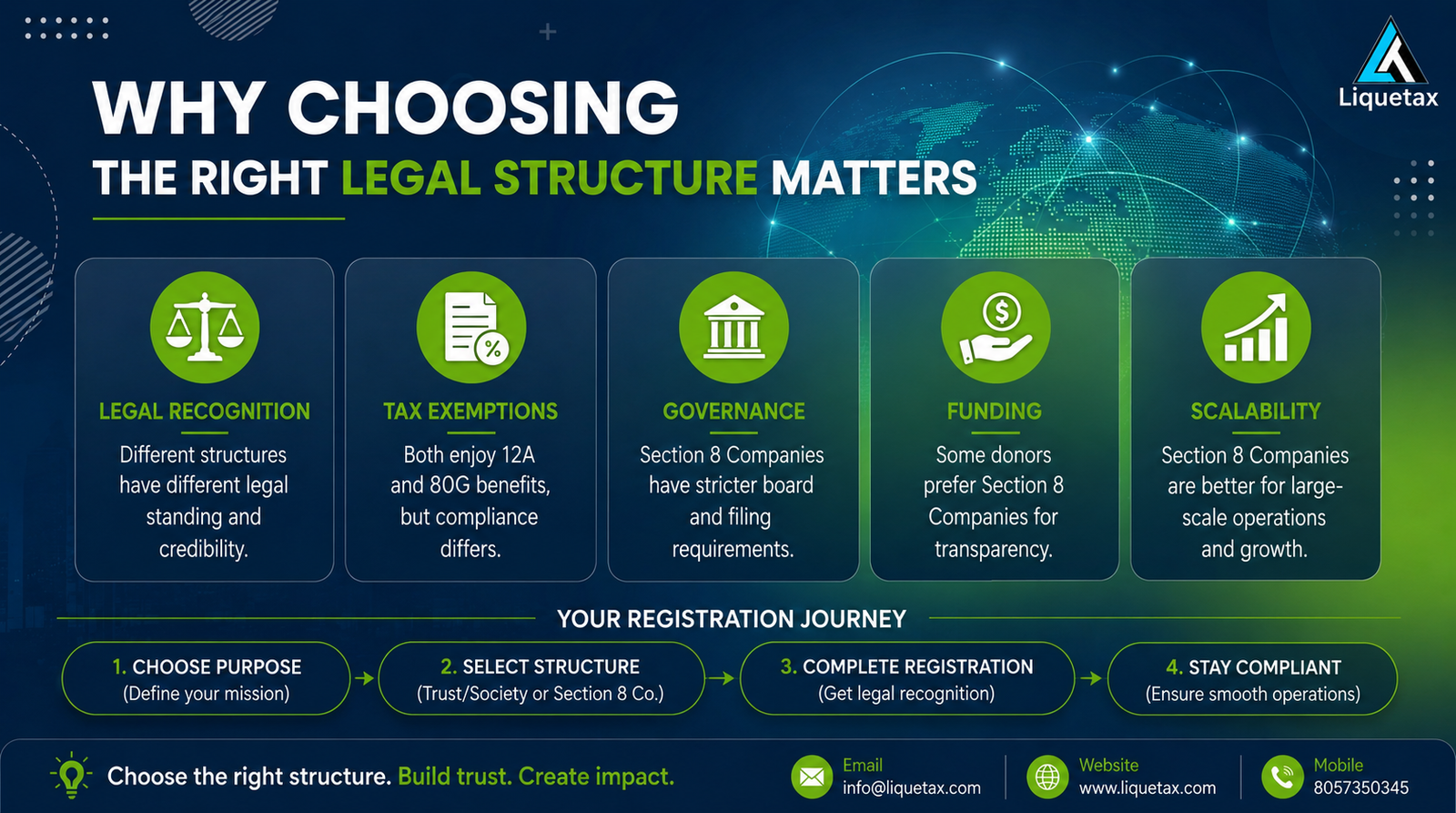
- Legal recognition: Different structures have different legal standing and credibility.
- Tax exemptions: Both enjoy 12A and 80G benefits, but compliance differs.
- Governance: Section 8 Companies have stricter board and filing requirements.
- Funding: Some donors prefer Section 8 Companies for transparency.
- Scalability: Section 8 Companies are better for large-scale operations.
Eligibility & Requirements for NGO and Non-Profit Registration
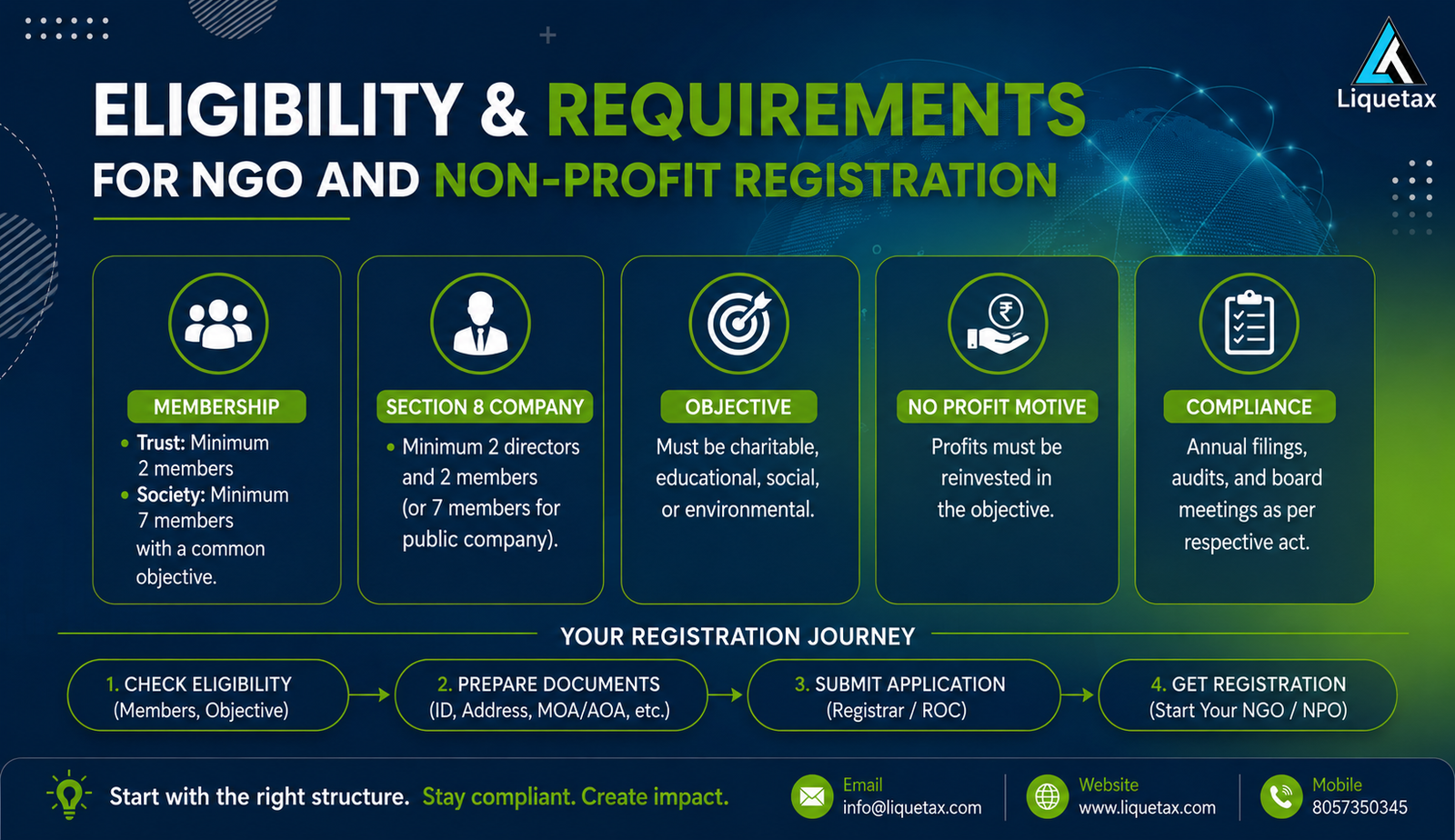
- For Trust/Society: Minimum 2 members (Trust) or 7 members (Society) with a common objective.
- For Section 8 Company: Minimum 2 directors and 2 members (or 7 members for public company).
- Objective: Must be charitable, educational, social, or environmental.
- No profit motive: Profits must be reinvested in the objective.
- Compliance: Annual filings, audits, and board meetings as per respective act.
Step-by-Step Process to Register NGO or Non-Profit Company
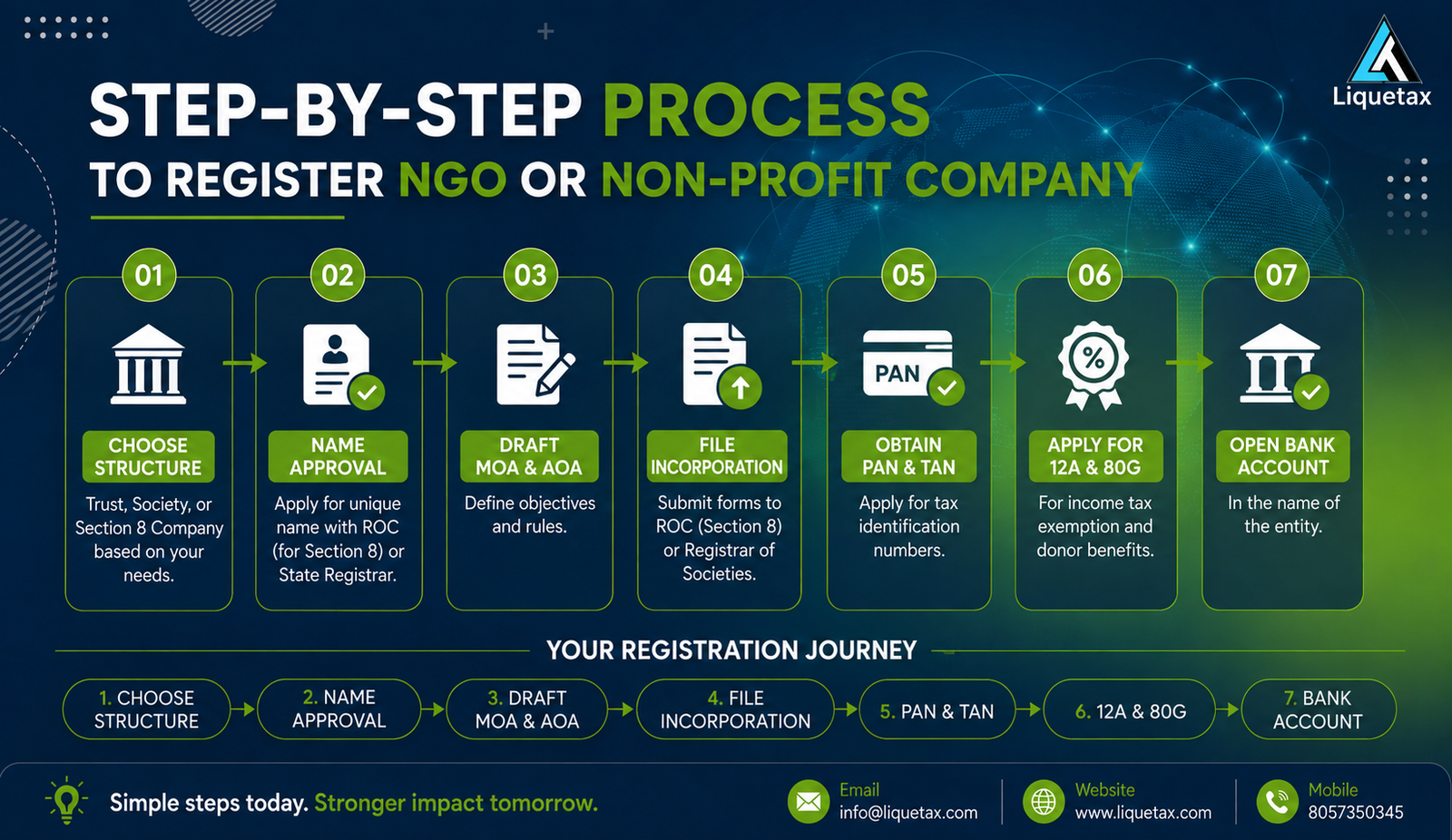
- Choose structure: Trust, Society, or Section 8 Company based on your needs.
- Name approval: Apply for unique name with ROC (for Section 8) or State Registrar.
- Draft MOA & AOA: Define objectives and rules.
- File incorporation: Submit forms to ROC (Section 8) or Registrar of Societies.
- Obtain PAN & TAN: Apply for tax identification numbers.
- Apply for 12A & 80G: For income tax exemption and donor benefits.
- Open bank account: In the name of the entity.
Documents Required for Registration
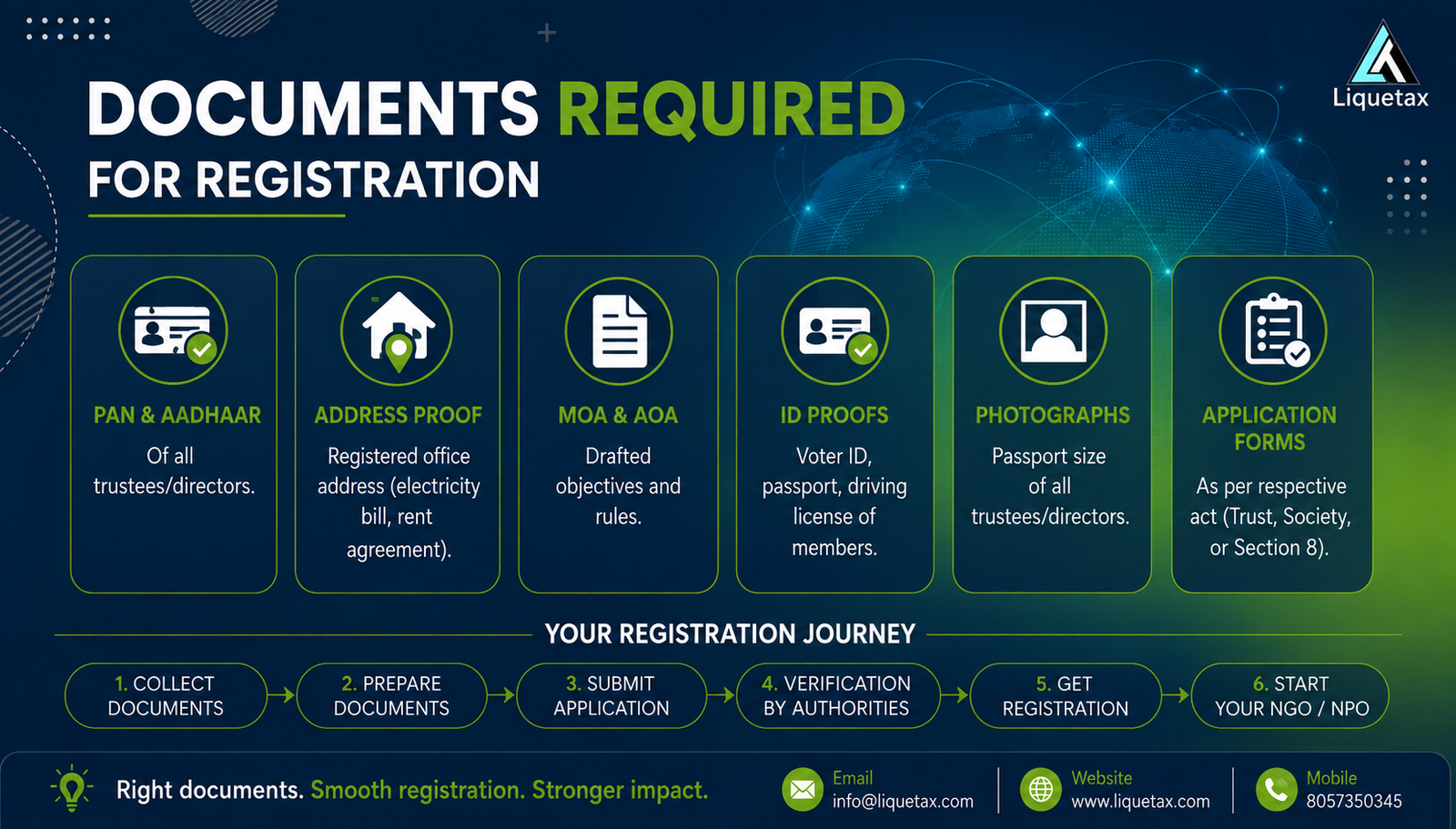
- PAN and Aadhaar: Of all trustees/directors.
- Address proof: Registered office address (electricity bill, rent agreement).
- MOA & AOA: Drafted objectives and rules.
- ID proofs: Voter ID, passport, driving license of members.
- Photographs: Passport size of all trustees/directors.
- Application forms: As per respective act (Trust, Society, or Section 8).
Government Fees & Penalties for Non-Compliance
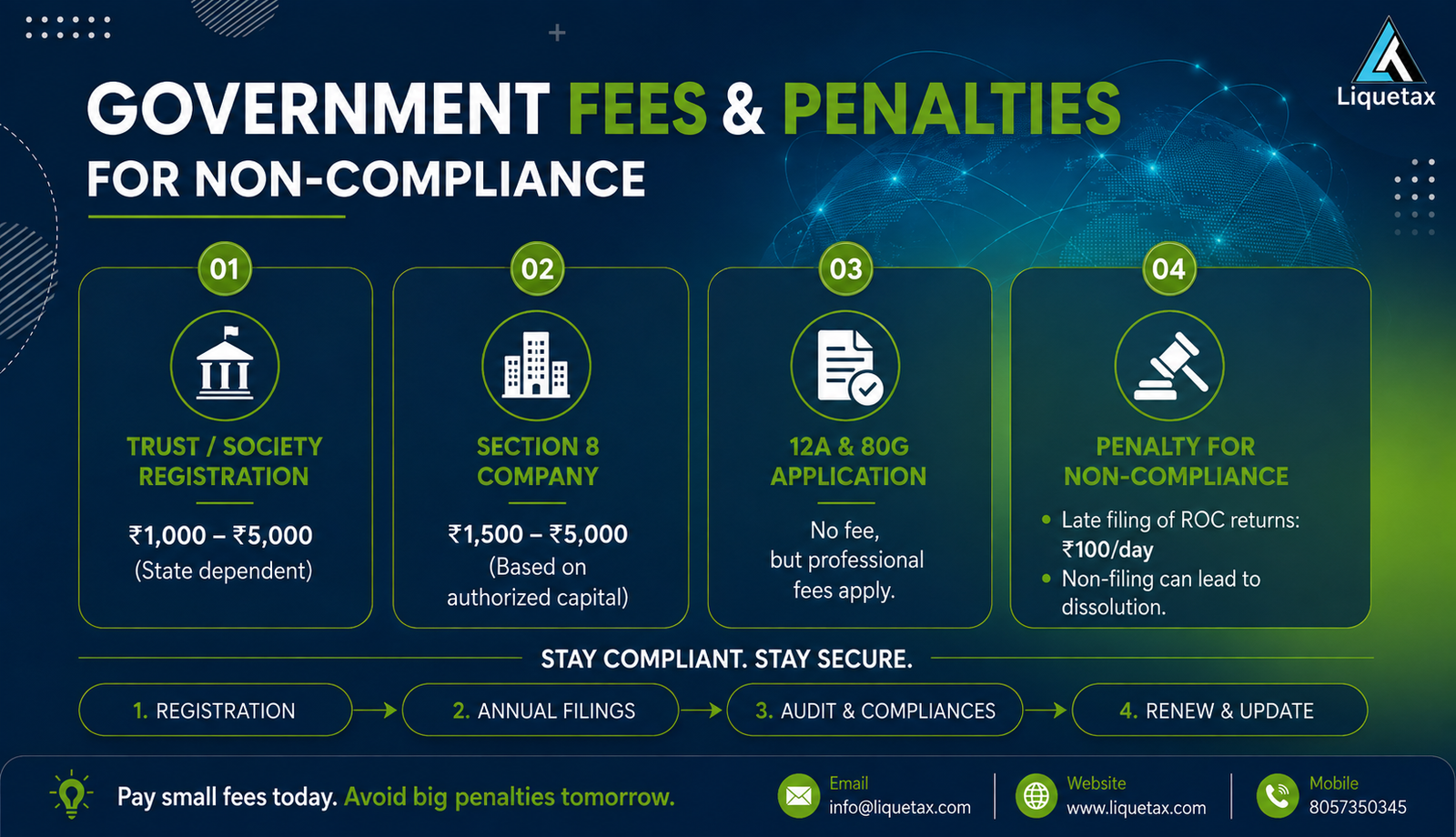
Government fees vary based on the structure and state. Common costs:
- Trust/Society registration: ₹1,000 – ₹5,000 (state dependent).
- Section 8 Company: ₹1,500 – ₹5,000 (based on authorized capital).
- 12A & 80G application: No fee, but professional fees apply.
- Penalty for non-compliance: Late filing of ROC returns: ₹100/day. Non-filing can lead to dissolution.
How Liquetax Can Help You Choose and Register
- Expert advice: We help you choose between Trust, Society, or Section 8 Company.
- Document preparation: We draft MOA, AOA, and all registration forms.
- End-to-end filing: We handle ROC, State Registrar, and income tax applications.
- 12A & 80G guidance: Ensure you get tax exemptions and donor benefits.
- Compliance support: Annual filings, board meetings, and audit support.
With Liquetax, your NGO or Non-Profit Company is set up correctly from day one.
FAQs on NGO vs Non-Profit Company
No. NGO is a broad term that includes Trusts, Societies, and Section 8 Companies. A Non-Profit Company specifically refers to a Section 8 Company.
For small-scale charitable work, a Trust or Society is simpler and cost-effective. For larger operations with multiple donors, a Section 8 Company offers better governance.
Yes, but salaries must be reasonable and as per market standards. Profits cannot be distributed as dividends.
Liquetax provides end-to-end support: structure selection, document drafting, filing, and post-registration compliance.
Start Your NGO or Non-Profit Company Today!
Get expert guidance on legal structure, registration, and tax compliance. Let Liquetax handle the paperwork so you can focus on your mission.